Immigration Proclamation Sets Limited Curbs

President Suspends Temporary Entry of Certain Immigrants Due to COVID-19 Economic Fallout

Written by David S. Rugendorf

On Wednesday evening, April 22, 2020, President Trump issued his highly anticipated immigration proclamation, temporarily suspending some types of immigration to the United States due to COVID-19 and its resultant damage to the domestic labor market. While the language of the order suggested that future actions may be necessary, the current order is very limited in its scope and application. Very few individuals are now prevented from entering the United States who had not previously been barred from entry. A summary of the order is as follows: Continue reading “Immigration Proclamation Sets Limited Curbs”


Contact Tracing: COVID-19

Written by Susan Kohn Ross and Timothy Carter

As the individual states struggle to define how best to reopen in a manner that minimizes the renewed spread of the novel coronavirus/COVID-19, the subject of contact tracing has become a major focus. To aid in this effort, Apple and Google announced late last week a joint contact tracing project that would leverage Bluetooth technology to identify and selectively alert individuals who have been in close proximity to someone who tested positive for COVID-19. Once alerted, that user could self-isolate or seek testing. Individuals who are diagnosed with COVID-19 can self-report their diagnosis, and any users who have been in recent contact with that individual will receive a notification. Public health agencies would be responsible for checking and verifying test results provided by users in order to prevent spoofing or fabrication. Continue reading “Contact Tracing: COVID-19”

Employer Expectations in COVID Conditions

Written by Frida P. Glucoft

Employers should beware: even during the COVID-19 pandemic, certain employer compliance and obligations continue and others are created.

NOTICE: if your work force is working from home and you have any individuals in H1B or E3 status, there are postings and notice requirements. There are technical rules which must be followed and documents to retain for the future when we return to the worksite.

TRAVEL BAN: the travel ban for entry to the USA from abroad remains in effect. The exception is for US citizens and lawful permanent residents and their families. In addition, many countries around the globe do not permit anyone but nationals of their own countries to enter.

Be sure your employees do not make travel arrangements without advising you well in advance. Continue reading “Employer Expectations in COVID Conditions”

Public Spaces = Covered Faces, Part 2

Written by Susan Kohn Ross

City of Los Angeles Mayor Eric Garcetti has issued an order stating that all workers who are deemed exempt by virtue of their services must wear face coverings over their noses and mouths. These face coverings are to be just that, not medical grade, but rather scarves, bandanas and similar coverings. Any which are reusable are to be washed frequently, at least once a day. If single use, they must be properly discarded. Continue reading “Public Spaces = Covered Faces, Part 2”

Public Spaces = Covered Faces

Written by Susan Kohn Ross

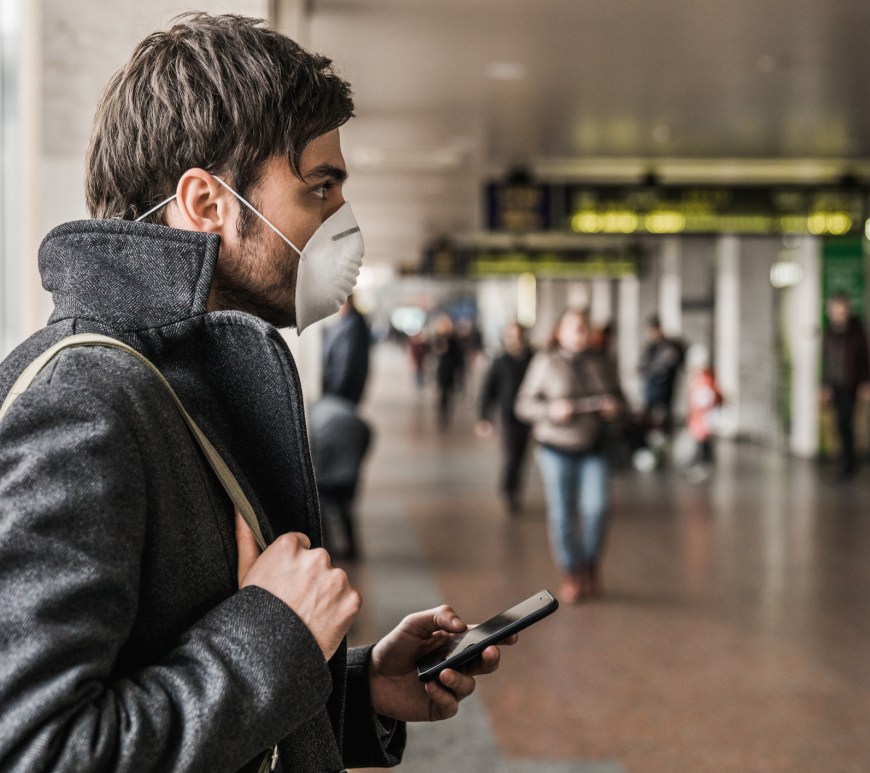
On Friday, April 2, 2020, the Centers for Disease Control (CDC) came out with a recommendation that anyone who goes out in public should wear a face covering.  The CDC took action based on recent studies which are said to show that “a significant portion” of individuals have the COVID-19 virus but are displaying no symptoms, and so are unknowingly infecting others. Speaking is cited as one of the situations by which asymptomatic individuals are spreading the virus. Therefore, CDC recommends wearing a cloth face covering in public settings, such as grocery stores and pharmacies, where social distancing may be difficult to maintain. Continue reading “Public Spaces = Covered Faces”

COVID-19 Relief for Music Industry Workers

Written by Eleanor M. Lackman and Craig C. Bradley

Music industry associations and trade groups, working alongside organizations spanning the creative industries, scored a major victory in securing financial help under the CARES Act (the “Act”) for musicians, music producers, and other music industry workers affected by the COVID-19 pandemic. This relief falls into two categories: (1) unemployment compensation expanded from traditional employees to include benefits previously unavailable to independent contractors, “gig” workers, and the self-employed, and (2) newly-available loans through the U.S. Small Business Administration (SBA), including loan advances of up to $10,000, which are now also available to sole proprietors, independent contractors, and the self-employed. Continue reading “COVID-19 Relief for Music Industry Workers”

Privacy Takes Many Forms

Written by Susan Kohn Ross and Timothy Carter

Amazon’s Alexa, Google devices such as Google Assistant and Google Home, Apple’s Siri, and Microsoft’s Cortana are now commonplace in many homes. These devices and other lesser-known counterparts allow users to control nearly everything in their homes with only their voice. That convenience, however, comes at the cost of some degree of privacy. While seldom viewed as presenting a live microphone inside one’s home or office, these otherwise passive listening devices begin recording upon initiation of a verbal cue. While the use (or even presence) of such voice assistants may present privacy concerns when used in consumers’ homes, with millions of people working remotely across the world due to COVID-19, these potential privacy concerns can quickly escalate to a much broader concern, especially for attorneys, who, as we discussed earlier, are bound to maintain confidentiality regarding information concerning the representation of their clients. But this concern extends far beyond “just” attorneys, because so many business dealings involve the exchange of confidential information. What one thinks of as a private or confidential discussion with a business partner is now taking place at home, perhaps with others around, but all too frequently in close proximity to these devices. Continue reading “Privacy Takes Many Forms”

Bay Area Narrows SIP Orders

Written by Susan Kohn Ross and Matthew S. Beasley

On March 31, 2020, six Bay Area counties in Northern California adopted amended “shelter in place” orders in response to the Novel Coronavirus (COVID-19). These orders are important to all businesses in the Bay Area, but also to everyone else as they could be a preview of what is to come.

Like the prior orders adopted during the week of March 16, 2020, the March 31, 2020 orders each generally require that residents stay home unless they are engaged in work which the orders define as “essential.” Importantly, the March 31, 2020 orders significantly restrict and reduce the definitions of “essential” work. For instance, under the San Francisco order, most construction is now prohibited. Exceptions are made for healthcare facility construction directly related to the COVID-19 response, affordable housing; public works projects when designated as essential by the lead governmental agency, shelters and temporary housing, projects necessary to provide critical services to certain vulnerable individuals, construction necessary to secure an existing construction site, and limited essential residential or business repairs. In other words, the March 31, 2020 orders ban most residential and commercial construction. As another example, businesses that supply products needed to work from home are no longer “essential,” and must cease operations. Continue reading “Bay Area Narrows SIP Orders”

Furthering the Fight Against COVID-19

Written By Susan Kohn Ross 

If you or your organization are interested in helping to fight the spread of COVID-19, please see this page on FEMA’s website for more information. Examples for the private sector include the following as stated by FEMA:

  • To sell medical supplies or equipment to the federal government, please submit a price quote under the COVID-19 PPE and Medical Supplies Request for Quotation. Full details can be found in the solicitation (Notice ID 70FA2020R00000011).
    • This solicitation requires registration with the System for Award Management (SAM) in order to be considered for award, pursuant to applicable regulations and guidelines. Registration information can be found at http://www.sam.gov.  Registration must be “ACTIVE” at the time of award.
  • If you have medical supplies or equipment to donate, please provide us details on what you are offering.
  • If you are a private company that wants to produce a product related to the COVID response – email nbeoc@max.gov.
  • If you are a hospital or healthcare provider in need of medical supplies, please contact your state, local, tribal or territory department of public health and/or emergency management agency.
  • If you are interested in doing business with FEMA and supporting the response to COVID- 19 with your company’s non-medical goods and/or services, please submit your inquiry to the Department of Homeland Security (DHS) Procurement Action Innovative Response Team (PAIR) team at DHSIndustryLiaison@hq.dhs.gov.

Continue reading “Furthering the Fight Against COVID-19”