Public Spaces = Covered Faces

Written by Susan Kohn Ross

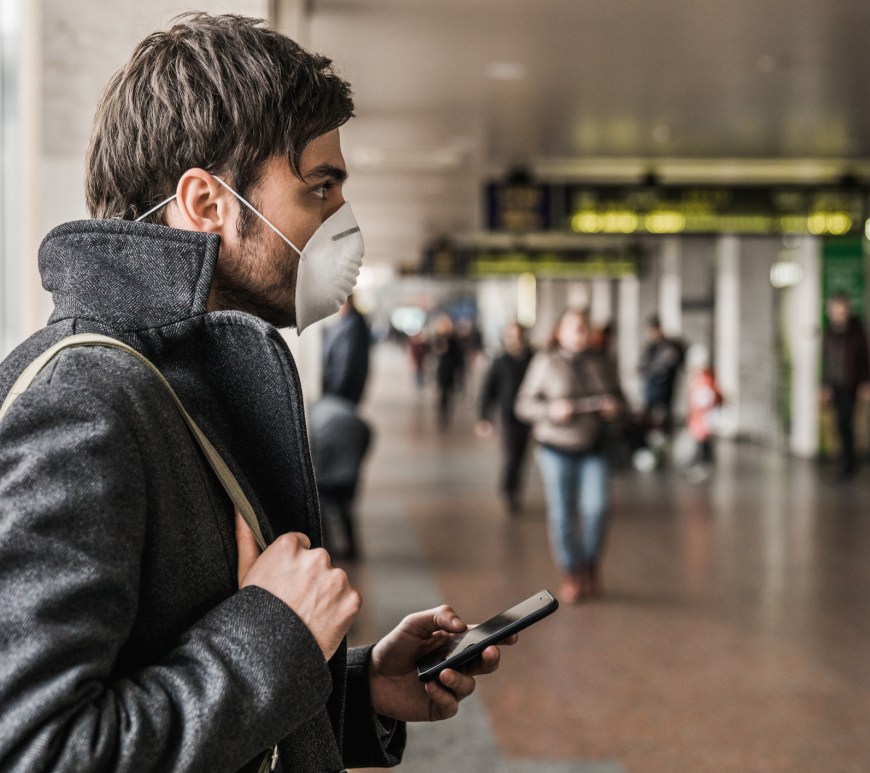
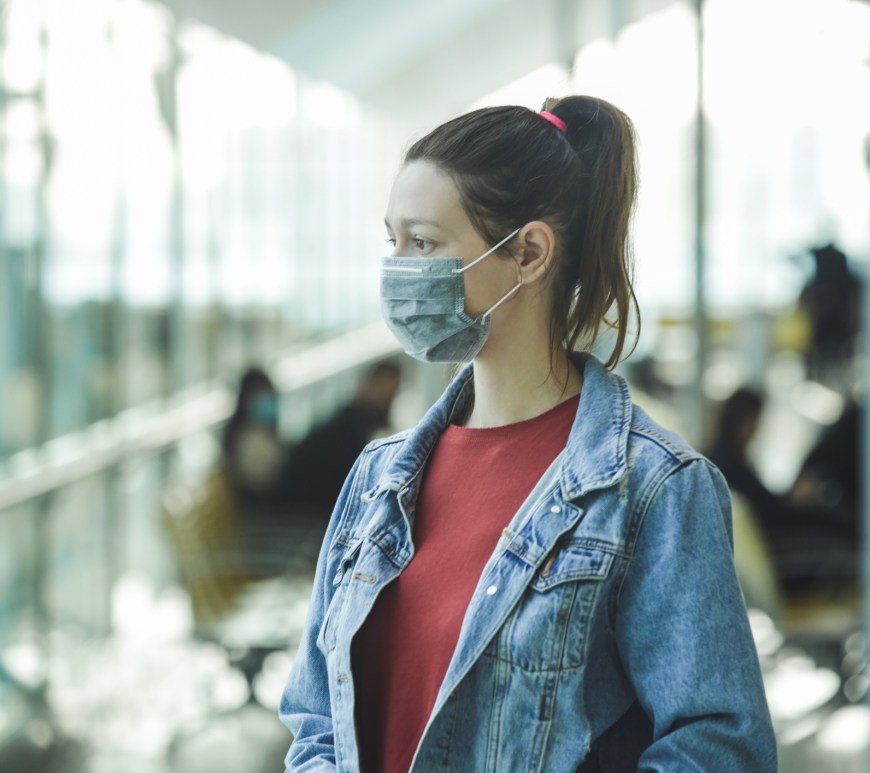
On Friday, April 2, 2020, the Centers for Disease Control (CDC) came out with a recommendation that anyone who goes out in public should wear a face covering.  The CDC took action based on recent studies which are said to show that “a significant portion” of individuals have the COVID-19 virus but are displaying no symptoms, and so are unknowingly infecting others. Speaking is cited as one of the situations by which asymptomatic individuals are spreading the virus. Therefore, CDC recommends wearing a cloth face covering in public settings, such as grocery stores and pharmacies, where social distancing may be difficult to maintain. Continue reading “Public Spaces = Covered Faces”


COVID-19 Relief for Music Industry Workers

Written by Eleanor M. Lackman and Craig C. Bradley

Music industry associations and trade groups, working alongside organizations spanning the creative industries, scored a major victory in securing financial help under the CARES Act (the “Act”) for musicians, music producers, and other music industry workers affected by the COVID-19 pandemic. This relief falls into two categories: (1) unemployment compensation expanded from traditional employees to include benefits previously unavailable to independent contractors, “gig” workers, and the self-employed, and (2) newly-available loans through the U.S. Small Business Administration (SBA), including loan advances of up to $10,000, which are now also available to sole proprietors, independent contractors, and the self-employed. Continue reading “COVID-19 Relief for Music Industry Workers”

Privacy Takes Many Forms

Written by Susan Kohn Ross and Timothy Carter

Amazon’s Alexa, Google devices such as Google Assistant and Google Home, Apple’s Siri, and Microsoft’s Cortana are now commonplace in many homes. These devices and other lesser-known counterparts allow users to control nearly everything in their homes with only their voice. That convenience, however, comes at the cost of some degree of privacy. While seldom viewed as presenting a live microphone inside one’s home or office, these otherwise passive listening devices begin recording upon initiation of a verbal cue. While the use (or even presence) of such voice assistants may present privacy concerns when used in consumers’ homes, with millions of people working remotely across the world due to COVID-19, these potential privacy concerns can quickly escalate to a much broader concern, especially for attorneys, who, as we discussed earlier, are bound to maintain confidentiality regarding information concerning the representation of their clients. But this concern extends far beyond “just” attorneys, because so many business dealings involve the exchange of confidential information. What one thinks of as a private or confidential discussion with a business partner is now taking place at home, perhaps with others around, but all too frequently in close proximity to these devices. Continue reading “Privacy Takes Many Forms”

New FFCRA Regulations Provide Clarity

Top 15 Practical Takeaways From the New Sick and Family Leave DOL Regulations

Written by Jeremy Mittman and Stephen Franz 

On the same day the Families First Coronavirus Response Act (“FFCRA”) took effect, the U.S. Department of Labor’s (”DOL”) Wage and Hour Division (“WHD”) posted a temporary rule issuing regulations to the FFCRA on April 1, 2020.  The rule, which expires on December 31, 2020, provides much-needed clarity to the expanded family and medical leave and emergency paid sick leave provisions of the FFCRA.  This is the latest guidance on the FFCRA from the DOL, which previously published and updated a series of “Questions and Answers” related to the law’s paid leave provisions after its enactment.  Our prior analysis of the FFCRA and how it affects employers is available here.

Because the rule answers previously unaddressed questions and clarifies the DOL’s prior guidance, Employers may need to adjust their FFCRA policies and practices accordingly.  Fortunately, the WHD will not start enforcing the FFCRA until April 18, 2020, so Employers have time to react to these new rules.

Here are the top 15 new takeaways for Employers from the rule. Continue reading “New FFCRA Regulations Provide Clarity”

Bay Area Narrows SIP Orders

Written by Susan Kohn Ross and Matthew S. Beasley

On March 31, 2020, six Bay Area counties in Northern California adopted amended “shelter in place” orders in response to the Novel Coronavirus (COVID-19). These orders are important to all businesses in the Bay Area, but also to everyone else as they could be a preview of what is to come.

Like the prior orders adopted during the week of March 16, 2020, the March 31, 2020 orders each generally require that residents stay home unless they are engaged in work which the orders define as “essential.” Importantly, the March 31, 2020 orders significantly restrict and reduce the definitions of “essential” work. For instance, under the San Francisco order, most construction is now prohibited. Exceptions are made for healthcare facility construction directly related to the COVID-19 response, affordable housing; public works projects when designated as essential by the lead governmental agency, shelters and temporary housing, projects necessary to provide critical services to certain vulnerable individuals, construction necessary to secure an existing construction site, and limited essential residential or business repairs. In other words, the March 31, 2020 orders ban most residential and commercial construction. As another example, businesses that supply products needed to work from home are no longer “essential,” and must cease operations. Continue reading “Bay Area Narrows SIP Orders”

Copyright Office Accepting Electronic Applications

Copyright Offices Announces Temporary Changes to Deposit Copy Requirements Written by Alesha M. Dominique and Marissa B. Lewis The United States Copyright Office has announced that it will temporarily accept electronic deposit copies to facilitate remote examination of electronic applications which ordinarily must be accompanied by physical deposits during the COVID-19 pandemic.  This measure, effective as of April 2, 2020, is optional and does not … Continue reading Copyright Office Accepting Electronic Applications

Paycheck Protection for Non-Profits

Charitable Organizations May Apply for Forgivable Loans Under the CARES Act

Written by David Wheeler Newman and Jean Nogues

As part of the unprecedented $2 Trillion stimulus package (the CARES Act), charitable organizations exempt under Internal Revenue Code section 501(c)(3) with 500 or fewer employees may apply for loans under the Paycheck Protection Program (PPP) provision of the Act.

All loans to qualifying charities will have the same terms: Continue reading “Paycheck Protection for Non-Profits”

Furthering the Fight Against COVID-19

Written By Susan Kohn Ross 

If you or your organization are interested in helping to fight the spread of COVID-19, please see this page on FEMA’s website for more information. Examples for the private sector include the following as stated by FEMA:

  • To sell medical supplies or equipment to the federal government, please submit a price quote under the COVID-19 PPE and Medical Supplies Request for Quotation. Full details can be found in the solicitation (Notice ID 70FA2020R00000011).
    • This solicitation requires registration with the System for Award Management (SAM) in order to be considered for award, pursuant to applicable regulations and guidelines. Registration information can be found at http://www.sam.gov.  Registration must be “ACTIVE” at the time of award.
  • If you have medical supplies or equipment to donate, please provide us details on what you are offering.
  • If you are a private company that wants to produce a product related to the COVID response – email nbeoc@max.gov.
  • If you are a hospital or healthcare provider in need of medical supplies, please contact your state, local, tribal or territory department of public health and/or emergency management agency.
  • If you are interested in doing business with FEMA and supporting the response to COVID- 19 with your company’s non-medical goods and/or services, please submit your inquiry to the Department of Homeland Security (DHS) Procurement Action Innovative Response Team (PAIR) team at DHSIndustryLiaison@hq.dhs.gov.

Continue reading “Furthering the Fight Against COVID-19”

Pardon The Interruption, Yet Again

Business Interruption Update Written by Jean Pierre Nogues In an earlier post, we reported that efforts were underway in Congress and New Jersey to get insurers to pay business interruption losses for the COVID-19 pandemic even in the face of exclusions for causes, such as viruses and other biological agents.  Massachusetts, Ohio, and, most recently, New York have joined in this effort and are now … Continue reading Pardon The Interruption, Yet Again

USPTO Extensions

The USPTO Extends Certain Trademark Deadlines Amid COVID-19 Disruptions

Written by Alesha M. Dominique and Marissa B. Lewis

The United States Patent and Trademark Office (“USPTO”) announced earlier this week a thirty-day extension of certain trademark deadlines due to the ongoing COVID-19 pandemic.  The extension applies broadly to trademark deadlines that fall between March 27, 2020 and April 30, 2020, including, in particular:

  • Responses to office actions, including notices of appeal from a final refusal;
  • Statements of use or requests to extend the time to file a statement of use;
  • Notices of opposition or requests to extend the time to file a notice of opposition;
  • Priority filings;
  • Transformations of international registration into a national trademark application;
  • Affidavits of use or excusable nonuse; and
  • Renewal applications.

Continue reading “USPTO Extensions”