



Buy American Executive Order
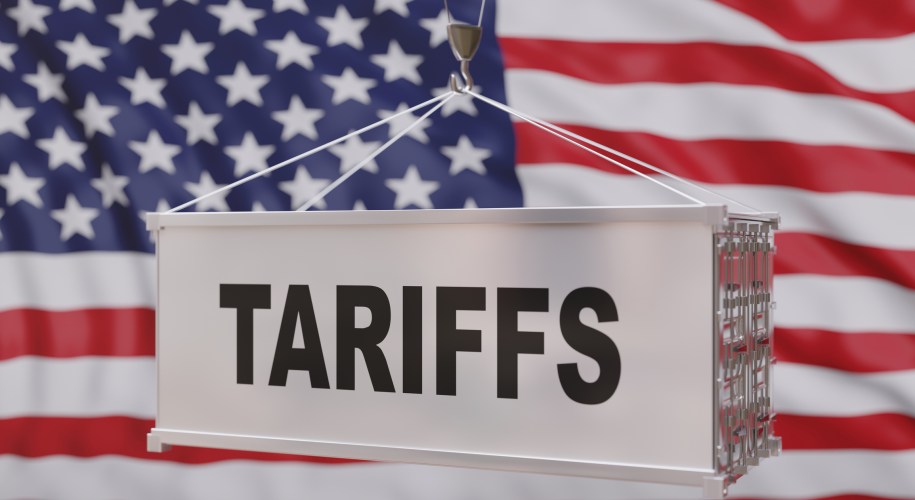
On April 18th, President Trump issued an Executive Order (“EO” or “Order”) focused on the Buy American laws and regulations. See Buy American EO. This EO directs federal government entities to review their procurement rules so that, to the extent legally permitted, preference is given to American made goods. Section 2 specifically states: “[i]t shall be the policy of the executive branch to buy American and hire American”. At the same time, the EO confirms: “[n]othing in this order shall be construed to impair or otherwise affect … existing rights or obligations under international agreements”. So, what does this EO mean to the private sector when it comes to government contracting?
First, it is important to keep in mind the review triggered by this Order applies only to federal procurement. States and other governmental entities have their own rules. They cannot contradict the federal rules, but they can be different.
Next, nothing in this Order has any impact on privately funded projects. The typical example given in the general press is the Keystone Pipeline. Nonetheless, the point is you are only impacted if you are providing or intend to provide goods to a U.S. government entity. Continue reading “Buy American Executive Order”

Where’s The Rest Of My Pay?
Commission-Only Employees Must Be Paid Separately for Rest Periods April 18, 2017 By Brian M. Ragen In Vaquero v. Stoneledge Furniture LLC, a California Court of Appeal recently held that inside sales employees who are paid on a 100% commission basis must be separately compensated for their rest periods. Though inside sales persons are exempt from overtime (provided they earn at least 1.5-times minimum wage … Continue reading Where’s The Rest Of My Pay?
DOJ Defines Compliance
In the span of the last 18 months, the topic of corporate compliance programs has gotten considerable attention from the Department of Justice (“DOJ”) and now finally, DOJ has published significant details about how it is likely to measure the sufficiency of any company’s compliance program.
First, some background. In September 2015, the Yates memo was published, see DOJ Sets Its Sights on Officers and Directors for more details. In short, then Deputy Attorney General Yates reminded the DOJ offices nationwide, if a corporation has violated the law, its level of cooperation will be measured, in large part, by whether it provides “all” the relevant details, which means did the company identify the individuals whose actions or inactions resulted in the violations under consideration, and provide supporting documentation to show what happened and how those individuals were involved. If the company did not do so, it does not get full credit under the Sentencing Guidelines. Continue reading “DOJ Defines Compliance”
Implementation of Executive Order Imposing Temporary Travel and Refugee Ban
By Benjamin Lau and David Rugendorf
On March 6, 2017, President Trump reissued the Executive Order, “Protecting the Nation from Foreign Terrorist Entry into the United States,” with an effective date of March 16, 2017. The previous Executive Order 13769 of January 27, 2017, will be revoked on March 16, 2017, and replaced with this reissued Order.
The new Executive Order bans immigrant and nonimmigrant entries for nationals of six designated countries – Syria, Iran, Libya, Somalia, Sudan, and Yemen – for at least 90 days beginning on March 16, 2017. The new Executive Order specifically removes Iraq from the list of designated countries. Continue reading “Implementation of Executive Order Imposing Temporary Travel and Refugee Ban”
U.S. Immigration to Suspend Premium Processing for All H-1B Petitions
By Stephen Blaker and Howard Shapiro
U.S. Citizenship and Immigration Services (USCIS) announced that as of Monday, April 3, 2017, it will not accept Premium Processing requests for H-1B visa petitions for a temporary period expected to last up to six (6) months. This applies to all H-1B visa petitions, including extensions, amendments, cap-exempt and new employment petitions, such as those to be submitted in the FY18 Bachelor’s and Master’s Caps. USCIS has indicated that the suspension is required to eliminate the backlog on long-pending H-1B visa petitions. Starting on April 3, 2017, USCIS will reject any H-1B visa petition that is filed with a Form I-907 and one (1) combined check for the I-129 filing fees and the I-907 filing fee. Continue reading “U.S. Immigration to Suspend Premium Processing for All H-1B Petitions”
Data Breaches: An Employer’s Duty to Protect Employees’ Personal Information
By Aaron Wais
It is tax season, which means that criminals are busy trying to steal people’s tax information (e.g., names, addresses, social security numbers, income information), which they can use to file fraudulent tax returns and steal tax refunds.
As an employer, you likely maintain your employees’ tax information and, thus, are a target. Indeed, criminals regularly target employers and hack their databases or pose as company executives and send a phishing email asking for all employees’ W-2s for accounting purposes.
As such, it is important to understand your duty to protect your employees’ personal information, as well as potential liability for failing to do so. Most states, including California, make clear that employers have a legal duty to protect their employees’ personal information. These courts also make clear that whether an employer has legally compliant, written policies for protecting private information and responding to data breaches will heavily inform whether and the extent of an employer’s liability for a data breach.
Continue reading “Data Breaches: An Employer’s Duty to Protect Employees’ Personal Information”
Is the Border Tax Crossing the Line?
By Susan Kohn Ross and Jeffrey D. Davine
It is far too early to discern the extent of any change to the relationship between the U.S. and Mexico in the face of the oft-repeated insistence of the Trump campaign to “renegotiate” NAFTA, a promise that was reiterated once Mr. Trump was sworn into office. Following a prickly meeting last month between President Trump and Mexican President Enrique Peña Nieto, accounts from Mexico report the government as having started consultations with its business community, a process described as taking 90 days. The results of those consultations and how they might impact any further discussions with the U.S. remain to be seen. Similarly, President Trump and Canadian Prime Minister Justin Trudeau also met last month, but under somewhat more cordial circumstances. Again, next steps with Canada remain an open question. However, the overarching theme is the oft-repeated promise from the Trump Administration that a border tax will be imposed. While nothing concrete has been proposed to date, how such a border tax might work has understandably caused varying levels of concern among American companies. Given there is nothing concrete to examine, in this Alert, we seek to provide a brief explanation of the concepts being bandied about. Continue reading “Is the Border Tax Crossing the Line?”
Understanding UPMIFA: Delegation of Management and Investment of Endowment Funds
The Uniform Prudent Management of Institutional Funds Act (UPMIFA or the Act) was adopted in 2006 by the National Conference of Commissioners on Uniform State Laws, as the successor to the Uniform Management of Institutional Funds Act (UMIFA), and has (on 1/1/2017) been enacted in every state except Pennsylvania. UPMIFA provides guidance and authority to charitable organizations concerning the management and investment of charitable funds and for endowment spending.
A prior post focused on UPMIFA rules for endowments held by charitable organizations, including standards for determining the annual spending from those funds, while this post will address UPMIFA rules for the delegation of management and investment functions.
Continue reading “Understanding UPMIFA: Delegation of Management and Investment of Endowment Funds”
President Trump’s Executive Order Prohibiting Entry of Certain Individuals to the United States
By David Rugendorf and Benjamin Lau
On January 27, 2017, President Trump signed an Executive Order that provided the following:
- Suspends nonimmigrants (persons coming temporarily to the United States) from designated countries from entry to the United States for a period of up to ninety (90) days from the date of the order (January 27, 2017). At this time, the designated countries are Iran, Iraq, Libya, Somalia, Sudan, Syria, and Yemen. Additional countries may be added. This prohibition does not apply to foreign nationals traveling on diplomatic visas, NATO visas, and United Nations visas. It is unclear if the Executive Order applies only to (1) individuals who hold passports from the designated countries, or if it also applies to (2) foreign nationals who were born in the designated countries, but who are citizens of other, non-designated countries or who are dual nationals, or (3) whose parents were born or hold citizenship from the designated countries. However, according to the Wall Street Journal, the State Department will announce that dual nationals are subject to the ban. For example, a dual national of Iraq and the United Kingdom would be denied entry, even if the dual national travels on a UK passport.
Data Breaches: An Employer’s Duty to Protect Employees’ Personal Information
By Aaron Wais
Recently, there has been much discussion about the Superior Court of Pennsylvania’s ruling in Dittman v. UPMC, which affirmed a lower court’s order dismissing an employee class action against their employer over a data breach. While this was a significant victory for employers, non-Pennsylvania employers should temper their enthusiasm. As one recent federal court decision in California makes clear, the reasoning of Dittman may not extend far beyond, if at all, the borders of Pennsylvania. Moreover, regardless of their outcomes, both cases also reinforce the need for employers to maintain legally compliant, written policies for safeguarding private information and responding to data breaches.
In Dittman, a data breach resulted in the theft of the personal information (e.g., names, birth dates, social security numbers, banking information) of approximately 62,000 UMPC current and former employees. The information was used to file fraudulent tax returns and steal tax refunds from certain employees.
Continue reading “Data Breaches: An Employer’s Duty to Protect Employees’ Personal Information”

