




NLRB General Counsel Issues Pro-Employer Guidance Regarding Workplace Rules
By Erica Parks
On June 6, the National Labor Relations Board’s (NLRB) Office of the General Counsel issued Memorandum 18-04, titled “Guidance on Handbook Rules Post-Boeing.” In it, the NLRB’s General Counsel (GC), provided guidance to the NLRB’s regional offices regarding how to analyze the legality of common employer policies in light of the NLRB’s decision in The Boeing Company, 365 NLRB No. 154 (December 14, 2017). The Boeing decision and the GC’s memo represent a pro-employer shift away from the NLRB’s decidedly more pro-employee positions during the Obama administration.
Continue reading “NLRB General Counsel Issues Pro-Employer Guidance Regarding Workplace Rules”

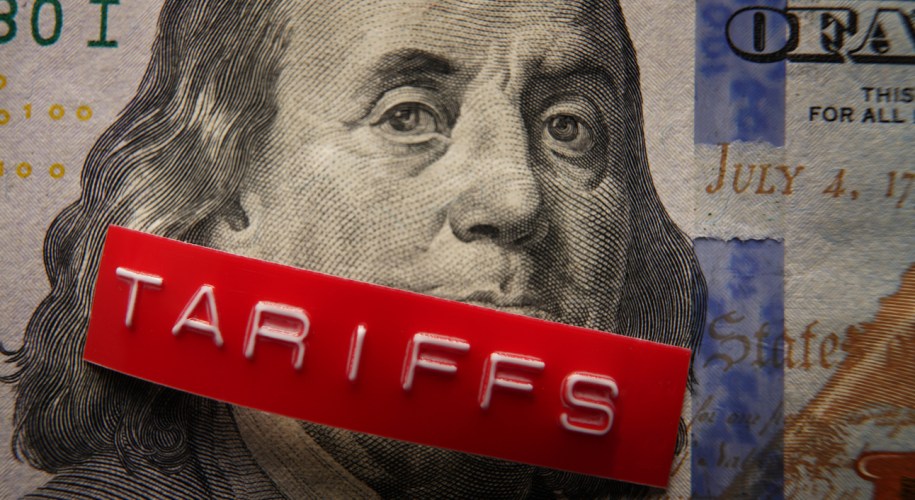
To Tariff or Not to Tariff – That Is The Question!
 By
By In the current tit for tat environment that overhangs international trade, below is an update regarding the 232 tariffs on steel and aluminum, the 301 tariffs related to China’s intellectual property rights and other business practices, and the 232 tariffs threatened on automobiles and parts.
Steel and Aluminum Tariffs:
As everyone by now knows, effective March 23, 2018, the U.S. imposed a 25% tariff on selected steel products and a 10% tariff on selected aluminum products. The basis for this action was a finding by the Dept. of Commerce that foreign competition had essentially undermined U.S. steel and aluminum production capabilities and so triggered national security concerns. In this context national security equates to economic security. The shorthand reference in this context is 232, the section of the law -The Trade Expansion Act of 1962 – under which the Administration acted. Continue reading “To Tariff or Not to Tariff – That Is The Question!”
California Court of Appeal Provides New Guidance on Meaning of “To Employ” Workers
 By
By Recently, in Curry v. Equilon Enterprises LLC, the California Court of Appeal ruled that a wage and hour class action against Shell Oil could not proceed because the service station manager bringing the suit was not a Shell employee. Rather, the manager was employed by ARS, the company that contracted with Shell to operate the station.
Similar to a franchisor-franchisee relationship, ARS had a contract with Shell to operate multiple gas stations. The plaintiff managed two locations. She was hired by ARS, trained by ARS employees, reported to ARS employees, and supervised ARS employees. ARS paid plaintiff and made all disciplinary and promotional decisions regarding her employment. Plaintiff brought a class-action suit against ARS and Shell, claiming she and other managers were misclassified as exempt employees, denied overtime pay and denied meal and rest breaks. The plaintiff also claimed that ARS and Shell were joint employers. Continue reading “California Court of Appeal Provides New Guidance on Meaning of “To Employ” Workers”
25% Tariff Imposed on Chinese Goods

The U.S. Trade Representative (USTR) today issued two lists of products on which the U.S. seeks to impose tariffs on goods made in China at a 25% rate. The lists together cover 1,102 tariff lines valued at approximately $50 billion. According to the USTR’s release, the list of products settled on was intended to focus on “products from industrial sectors that contribute to or benefit from the ‘Made in China 2025’ industrial policy,” and include aerospace, information and communications technology, robotics, industrial machinery, new materials and automobiles. Cellular telephones and televisions are not included. Continue reading “25% Tariff Imposed on Chinese Goods”
California Courts of Appeal Pave the Way for More PAGA Claims
By Brett Thomas
The California Court of Appeal recently issued two emplo yee-friendly rulings regarding the California Private Attorneys General Act (PAGA), which further expand PAGA’s reach. PAGA is part of the California Labor Code and authorizes individuals to bring representative actions against employers to recover civil penalties for violations of the California Labor Code.
In the first, Huff v. Securitas Security Services USA, Inc., a California Court of Appeal addressed the issue of whether a plaintiff who brings a PAGA representative action may seek penalties not only for the Labor Code violation that affected him or her, but also for different Labor Code violations that affected other employees. The Court held that PAGA allows a plaintiff to pursue penalties for all the Labor Code violations committed by that employer that affected any employee, provided that the plaintiff must have been affected by at least one Labor Code violation. In other words, a plaintiff who brings a representative action under PAGA may seek penalties for violations that he or she did not even suffer. Continue reading “California Courts of Appeal Pave the Way for More PAGA Claims”
New Federal Act Amending Dodd-Frank Also Seeks to Help Startups

By Mark Hiraide & David Gordon
In late May, President Trump signed the Economic Growth, Regulatory Relief and Consumer Protection Act. Although the president and many Republican members of Congress had threatened to repeal and replace Dodd-Frank, the new law’s actual changes are relatively minor. The new law rolls back some of the post-financial crisis legislation enacted in 2010, particularly for smaller community banks and credit unions. But it largely leaves intact the core framework of Dodd-Frank.
Less publicized but worthy of attention is the new law’s Title V—Encouraging Capital Formation, which amends the Securities Act of 1933 and Investment Company Act of 1940 with regard to early stage companies. Like the amendment to Dodd-Frank, the new law’s amendments to the federal securities laws are modest. Continue reading “New Federal Act Amending Dodd-Frank Also Seeks to Help Startups”
232 Auto Investigation Timeline Published
 By
By The Federal Register notice advising the timeline which applies to the Administration’s 232 investigation regarding automobiles and parts was published on May 30, 2018. The relevant time frame requires that written comments are due by June 22, 2018 and rebuttal comments by July 6, 2018. A public hearing will be held on July 19 and 20, 2018. All comments should be filed through www.regulations.gov referring to Docket Number DOC-2018-0002.
In particular, Commerce wants information about:
- The quantity and nature of imports of automobiles, including cars, SUVs, vans and light trucks, and automotive parts and other circumstances related to the importation of automobiles and automotive parts;
- Domestic production needed for projected national defense requirements;
- Domestic production and productive capacity needed for automobiles and automotive parts to meet projected national defense requirements;
- The existing and anticipated availability of human resources, products, raw materials, production equipment, and facilities to produce automobiles and automotive parts;
- The growth requirements of the automobiles and automotive parts industry to meet national defense requirements and/or requirements to assure such growth, particularly with respect to investment and research and development;
- The impact of foreign competition on the economic welfare of the U.S. automobiles and automotive parts industry;
- The displacement of any domestic automobiles and automotive parts causing substantial unemployment, decrease in the revenues of government, loss of investment or specialized skills and productive capacity, or other serious effects;
- Relevant factors that are causing or will cause a weakening of our national economy;
- The extent to which innovation in new automotive technologies is necessary to meet projected national defense requirements;
- Whether and, if so, how the analysis of the above factors changes when U.S. production by majority U.S.-owned firms is considered separately from U.S. production by majority foreign-owned firms; and
- Any other relevant factors. Continue reading “232 Auto Investigation Timeline Published”
Which Way Is Up?
 By
By Living true to the times, it is nearly impossible to find predictability in current events. That fact makes it quite challenging for businesses, and we have recent events adding to the confusion.
One notable example is that on June 1, the suspension of the 232 tariffs on steel (25%) and aluminum (10%) expire on the relevant goods from Australia, Argentina, Brazil, Canada, Mexico and the EU member countries: Austria, Belgium, Bulgaria, Croatia, Cyprus, Czech Republic, Denmark, Estonia, Finland, France, Germany, Greece, Hungary, Ireland, Italy, Latvia, Lithuania, Luxembourg, Malta, Netherlands, Poland, Portugal, Romania, Slovakia, Slovenia, Spain, Sweden, and United Kingdom. Last reports indicate that negotiations with Australia continue, while the NAFTA renegotiations with Canada and Mexico seem mired in the automobile domestic content requirement. Continue reading “Which Way Is Up?”
U.S. Supreme Court Rules That Class Action Waivers in Employment Arbitration Agreements Are Enforceable
By Stephen Rossi Last week, in an important win for employers, the U.S. Supreme Court resolved a circuit-split on whether class action waivers in employment arbitration agreements are enforceable under the Federal Arbitration Act (FAA), holding that they are. The Court decided three cases, Epic Systems Corp. v. Lewis, Ernst & Young LLP v. Morris, and National Labor Relations Board v. Murphy Oil USA, Inc., … Continue reading U.S. Supreme Court Rules That Class Action Waivers in Employment Arbitration Agreements Are Enforceable
New York City & State Implement Stronger Protections Against Workplace Harassment

As states begin to focus heightened attention on sexual harassment in the workplace in the wake of the #MeToo movement, New York State (“NY State”) and New York City (“NYC”) have implemented stronger protections for employees against workplace harassment. The new requirements, which have been passed into law in NY State and NYC, will impact employers’ training, policies & procedures, and employment agreements for New York employees.
New York State: Continue reading “New York City & State Implement Stronger Protections Against Workplace Harassment”
 MSK Blog