Written by Jeremy Mittman and Nicholas Baltaxe California Code of Civil Procedure section 1281.98 establishes that employers who draft and maintain arbitration agreements are responsible for paying fees and costs to an arbitrator, and must do so “within 30 days after the due date,” which is the date of the receipt of the invoice. See Cal. Code. Civ. Proc. § 1281.98, subds. (a)(1-2). … Continue reading California Supreme Court Waters Down—But Does Not Extinguish—Harsh Arbitration Fee Law
Written by Deeba Fahami On December 28, 2022, the Biden administration announced new COVID-19 restrictions for travelers from China, citing mounting concerns of the ongoing COVID-19 surges and the lack of adequate data being reported from the People’s Republic of China (China). These restrictions will affect all air passengers two years and older boarding flights to the United States originating from China, Hong Kong, and … Continue reading U.S. to Impose New COVID-19 Restrictions for Air Travelers from China
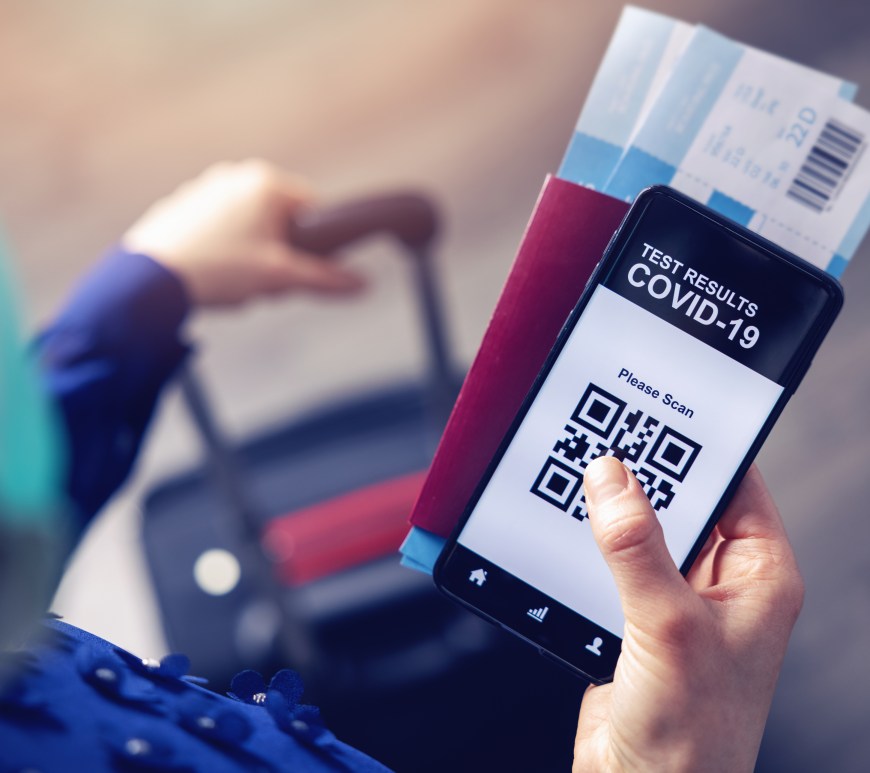
Written by David S. Rugendorf Yesterday, October 25, 2021, the White House issued its long-awaited vaccination and testing requirements for noncitizen/nonpermanent resident air travelers to the United States. The new requirements, which will take effect at 12:01 a.m. on November 8, 2021, replace the previous travel restrictions – no longer will travelers physically present in certain specified geographic regions (China, UK, Ireland, Europe (Schengen countries), … Continue reading White House Announces New COVID-19 Vaccination and Testing Requirements for Air Travelers to US
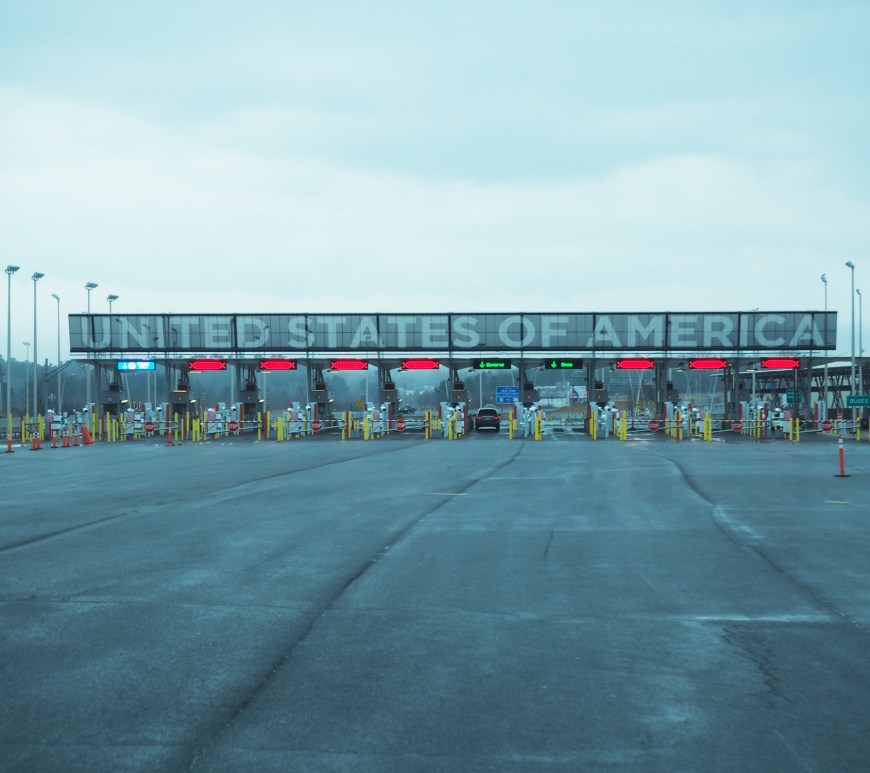
The U.S. is working closely with Mexico and Canada to ensure North America has a coordinated approach to combating the pandemic caused by COVID-19, and mitigating any further spread. The United States and Canada have agreed to restrict travel at the land border to essential travel only (details regarding those travel restrictions can be found here and here). In a similar fashion, the United States and Mexico are finalizing an agreement that will facilitate only essential travel at the U.S. southern border. The three countries are maintaining cross-border activities that support health security, commerce, supply security, trade, and other essential activities, while taking prudent steps to protect citizens and to limit spread of the virus. The stated goal of these efforts is to help save lives. As such, these restrictions are in place indefinitely. Continue reading “North America, Bordered Up”
Our lives have changed almost overnight, and the unimaginable has become the new normal. We find ourselves, our families and our workplaces in an unprecedented and ever evolving situation, with new government directives and restrictions appearing on an almost daily basis. With that in mind, we have a few general points to share with our clients and friends:
RECONSIDER TRAVEL PLANS – This should be obvious. Government travel restrictions are in place prohibiting entry into the United States of individuals who have recently been present in China and Europe (including the United Kingdom). Exceptions are currently being made for US citizens, permanent residents (“green card” holders) and their immediate families. Entries across our land borders are now severely curtailed. We do not expect the situation to return to normal any time soon – further restrictions may be imposed. Appointments to obtain visas at US embassies and consulates all over the world have been cancelled, or face lengthy postponements. Applicants should monitor their e-mails for notifications regarding cancellations and postponements. US airports have seen delays in immigration processing and crowding which have made social distancing impossible. Continue reading “Don’t Get Stuck With COVID-19”
Exceptions: The travel restriction does not apply to US Citizens, legal permanent residents (green card holders), spouses of US Citizens or legal permanent residents, unmarried children under the age of 21 of US Citizens or legal permanent residents, parents or legal guardians of US Citizens or legal permanent residents who are unmarried and under the age of 21, or members of the US Armed Forces and spouses and children of members of the US Armed Forces. Additional less common immigration statuses, such as individuals traveling on diplomatic visas, United Nation visas, or C-1/D crewmember visas, are also excluded from the travel restriction. Continue reading “Novel Coronavirus European Travel Ban (Effective March 13, 2020)”
New York residents may no longer be able to enroll (or re-enroll) in Global Entry and other Trusted Traveler Programs, according to recent action by the Department of Homeland Security (“DHS”).
On February 5, 2020, Acting Homeland Security Secretary Chad Wolf announced DHS was suspending enrollment in Global Entry, NEXUS, SENTRI, and FAST for all New York state residents. This announcement does not affect residents of other U.S. states and jurisdictions who may continue to use, enroll or re-enroll in these programs. No information was provided regarding how long the suspension would be in effect, although the way the DHS letter to New York state officials was worded makes it seems further discussions between DHS and those officials may be possible. The stated reason for the restriction is New York’s denial of access to DHS of its Department of Motor Vehicle data for immigration enforcement and criminal history/involvement purposes. An open question remains as to whether grounds exist to bring court action or some other form of legal challenge given DHS invoking law enforcement considerations as the basis for its actions. Continue reading “New Travel Restrictions for New Yorkers”
Earlier this month, MSK attorneys David Rugendorf and Frida Glucoft published an Alert summarizing the latest directive issued by Customs and Border Protection (CBP) regarding the search of electronic devices. A copy of their original article can be found here – Hold That Call International Travelers. Given the increasing likelihood of any traveler’s electronic devices being subjected to a search, whether arriving or departing the U.S. by air, ocean or land, these recent changes warrant a deeper dive.
First, for those who want to read the actual document, it is CBP Directive 3340-049A. As the earlier Alert noted, CBP has the broad rights to search any individuals, luggage, and cargo entering and leaving the U.S. Searches of cargo are governed by other laws and regulations. This directive deals only with arriving and departing travelers and their devices. Continue reading “Border Searches of Electronic Devices”
In the September 18, 2017 Federal Register notice (see 82 FR 43556) , U.S. Citizenship and Immigration made clear it will now routinely require those applying to enter the U.S. to provide social media handles. As such, the obvious starting point for these tips must be a reminder that Customs and Border Protection (“CBP”) officers may require arriving travelers to provide the unlock code to their electronic devices and user names/passwords to gain access to programs, including social media accounts, so make sure all your programs are closed when you cross the border! The contents on your devices can be examined, and that is true whether or not you are a U.S. citizen, and regardless of your profession. If you are selected for such an inspection, you can expect this two page summary may be handed to you.
The national security concerns of protecting the homeland allow CBP officers to inspect passengers and their belongings without meeting the Fourth Amendment protections against unreasonable search and seizure. A CBP officer is not required to articulate why he or she directs you to secondary or why you or a particular device is of interest. Continue reading “Tips for Traveling with Electronic Devices”








 MSK Blog