When President Trump announced the 25% steel and 10% aluminum tariffs on March 8, 2018, he instructed the Secretary of Commerce to issue regulations explaining how American companies could seek exclusions from those tariffs no later than March 19, 2018, and that deadline has been met. These new regulations can be found here.
Before we discuss the new regulations, we should start with the data Customs and Border Protection (CBP) released with its programming updates to implement these safeguard tariffs. Continue reading “New Tariffs: Definition & Exclusion”
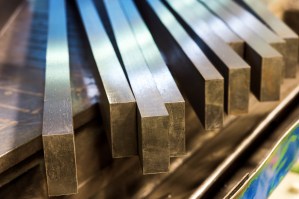
Earlier today, March 8, 2018, President Trump signed two Presidential Proclamations, one dealing with additional tariffs on steel and the other with additional tariffs on aluminum. As has been widely reported in the general press, those rates are 25% on steel and 10% on aluminum. The only countries exempted are Canada and Mexico.
Steel articles are defined as those which are classified under HTSUS 7206.10 through 7216.50 (including ingots, bars, rods and angles), 7216.99 through 7301.10 (including bars, rods, wire, ingots, and sheet piling), 7302.10 (rails), 7302.40 through 7302.90 (including plates and sleepers), and 7304.10 through 7306.90 (including tubes, pipes and hollow profiles). Aluminum products are defined as unwrought aluminum (HTS 7601); aluminum bars, rods, and profiles (HTS 7604); aluminum wire (HTS 7605); aluminum plate, sheet, strip and foil (flat rolled products) (HTS 7606 and 7606); aluminum tubes and pipes and tube and pipe fittings (HTS 7608 and 7609); and aluminum castings and forgings (HTS 7616.99.5160 and 7616.99.51.70). Continue reading “Clanging: Here Come Those New Steel and Aluminum Tariffs!”
Earlier today, President Trump announced his intention to adopt the recommendations of the Dept. of Commerce and impose tariffs on imports of steel and aluminum. The formal signing is said to be taking place “next week.” President Trump has stated those tariffs will be 25% on foreign-made steel and 10% on foreign-made aluminum. Hopefully when the final document is signed and released, it will become clear how long these tariffs will be in place and whether they will be accompanied by any other measures, such as quotas.
Commerce’s original steel recommendations were: (i) a 24% tariff on all steel imports; or (ii) a 53% tariff on steel imports from Brazil, China, Costa Rica, Egypt, India, Malaysia, South Korea, Russia, South Africa, Thailand, Turkey and Vietnam; which (iii) could include a quota from all other countries equal to their 2017 level of imports; or (iv) no tariffs, but a quota on all steel products from all countries equal to 63% of their 2017 import levels. Continue reading “Steel & Aluminum: Tough Tariffs, Tough Road Ahead?”
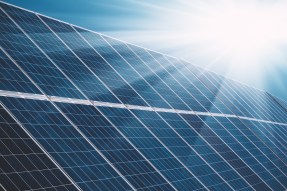
Yesterday, January 22, 2018, U.S. Trade Representative (USTR) Robert Lighthizer announced the imposition of safeguard tariffs on solar cells and modules. Much has been said in the general press about this case, but only now is the key point starting to register, and is something international traders immediately thought about – is President Trump starting a new trade war with China?
By way of a quick summary, after seeking relief through the antidumping and countervailing duty laws and not getting the desired market relief, Suniva, later joined by SolarWorld, invoked Section 201 of the Trade Act of 1974. The appropriate petition was brought, the International Trade Commission (ITC) conducted the required proceedings, found detrimental harm, and made recommendations to the President. While disagreement among the Commissioners was acknowledged, most favored an increase in duties, and President Trump agreed. Safeguard tariffs have been imposed for four years – the maximum length of time permitted – on a per year basis – 30%, 25%, 20% and 15%. The USTR announcement also states the first 2.5 gigawatts of imported cells are excluded from the safeguard tariff. A critical point here is these safeguards are being imposed on both the cells and the modules, regardless of where made, as would be expected from a global safeguard, but the solar cells are overwhelmingly made in China. Continue reading “New Tariffs: Trade War Washing Ashore?”
Two actions took place at the end of last week which heighten concerns that a trade war with China could be ever more likely. First, there was the preliminary decision in the solar panels 201 case. Then, we had the additional sanctions imposed by the President on North Korea.
The 201 solar panel case began when Suniva Inc. and SolarWorld Americas Inc. filed their cases before the International Trade Commission (“ITC”) in April and May 2017. These actions are, of course, in addition to the antidumping and countervailing duties currently being imposed on these products from China. Continue reading “Solar Flare-up with China”
Today, President Trump signed into law H.R. 3364, the “Countering America’s Adversaries Through Sanctions Act”. The general press is covering this story by writing about Russia’s initial retaliation taking the form of cutting the staff authorized at the U.S. embassy in Moscow and the seizure of certain U.S. diplomatic property within Russia. When it comes to international traders, the impact on dealing with Russia, but also Iran and North Korea, takes the form of enhanced compliance efforts.
The new law will provide more in the way of direct and indirect sanctions. A direct sanction arises because the person (or company/entity) is listed by one of the relevant U.S. agencies on the appropriate blocked persons list. A secondary sanction arises because a blocked person (individual or entity) owns or has a controlling ownership in a company not otherwise listed as blocked. Of course, additional headaches exist when there is U.S. content in the good being sold, so the impact is on both exports and imports. Continue reading “Trading with China – New Reasons to Be Wary!”





 MSK Blog