PAGA Representative Claims Can Still Be Litigated In Court Despite Robust Arbitration Agreements

Written by Gary McLaughlin and Kyle DeCamp On July 17, 2023, the California Supreme Court broke from the United States Supreme Court by deciding in Adolph v. Uber Technologies that a plaintiff in a Private Attorneys General Act (“PAGA”) action whose own individual claims are compelled to arbitration nonetheless retains standing to pursue representative PAGA claims in court. In Adolph, the plaintiff, Erik Adolph, worked … Continue reading PAGA Representative Claims Can Still Be Litigated In Court Despite Robust Arbitration Agreements

Rapper’s (un)Delight:  Ninth Circuit Holds Blaring Rap Music in the Workplace Can Support Sex Harassment Claim

Written by Jeremy Mittman In a recent decision, the Ninth Circuit Court of Appeals addressed the issue of music-as-harassment in the workplace. The court recognized the impact of “sexually graphic, violently misogynistic music” in creating a hostile work environment, ruling that it could be grounds for a Title VII claim. The court’s ruling emphasizes the importance of addressing offensive conduct and provides guidance for employers … Continue reading Rapper’s (un)Delight:  Ninth Circuit Holds Blaring Rap Music in the Workplace Can Support Sex Harassment Claim

The Employer Strikes Back: SCOTUS Holds Tort Claims Against Union for Strikers’ Intentional Destruction of Property Are Not Preempted by the NLRA

Written by Jonathan Turner and William S. Lisa The Supreme Court’s June 1, 2023 decision in Glacier Northwest, Inc. v. International Brotherhood of Teamsters may provide employers with an additional avenue of recourse when dealing with strikers engaging in unlawful behavior not specifically prohibited by the National Labor Relations Act (the “NLRA” or the “Act”).  In a decision joined by five Justices, and a judgment … Continue reading The Employer Strikes Back: SCOTUS Holds Tort Claims Against Union for Strikers’ Intentional Destruction of Property Are Not Preempted by the NLRA

Florida to Require E-Verify for Employers With 25 or More Employees in the State

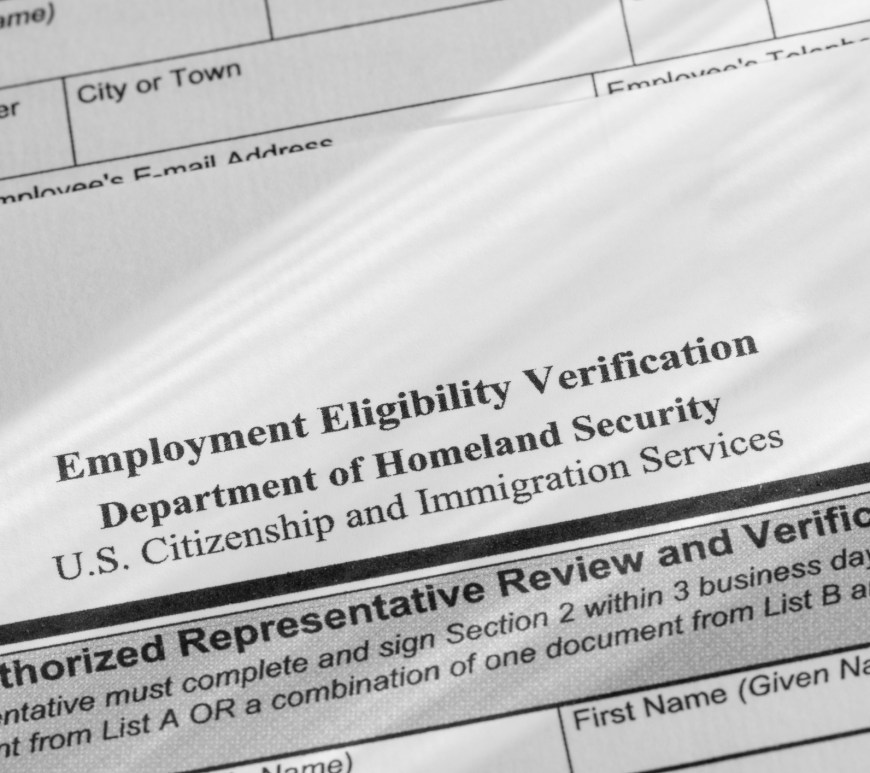
Written by Alina Charniauskaya-Mehta and Jason A. Farkas Beginning July 1, 2023, employers with 25 or more employees in Florida will be required to use E-Verify to confirm the employment eligibility of new hires, pursuant to Florida Senate Bill (SB) 1718, the new law signed by Governor Ron DeSantis on May 10. Independent contractors – as defined in federal laws or regulations – do not … Continue reading Florida to Require E-Verify for Employers With 25 or More Employees in the State

The Fair Work Week Ordinance: What LA Retailers Need to Know

Written by Jeremy Mittman and Thea Rogers On April 1st, the Los Angeles City Fair Work Week Ordinance (“FWWO”), an employee-friendly law affecting mid-size and large retail businesses, takes effect.  The FWWO, which was passed by the Los Angeles City Council during the final days of 2022, is generally applicable to retailers (with over 300 employees globally) with nonexempt employees who work at least two … Continue reading The Fair Work Week Ordinance: What LA Retailers Need to Know

Are highly compensated executives still entitled to overtime pay under the FLSA? 

Yes, if the employer is not careful when structuring the pay arrangements. Written by Jonathan Turner and Gabriel Hemphill Employers under the Fair Labor Standards Act (“FLSA”) need to be aware of how to structure “salary” compensation arrangements with persons they are employing in an “executive” capacity to manage all or part of the employer’s business; otherwise, employers may find themselves subject to claims that … Continue reading Are highly compensated executives still entitled to overtime pay under the FLSA? 

NLRB Calls Into Question Confidentiality and Non-Disparagement Provisions in Agreements with Employees

Written by Jeremy Mittman, Jonathan Turner and Kyle DeCamp On February 21, 2023, the National Labor Relations Board (the NLRB) issued a decision in McLaren Macomb, 372 NLRB No. 58 (2023), that will impact employers in both unionized and non-unionized workplaces.  The decision holds that employers violate the National Labor Relations Act (the NLRA) when they present employees with severance agreements that contain overly broad … Continue reading NLRB Calls Into Question Confidentiality and Non-Disparagement Provisions in Agreements with Employees

New Federal Workplace Protections for Pregnant and Nursing Employees, Reminiscent of…California Law?!

Written by Christie Del Rey-Cone and Thea Rogers It may surprise California-centric employers to learn that up until the final days of 2022, Federal law seldom required employers to provide reasonable accommodations to individuals with known pregnancy-related limitations, and millions of nursing mothers had no guaranteed right to lactation breaks during working hours.  On December 29, 2022, President Biden signed two laws that finally changed … Continue reading New Federal Workplace Protections for Pregnant and Nursing Employees, Reminiscent of…California Law?!

Mandatory Arbitration Is Off The Ropes in California!

Reversing Itself, Ninth Circuit Invalidates California’s Ban on Mandatory Employment Arbitration Agreements Written by Stephen Rossi In 2018, California passed a controversial law called AB-51 (now Labor Code Section 432.6) that prohibited California employers from requiring arbitration agreements as a condition of employment – on pain of jail time and civil penalties.  AB-51 was immediately challenged and preliminarily enjoined under the Federal Arbitration Act (“FAA”), … Continue reading Mandatory Arbitration Is Off The Ropes in California!

Will Non-Compete Clauses Be No-More?

Written by Christie Del Rey-Cone and Eric Engelman The Federal Trade Commission (“FTC”) issued a Notice of Proposed Rulemaking on January 5, 2023 that would prohibit employers from entering into, or enforcing, non-compete clauses with workers. The proposed rule would broadly cover all workers, regardless of whether the worker is an employee or independent contractor, or whether the worker is paid or unpaid. The FTC’s … Continue reading Will Non-Compete Clauses Be No-More?