Tips for Traveling with Electronic Devices

Woman using her mobile phone , city skyline night light background
Photo credit: iStock.com/LDProd

By Susan Kohn Ross

In the September 18, 2017 Federal Register notice (see 82 FR 43556) , U.S. Citizenship and Immigration made clear it will now routinely require those applying to enter the U.S. to provide social media handles. As such, the obvious starting point for these tips must be a reminder that Customs and Border Protection (“CBP”) officers may require arriving travelers to provide the unlock code to their electronic devices and user names/passwords to gain access to programs, including social media accounts, so make sure all your programs are closed when you cross the border! The contents on your devices can be examined, and that is true whether or not you are a U.S. citizen, and regardless of your profession. If you are selected for such an inspection, you can expect this two page summary may be handed to you.

The national security concerns of protecting the homeland allow CBP officers to inspect passengers and their belongings without meeting the Fourth Amendment protections against unreasonable search and seizure.  A CBP officer is not required to articulate why he or she directs you to secondary or why you or a particular device is of interest. Continue reading “Tips for Traveling with Electronic Devices”

Green Card Lottery

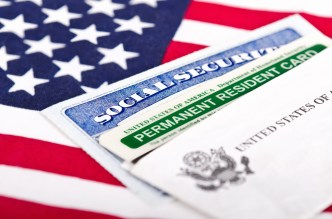
Social Security card and permanent resident on USA flag
Photo credit: iStock.com/leekris

By Jaclyn Granet

The Fiscal Year (FY) 2019 Diversity Lottery registration opens on October 3, 2017 and will remain open until November 7, 2018.

WHAT IS IT?

The Diversity Lottery makes available 50,000 immigrant visas (green cards) through random selection. The immigrant visas made available are for individuals from countries with historically low immigration rates. According to the State Department, the diversity visas (DVs) are “distributed among six geographic regions and no single country may receive more than seven percent of the available DVs in any one year.”

WHO IS ELIGIBLE?

Applicants from the eligible countries must submit an application during the entry period and must have: Continue reading “Green Card Lottery”

The Only Thing Certain is Uncertainty

Detail Of A USA Visa
Photo credit: iStock.com/mrdoomits

By Frida P. Glucoft and David S. Rugendorf 

Workplace immigration law has been the focal point of increased anxiety and uncertainty because of various changes proposed by Executive Order. Discussions have heated up considerably in the offices of human resources professionals and personnel managers, in the break room, around the water cooler, as well as in the news media and on social media. Because the changes have not come in the form of formal regulatory changes through legislation, which require a prescribed notice and comment period (though those may soon be on the way), changes in enforcement priorities and how existing laws are interpreted create an unclear path about who will be impacted and when the new Executive Order priorities will be instituted.

What are these new priorities? At present they are best explained in Executive Order 13788. Continue reading “The Only Thing Certain is Uncertainty”

Lawful Permanent Residence: How Not to Lose It

By Frida GlucoftImmigration Collage l Alert

U.S. Customs and Border Protection Officers at ports of entry to the U.S. routinely question returning lawful permanent residents (“green card” holders) about the length of time spent outside the U.S.A. and the nature of their activities abroad. Generally, an absence from the U.S.A. of six months or longer will result in further inquires and requests for documentation to establish the individual’s intent to retain lawful permanent residence status.

A U.S. “green card” allows the holder to reside in the U.S. as an immigrant as long as the holder’s status does not change. However, that status may be lost if the “green card” holder is deemed to have abandoned his or her U.S. residence or if the individual lacks the requisite ties to the U.S. while living abroad.

The question of whether a “green card” holder has retained his or her status in the U.S. arises when the individual departs from the U.S. for lengthy periods of time usually exceeding one year. The determination of retention of U.S. residence depends upon the circumstances surrounding the individual’s departure and his or her ties to the U.S. Among other factors considered in evaluating retention of U.S. residence are the following: Continue reading “Lawful Permanent Residence: How Not to Lose It”

U.S. Immigration to Suspend Premium Processing for All H-1B Petitions

By Stephen Blaker and Howard Shapiro

U.S. Citizenship and Immigration Services (USCIS) announced that as of Monday, April 3, 2017, it will not accept Premium Processing requests for H-1B visa petitions for a temporary period expected to last up to six (6) months. This applies to all H-1B visa petitions, including extensions, amendments, cap-exempt and new employment petitions, such as those to be submitted in the FY18 Bachelor’s and Master’s Caps. USCIS has indicated that the suspension is required to eliminate the backlog on long-pending H-1B visa petitions. Starting on April 3, 2017, USCIS will reject any H-1B visa petition that is filed with a Form I-907 and one (1) combined check for the I-129 filing fees and the I-907 filing fee. Continue reading “U.S. Immigration to Suspend Premium Processing for All H-1B Petitions”

President Trump’s Executive Order Prohibiting Entry of Certain Individuals to the United States

By David Rugendorf and Benjamin Lau

On January 27, 2017, President Trump signed an Executive Order that provided the following:

  • Suspends nonimmigrants (persons coming temporarily to the United States) from designated countries from entry to the United States for a period of up to ninety (90) days from the date of the order (January 27, 2017). At this time, the designated countries are Iran, Iraq, Libya, Somalia, Sudan, Syria, and Yemen.  Additional countries may be added.  This prohibition does not apply to foreign nationals traveling on diplomatic visas, NATO visas, and United Nations visas.  It is unclear if the Executive Order applies only to (1) individuals who hold passports from the designated countries, or if it also applies to (2) foreign nationals who were born in the designated countries, but who are citizens of other, non-designated countries or who are dual nationals, or (3) whose parents were born or hold citizenship from the designated countries.  However, according to the Wall Street Journal, the State Department will announce that dual nationals are subject to the ban.  For example, a dual national of Iraq and the United Kingdom would be denied entry, even if the dual national travels on a UK passport.

Continue reading “President Trump’s Executive Order Prohibiting Entry of Certain Individuals to the United States”