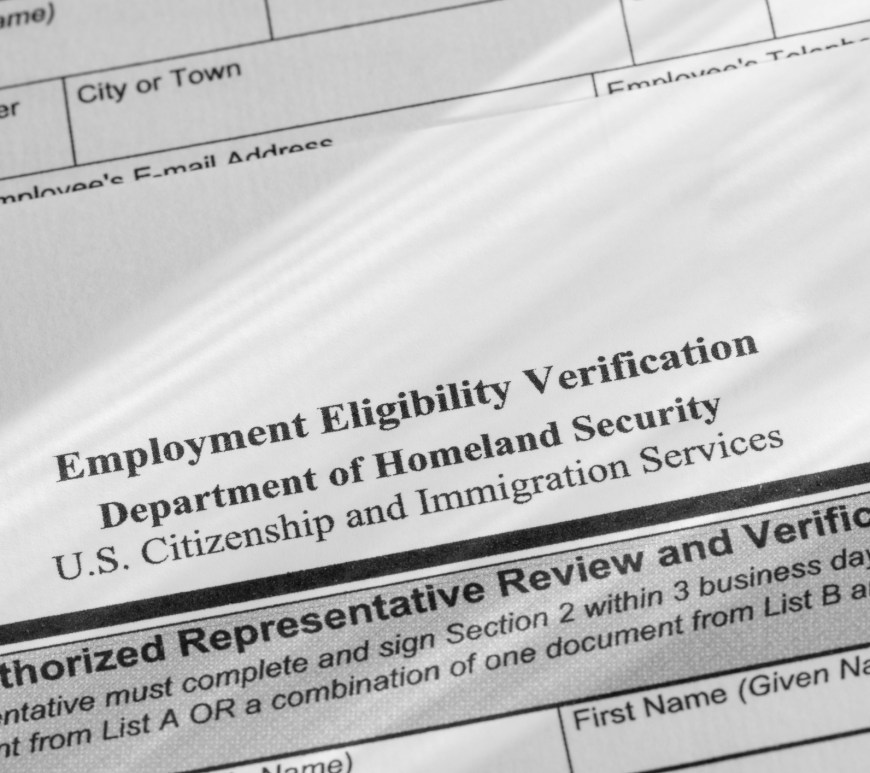
Written by Alina Charniauskaya-Mehta and Jason A. Farkas Beginning July 1, 2023, employers with 25 or more employees in Florida will be required to use E-Verify to confirm the employment eligibility of new hires, pursuant to Florida Senate Bill (SB) 1718, the new law signed by Governor Ron DeSantis on May 10. Independent contractors – as defined in federal laws or regulations – do not … Continue reading Florida to Require E-Verify for Employers With 25 or More Employees in the State
Written by Jeremy Mittman and Shanda Lowe As expected, the first batch of lawsuits challenging COVID-19 vaccine mandates are popping up across the country—a possibility that we noted in an earlier post on this subject. So far, at least two federal lawsuits have been filed based on the fact that the COVID-19 vaccines currently in use are only available under an Emergency Use Authorization (“EUA”) … Continue reading Employers Begin to Grapple with the Risks of Mandatory COVID-19 Vaccination Policies
In this video, MSK attorney Hilary Feybush discusses the most recent update to return to workplace guidance issued by the EEOC, which covers questions relating to an employer’s obligation to provide accommodations to “high risk” employees and other considerations for a safe return to the office. Continue reading MSK Minute: Hilary Feybush Discusses New EEOC Return to Workplace Guidance
President Donald Trump signed the “Families First Coronavirus Response Act,” (H.R. 6201) on March 18, 2020, shortly after the Senate voted to approve the bill. The bill will take effect on April 2, 2020. For those who read our earlier post, the House of Representatives made a number of amendments on March 16, 2020 to the version of the bill it passed two days prior.
On April 23, 2019, Tennessee Governor Bill Lee signed a bill into law extending the Healthy Workplaces Act, Tennessee’s workplace bullying prevention law, to private employers. The law went into effect immediately upon signing. Tennessee’s anti-bullying law encourages employers to adopt policies to address and prevent “abusive conduct” in the workplace. The law defines “abusive conduct” as “acts or omissions that would cause a reasonable person, based on the severity, nature, and frequency of the conduct, to believe that an employee was subject to an abusive work environment.” Continue reading “A Sign of the Times? Tennessee Expands Anti-Bullying Law to Private Employers”
The day after the Ninth Circuit Court of Appeals ruled that the California Supreme Court’s decision in Dynamex Operations West, Inc. v. Superior Court applies retroactively (see here), California’s Division of Labor Standards Enforcement (DLSE) released an opinion letter concluding that Dynamex’s ABC test applies to both IWC Wage Order claims and certain Labor Code provisions that enforce Wage Order requirements. The California Court of Appeals has ruled that Dynamex applies only to claims brought under the IWC Wage Orders (see here) and the DLSE’s recent opinion letter seems to expand what that means.
While California state and federal courts are not bound by DLSE opinion letters (meaning they could reach a different conclusion as to exactly which California Labor Code claims fall under Dynamex), the DLSE’s opinion letter reflects the way that agency will be interpreting Dynamex moving forward. This will impact employers who face DLSE wage claims where employees contend they were improperly classified as independent contractors. Continue reading “The Ever-Expanding Dynamex Decision”
On Thursday, May 2, in Vazquez v. Jan-Pro Franchising International, Inc., a three-judge panel of the Ninth Circuit Court of Appeals held that the California Supreme Court’s ruling in Dynamex Operations West, Inc. v. Superior Court applies retroactively. In Dynamex, the Supreme Court adopted a new standard for determining whether a California worker is an employee or independent contractor under the California Industrial Welfare Commission’s (“IWC”) wage orders. As we have previously discussed (see here, here, and here), Dynamex’s reach continues to grow and the Ninth Circuit’s ruling in Vazquez should be of particular concern to employers, who now face potential liability for their past decisions to classify workers as independent contractors rather than employees under a standard that did not exist at the time. Continue reading “Dynamex Goes Back in Time”








 MSK Blog