In this video, MSK attorneys Susan Kohn Ross and Timothy Carter discuss contact tracing: what it is, what it means for employers and employees, and the impact it may have on your privacy right. If you are interested in learning more broadly about contact tracing or have any questions on this topic, please email Su at skr@msk.com or Tim at tmc@msk.com. Continue reading MSK Minute: Su Ross and Tim Carter Discuss Contact Tracing
While much attention and focus has rightly been placed on the California Consumer Privacy Act and the dramatic expansion of privacy rights for California residents that it heralds, a number of other states have quickly followed suit, working to strengthen their respective data security and privacy laws. Signed into law on July 25, 2019 by Governor Andrew Cuomo, New York enacted the Stop Hacks and Improve Electronic Data Security Act (the “SHIELD Act” or the “Act”). The SHIELD Act amends New York State’s data breach notification law, by broadening existing the state’s data breach notification requirements and requires covered businesses to have “reasonable” data security safeguards. Continue reading “Amidst A Pandemic, New York Quietly Implements Its Enhanced Data Security Law”
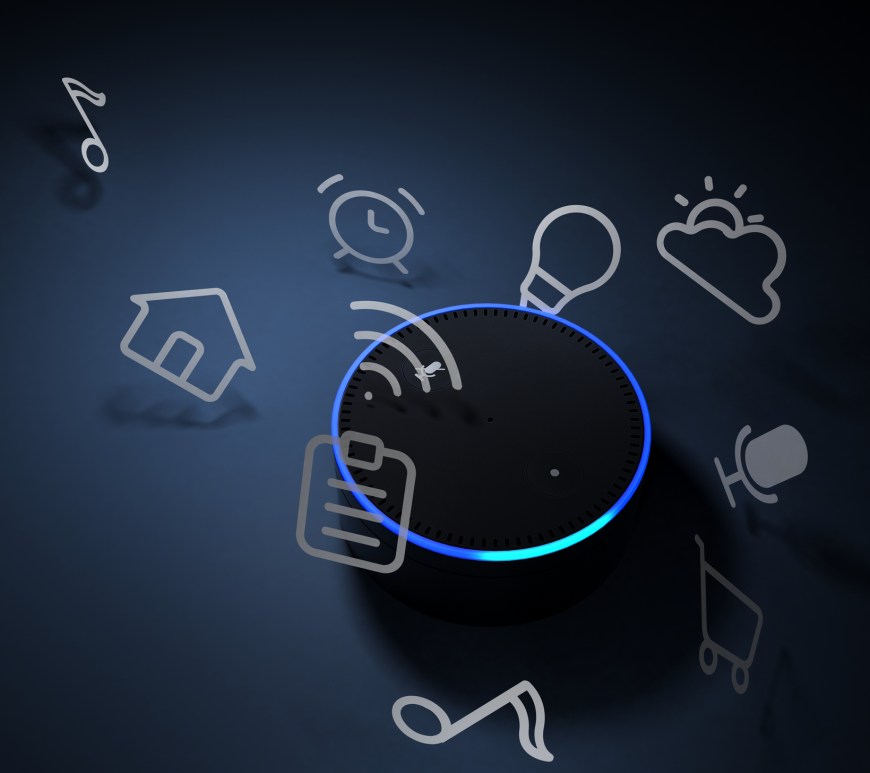
Amazon’s Alexa, Google devices such as Google Assistant and Google Home, Apple’s Siri, and Microsoft’s Cortana are now commonplace in many homes. These devices and other lesser-known counterparts allow users to control nearly everything in their homes with only their voice. That convenience, however, comes at the cost of some degree of privacy. While seldom viewed as presenting a live microphone inside one’s home or office, these otherwise passive listening devices begin recording upon initiation of a verbal cue. While the use (or even presence) of such voice assistants may present privacy concerns when used in consumers’ homes, with millions of people working remotely across the world due to COVID-19, these potential privacy concerns can quickly escalate to a much broader concern, especially for attorneys, who, as we discussed earlier, are bound to maintain confidentiality regarding information concerning the representation of their clients. But this concern extends far beyond “just” attorneys, because so many business dealings involve the exchange of confidential information. What one thinks of as a private or confidential discussion with a business partner is now taking place at home, perhaps with others around, but all too frequently in close proximity to these devices. Continue reading “Privacy Takes Many Forms”
While likely not the first topic that comes to mind amidst a global pandemic, organizations and businesses that now find themselves entirely (or almost entirely) remote would be remiss not to consider the potential data and cybersecurity issues raised by this sudden and unexpected shift to remote work. For much of the country, COVID-19 has resulted in an abrupt shift in the way we work. Even for those businesses that maintained robust work-from-home policies and systems, this shift presents a learning curve. The more traditional data and cybersecurity concerns ever-present in normal business operations are compounded by the difficulties presented by an extensive remote workforce. Preoccupied remote workers can be more susceptible to online threats such as phishing emails or malware and ransomware, thereby “opening the door” and providing unauthorized access to bad actors. The other, often lesser considered concern is accidental disclosure of confidential business information. Continue reading “Careful With The Remote”
As the COVID-19 crisis rapidly evolves, the health and safety of our employees, clients and our communities remain our highest priority. We wanted to share with you what we are doing as a firm. We have instructed attorneys and staff in all of our offices to work remotely (with rare exception for certain critical functions). This is happening seamlessly as part of our business continuity plan. We have been working round-the-clock in counseling clients on today’s mission-critical issues, from employment to immigration to tax, as it relates to the outbreak of COVID-19. Like you, we are constantly monitoring the situation, and we will provide additional updates in the coming days and weeks as appropriate. In the meantime, we want you to know that our thoughts are with you and your families, and we hope that you remain healthy and safe.
In an effort to support you during these uncertain times, we have assembled a firm-wide COVID-19 response team from all of our practice areas. For the coming weeks, and starting today in this alert, we intend to send a consolidated communication alert on a regular basis that touches on breaking news and relevant items that could affect you or your business across a range of topics. If there is anything else that we can do to help you during this challenging time, please do not hesitate in reaching out.
A topic of immediate concern to businesses that has not received a great deal of attention (but should) is cybersecurity. There are unscrupulous people out there who will try to take advantage of the situation! This is especially worrisome with the increased usage of telecommuting to facilitate business continuity.
Within the Dept. of Homeland Security sits the Cybersecurity and Infrastructure Security Agency or CISA which is “responsible for protecting the Nation’s critical infrastructure from physical and cyber threats.” CISA, through its National Cyber Awareness System, released Defending Against COVID-19 Cyber Scams, see here for the full text. In short, beware of emails with malicious attachments and hyperlinks. Also be careful about social media pleas, texts and calls having to do with COVID-19.
On March 11, 2020, the California Attorney General (CA AG) issued additional revisions to the proposed regulations implementing the California Consumer Privacy Act (CCPA). The CA AG published a redline against the earlier proposed regulations highlighting the latest changes. A copy can be found here. The latest modified draft regulations are subject to a public comment period which ends on March 27, 2020, at 5:00 p.m. (PDT). Information about where to submit comments can be found at the end of this Alert.
While many of the latest changes consist of technical corrections or clarifications, there are some significant modifications, all are effective on July 1, 2020. Below, we summarized the key changes: Continue reading “CCPA: More Regulatory Changes Proposed”
The California Consumer Privacy Act (“CCPA”) took effect on January 1, 2020. In October 2019, the California Attorney General (“CA AG”) published proposed regulations. In the lead up to January 1, 2020, the CA AG repeatedly made the point that those subject to the CCPA should plan for compliance with its broad principals by the first of the year, while admitting enforcement would not start until the regulations were final, meaning July 1, 2020. As part of this process, the CA AG advised he did not expect there to be significant changes to the regulations between October and July. However, upon receiving comments to those October proposed regulations, he changed his mind and on February 7, 2020 revised regulations were issued. A subsequent notice on February 10, 2020 corrected the earlier publication, which omitted certain updates.
To be clear, some of the changes were long awaited (such as what the “Do Not Sell My Personal Data” button looks like), while others were unexpected (such as the change to the training requirement by raising the level of records from four million to ten million). This Alert will summarize the key proposed changes. Continue reading “New Revisions to the CCPA”
In Part 1, we summarized the recent legislative changes regarding the California Consumer Privacy Act (“CCPA”). Bearing in mind the CCPA takes effect on January 1, 2020 and the Attorney General is required to issue regulations by July 1, 2020, these regulations both meet that time frame, but also seek to provide much-needed guidance to industry.
Most of the legislative changes focused on narrowing the definition of personal information, clarified the time frame which applies when a consumer demands information the business possesses about him or her, and also confirmed the CCPA applies to businesses, not non-profits or government entities. In this Alert, we summarize the regulations which were recently issued. However, even in the regulatory context, the starting point remains the same. Companies should begin by asking the following questions: Continue reading “California Consumer Privacy Act: Are You Ready? (Part 2)”







 MSK Blog