



Modernizing and Simplifying Disclosure with the FAST Act Mandate

By Blake Baron
Under the FAST Act mandate, the U.S. Securities and Exchange Commission (SEC) voted on October 11, 2017 to propose amendments to Regulation S-K and related rules and forms aimed at modernizing and simplifying the current disclosure requirements for investment companies, public companies, and investment advisers.
What are the Proposed Amendments?
If adopted, the amendments would:
- Revise rules or forms to update, streamline or otherwise improve the Commission’s disclosure framework by eliminating the risk factor examples listed in the disclosure requirement and revising the description of property requirement to emphasize the materiality threshold;
- Update rules to account for developments since their adoption or last amendment by eliminating certain requirements for undertakings in registration statements;
- Simplify disclosure or the disclosure process, including proposed changes to exhibit filing requirements and the related process for confidential treatment requests and changes to Management’s Discussion and Analysis that would allow for flexibility in discussing historical periods; and
- Incorporate technology to improve access to information by requiring data tagging for items on the cover page of certain filings and the use of hyperlinks for information that is incorporated by reference and available on EDGAR.
Continue reading “Modernizing and Simplifying Disclosure with the FAST Act Mandate”

California “Bans the Box”: Pre-Offer Criminal Inquiries Generally Outlawed in the State
 By
By On October 14, 2017, California Governor Jerry Brown signed Assembly Bill 1008 a “Ban the Box” law that significantly restricts an employer’s ability to seek or obtain information about a job applicant’s criminal history. The California law is similar to laws that have been adopted in other jurisdictions, including New York City and the City of Los Angeles. California’s new law amends the California Fair Employment and Housing Act (“FEHA”), adding a new section, Government Code Section 12952, which prohibits all California employers with five or more employees from: Continue reading “California “Bans the Box”: Pre-Offer Criminal Inquiries Generally Outlawed in the State”
California Bans Salary History Inquiries for Job Applicants

On October 12, 2017, California Governor Jerry Brown signed a significant piece of employment legislation that prohibits California employers from asking job applicants about their salary histories. The new law will take effect on January 1, 2018.
Assembly Bill 168, which adds section 432.3 to the California Labor Code, is intended to promote equal pay, particularly between men and women. It prohibits all California employers (including state and local government employers and the state Legislature) from
- Seeking from job applicants, whether “orally or in writing, personally or through an agent,” salary history information (including both pay and benefits); and
- Relying on salary history as a factor in determining whether to offer employment to an applicant or what salary to offer an applicant.
Continue reading “California Bans Salary History Inquiries for Job Applicants”
Tips for Traveling with Electronic Devices

In the September 18, 2017 Federal Register notice (see 82 FR 43556) , U.S. Citizenship and Immigration made clear it will now routinely require those applying to enter the U.S. to provide social media handles. As such, the obvious starting point for these tips must be a reminder that Customs and Border Protection (“CBP”) officers may require arriving travelers to provide the unlock code to their electronic devices and user names/passwords to gain access to programs, including social media accounts, so make sure all your programs are closed when you cross the border! The contents on your devices can be examined, and that is true whether or not you are a U.S. citizen, and regardless of your profession. If you are selected for such an inspection, you can expect this two page summary may be handed to you.
The national security concerns of protecting the homeland allow CBP officers to inspect passengers and their belongings without meeting the Fourth Amendment protections against unreasonable search and seizure. A CBP officer is not required to articulate why he or she directs you to secondary or why you or a particular device is of interest. Continue reading “Tips for Traveling with Electronic Devices”
The White House Framework for Tax Legislation

On September 27, the White House released a document called the “Unified Framework for Fixing Our Broken Tax Code,” containing an outline prepared by the administration plus the senior Republican members of the tax-writing committees of Congress. The Framework is far less detailed than previous proposals for structural tax reform, but is instead described as a “template” which the authors intend for Congress to use to prepare actual legislation. This template calls for new tax rates for individuals and businesses and would create a territorial international tax system. Some key headlines:
Estate Tax. The Framework calls for a repeal of the estate tax. In announcing the tax plan, the President said that repeal would overwhelmingly help farmers and small business owners. However, most farm families are not actually affected by the estate tax, which only applies to estates valued at over $5.49 million. The nonpartisan Tax Policy Center projects that estate tax of $19.95 billion will arise from Americans dying in 2017, of which about $30 million, or 00.15%, will be paid by the estates of farmers and small business owners.
The Framework would also repeal the generation skipping transfer tax. The proposal is silent on the gift tax. Continue reading “The White House Framework for Tax Legislation”
Green Card Lottery
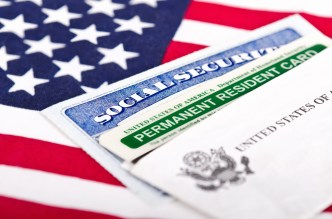
The Fiscal Year (FY) 2019 Diversity Lottery registration opens on October 3, 2017 and will remain open until November 7, 2018.
WHAT IS IT?
The Diversity Lottery makes available 50,000 immigrant visas (green cards) through random selection. The immigrant visas made available are for individuals from countries with historically low immigration rates. According to the State Department, the diversity visas (DVs) are “distributed among six geographic regions and no single country may receive more than seven percent of the available DVs in any one year.”
WHO IS ELIGIBLE?
Applicants from the eligible countries must submit an application during the entry period and must have: Continue reading “Green Card Lottery”
Walking the North Korean Tightrope

On September 21, 2017, President Trump issued an Executive Order (yet to be numbered) (“EO”) imposing additional sanctions on North Korea. It took effect the next day. The general press has quoted Treasury Secretary Mnuchin as stating: “Foreign financial institutions are now on notice that going forward they can choose to do business with the United States or North Korea, but not both.” These latest changes raise the specter for even more caution on the part of companies conducting international business. The question every CFO at every company should ask is – is our due diligence program as good as it needs to be? If not, your funds could get seized and dealing with the Dept. of Justice in these types of cases can be quite challenging. The government often has information the private sector does not possess and, if your due diligence program is not deemed sufficient, you stand little chance of getting those funds released. Given the current climate, you can bet getting funds released related to the North Korea sanctions is going to be even more difficult!
The new Executive Order is broadly worded to include any person who is determined: Continue reading “Walking the North Korean Tightrope”
The Only Thing Certain is Uncertainty

By Frida P. Glucoft and David S. Rugendorf
Workplace immigration law has been the focal point of increased anxiety and uncertainty because of various changes proposed by Executive Order. Discussions have heated up considerably in the offices of human resources professionals and personnel managers, in the break room, around the water cooler, as well as in the news media and on social media. Because the changes have not come in the form of formal regulatory changes through legislation, which require a prescribed notice and comment period (though those may soon be on the way), changes in enforcement priorities and how existing laws are interpreted create an unclear path about who will be impacted and when the new Executive Order priorities will be instituted.
What are these new priorities? At present they are best explained in Executive Order 13788. Continue reading “The Only Thing Certain is Uncertainty”
New Partnership Audit Regime and Partnership M&A Transactions

Background:
Congress has changed the way partnership[1] audits will be conducted in the future. Beginning with tax years starting on or after January 1, 2018, audits will still be done at the partnership level; however unlike current practice where adjustments and additional tax payments are made at the partner level, under the new rules the adjustments and additional tax payments will in many cases now be done at the partnership level with the payments made in the year the tax audit is finalized. The changes were made to make it easier for the IRS to audit partnerships.
The new rules raise a number of unanswered questions in the M&A arena all of which require a significant rethinking of the way partnership M&A transactions are structured and documented. There are likely to be significant differences in the responses to the Open Issues set out below between a transaction involving a LLC, which would survive as a separate legal entity after the acquisition, and a limited partnership which would terminate and not exist as a separate legal entity after the acquisition as it would only have one member. Continue reading “New Partnership Audit Regime and Partnership M&A Transactions”
Solar Flare-up with China

Two actions took place at the end of last week which heighten concerns that a trade war with China could be ever more likely. First, there was the preliminary decision in the solar panels 201 case. Then, we had the additional sanctions imposed by the President on North Korea.
The 201 solar panel case began when Suniva Inc. and SolarWorld Americas Inc. filed their cases before the International Trade Commission (“ITC”) in April and May 2017. These actions are, of course, in addition to the antidumping and countervailing duties currently being imposed on these products from China. Continue reading “Solar Flare-up with China”

