



California Supreme Court Adopts “ABC” Test As Standard To Determine Independent Contractor Status Under the Wage Orders
 By
By In Dynamex Operations West, Inc. v. Superior Court, the California Supreme Court issued a unanimous decision adopting a new standard for determining whether a California worker is an employee or independent contractor under the wage orders adopted by California’s Industrial Welfare Commission. In adopting the new standard, the Court noted that, under the wage orders, “employ” has three alternative definitions: “(a) to exercise control over the wages, hours or working conditions, or (b) to suffer or permit to work, or (c) to engage, thereby creating a common law employment relationship.” Of these, the broadest definition is “to suffer or permit” to work. As the Court stated:
“We conclude that in determining whether, under the suffer or permit to work definition, a worker is properly considered the type of independent contractor to whom the wage order does not apply, it is appropriate to look to a standard, commonly referred to as the ‘ABC’ test, that is utilized in other jurisdictions in a variety of contexts to distinguish employees from independent contractors. Under this test, a worker is properly considered an independent contractor to whom a wage order does not apply only if the hiring entity establishes: (A) that the worker is free from the control and direction of the hirer in connection with the performance of the work, both under the contract for the performance of such work and in fact; (B) that the worker performs work that is outside the usual course of the hiring entity’s business; and (C) that the worker is customarily engaged in an independently established trade, occupation, or business of the same nature as the work performed for the hiring entity.” Continue reading “California Supreme Court Adopts “ABC” Test As Standard To Determine Independent Contractor Status Under the Wage Orders”

The GDPR is Coming – Are You Ready?
 By Susan Kohn Ross and Aaron Wais
On May 25, 2018, important European regulations regarding data privacy and protection go into effect that will have a major impact on American companies, many of whom don’t realize they will be subject to compliance with its requirements. The General Data Protection Regulations (the “GDPR”) will have severe penalties for non-compliance (as high as €20 million or 4% of annual worldwide turnover). The GDPR will also have very broad territorial reach applying not only to European entities, but also to entities located outside of Europe (including those in the U.S.) that process the personal data of living European individuals residing in the covered countries, including if the company:
- Offers goods or services to individuals in the covered countries (e.g., e-commerce, capital raising, fund raising, immigration);
- Employs individuals in one or more of the countries;
- Monitors the behavior of individuals in any of these countries; and
- Collects, stores, or processes the personal data of affected individuals on behalf of others.
For these purposes, the European definition of personal data mirrors nicely the American definition of personally identifiable information. Given the severe penalties and broad reach, it is important that each company in the U.S. consider whether the GDPR applies to its operations and, if so, how best to comply. Continue reading “The GDPR is Coming – Are You Ready?”
USTR Publishes 301 Product List / China Reacts With Its Own List

By Susan Kohn Ross and Kevin Rosenbaum
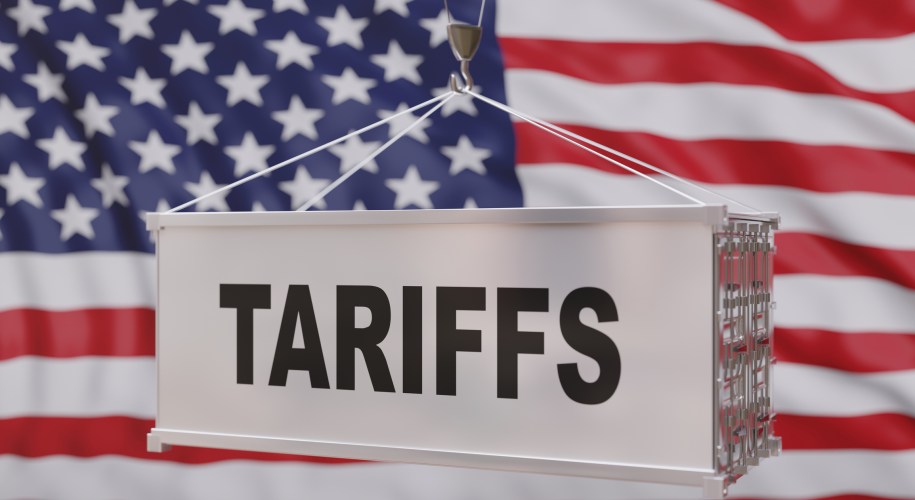
The U.S. Trade Representative (“USTR”) has prepared for publication a Federal Register Notice (“Notice”) that identifies a list of approximately 1,300 tariff lines on which it proposes to levy additional duties of up to 25% on goods made in China. The pre-published copy of the Notice was released yesterday, April 3, 2018, and includes an Annex identifying the products on which USTR proposes to assess the additional duties. The notice can be found here. According to an accompanying press release, the sectors targeted for the proposed tariffs “include industries such as aerospace, information and communication technology, robotics, and machinery.” The press release further indicates these tariffs are intended to combat China’s “industrial plans, such as ‘Made in China 2025.’” The tariffs, therefore, are intended to “target products that benefit from China’s industrial plans while minimizing the impact on the U.S. economy.”
The Notice announces a public hearing and an opportunity for interested parties to submit written comments. The public hearing will take place on May 15th; interested members of the public must file requests to appear at that hearing, and a summary of expected testimony as well as any other pre-hearing submissions are due by April 23rd. Written comments must be filed by May 11th, and any post-hearing rebuttal comments are due May 22nd. Continue reading “USTR Publishes 301 Product List / China Reacts With Its Own List”
Steel/Aluminum Tariffs Exemptions Clarified

In off the record comments on March 28, 2018, an official of the Dept. of Commerce provided some clarification as to how the product exemption process will work relative to steel and aluminum tariffs. Of course, the starting point is: if your product is subject to the steel or aluminum tariffs and is not from an exempted country, the 25% or 10%, respectively, will have to be paid. After that, things get trickier.
If you decide to seek exemption for your product, the first step obviously is to gather the needed details and file your exemption request. The way the process is intended to work is once the exemption request is uploaded to regulations.gov, the Bureau of Industry and Security (“BIS”) will review it for completeness. If not complete, the application will be rejected. If complete, it will be officially posted on the regulations.gov website. That date is key. Because, if your exemption request is later granted, while not official until five days after it is published, you will be able to seek refunds on any entries filed between the date the exemption request is posted and when it is granted. Continue reading “Steel/Aluminum Tariffs Exemptions Clarified”
Consumer Products Sellers Beware: New Prop 65 Warnings Coming in California

New Proposition 65 safe harbor warnings will take effect on August 30, 2018. While these new warnings relate to a wide range of goods and services, we are focused on changes that impact consumer products due to the focus of our clientele. If you are currently subject to Prop 65, you will continue to be subject to its requirements. If you are not currently impacted, you may be under the new rules!
Not sure? Check the various fact sheets published here, or more generally the “warnings page” here.
New Categories
Warnings are now expressly required on your website! Internet warnings – “a warning that complies with the content requirements of Section 25603(a) must also be provided by including either the warning or a clearly marked hyperlink using the word “WARNING” on the product display page, or by otherwise prominently displaying the warning to the purchaser prior to completing the purchase.” The Office of Environmental Health Hazard Assessment or OEHHA (the California state agency which oversees Prop 65) noted the following: “Some online retail sellers who currently provide an internet warning do so by providing the warning as a pop-up when the purchaser enters a California zip code. This is an example of a way to prominently display ‘the warning to the purchaser prior to completing the purchase’ as required by the regulation.” Continue reading “Consumer Products Sellers Beware: New Prop 65 Warnings Coming in California”
Trade Trifecta!

Some events rather significant to international traders occurred in the last few days. First, on Friday, March 23, 2018, President Trump signed the latest spending bill. It includes a provision to renew Generalized System of Preferences (“GSP”) benefits retroactive to December 31, 2017, when the program last expired. GSP is now authorized through December 31, 2020.
With history as a guide, we should expect Customs and Border Protection to shortly publish a message advising when its programming is updated, the deadline by which to file refunds and similar details. In the past, so long as the entry was filed with an “A” or similar indicator, refunds were routinely issued, but importers would still be wise to make sure their list of eligible entries is current, and then to track their refunds. Since the bill was signed into law on Friday, the deadline to file refund requests will be 180 days later, which works out to September 18, 2018. Continue reading “Trade Trifecta!”
New Tariffs: Definition & Exclusion

When President Trump announced the 25% steel and 10% aluminum tariffs on March 8, 2018, he instructed the Secretary of Commerce to issue regulations explaining how American companies could seek exclusions from those tariffs no later than March 19, 2018, and that deadline has been met. These new regulations can be found here.
Before we discuss the new regulations, we should start with the data Customs and Border Protection (CBP) released with its programming updates to implement these safeguard tariffs. Continue reading “New Tariffs: Definition & Exclusion”
Clanging: Here Come Those New Steel and Aluminum Tariffs!

Earlier today, March 8, 2018, President Trump signed two Presidential Proclamations, one dealing with additional tariffs on steel and the other with additional tariffs on aluminum. As has been widely reported in the general press, those rates are 25% on steel and 10% on aluminum. The only countries exempted are Canada and Mexico.
Steel articles are defined as those which are classified under HTSUS 7206.10 through 7216.50 (including ingots, bars, rods and angles), 7216.99 through 7301.10 (including bars, rods, wire, ingots, and sheet piling), 7302.10 (rails), 7302.40 through 7302.90 (including plates and sleepers), and 7304.10 through 7306.90 (including tubes, pipes and hollow profiles). Aluminum products are defined as unwrought aluminum (HTS 7601); aluminum bars, rods, and profiles (HTS 7604); aluminum wire (HTS 7605); aluminum plate, sheet, strip and foil (flat rolled products) (HTS 7606 and 7606); aluminum tubes and pipes and tube and pipe fittings (HTS 7608 and 7609); and aluminum castings and forgings (HTS 7616.99.5160 and 7616.99.51.70). Continue reading “Clanging: Here Come Those New Steel and Aluminum Tariffs!”
Steel & Aluminum: Tough Tariffs, Tough Road Ahead?

Earlier today, President Trump announced his intention to adopt the recommendations of the Dept. of Commerce and impose tariffs on imports of steel and aluminum. The formal signing is said to be taking place “next week.” President Trump has stated those tariffs will be 25% on foreign-made steel and 10% on foreign-made aluminum. Hopefully when the final document is signed and released, it will become clear how long these tariffs will be in place and whether they will be accompanied by any other measures, such as quotas.
Commerce’s original steel recommendations were: (i) a 24% tariff on all steel imports; or (ii) a 53% tariff on steel imports from Brazil, China, Costa Rica, Egypt, India, Malaysia, South Korea, Russia, South Africa, Thailand, Turkey and Vietnam; which (iii) could include a quota from all other countries equal to their 2017 level of imports; or (iv) no tariffs, but a quota on all steel products from all countries equal to 63% of their 2017 import levels. Continue reading “Steel & Aluminum: Tough Tariffs, Tough Road Ahead?”
Free Speech Issues

The following was written collectively by our Labor & Employment Department.
A. Anti-SLAPP (Strategic Litigation Against Public Policy)Law, Code of Civil Procedure § 425.16
1. Anti-SLAPP Statute Does Not Provide a Safe-Harbor Against Employee FEHA Lawsuits, Even if the Claims Arise Partially from Employer’s Protected Conduct
In Nam v. Regents of the University of California, 1 Cal.App.5th 1176, 1193 (2016), a resident in the anesthesiology department at UC Davis Medical Center brought a lawsuit claiming sexual harassment and retaliation against her employer. The resident accused her residency program director of sexual harassment, alleging that after she rebuffed his advances, he retaliated against her by, among other things, issuing an unwarranted disciplinary letter and placing her on investigatory leave. The resident further alleged that she was retaliated against because she complained about the clinical behavior of another doctor and serious patient care and safety issues. Continue reading “Free Speech Issues”

