




NLRB Continues Trend to Create a More Business Friendly Environment by Reversing Obama-Era Labor Decisions

Written by Jonathan Turner and Daniel Innamorati
In a burst of year-end activity, the National Labor Relations Board (“NLRB”) largely overturned multiple Obama-era labor decisions and returned to long-standing NLRB precedents that favor employer’s property rights and abilities to regulate the workplace. Here, we will look at these rulings and how they impact federal labor law.
Caesars – Employers may restrict employees’ email use to business purposes
Employees do not have a statutory right under the NLRA to use their employer’s email system or other information technology (“IT”) resources for NLRA Section 7 purposes. In doing so, the NLRB reversed its 2014 ruling in Purple Communications that held workplace rules prohibiting employee email use for Section 7 activity were presumptively invalid. (Section 7 of the National Labor Relations Act guarantees employees “the right to self-organization, to form, join, or assist labor organizations, to bargain collectively through representatives of their own choosing, and to engage in other concerted activities for the purpose of collective bargaining or other mutual aid or protection,” as well as the right “to refrain from any or all such activities.”)

Tax Act Enhances Deductibility of Disaster Relief Donations for a Limited Time Only

Written by David Wheeler Newman
Tax legislation that was included in the massive spending bill signed by the President included provisions affecting the charitable sector. We previously reported on one provision that will be welcomed across the sector. Another provision will be good news for donors making charitable contributions for disaster relief.
The Taxpayer Certainty and Disaster Relief Tax Act signed into law on December 20 includes various tax provisions intended to mitigate a portion of the enormous financial cost of recent hurricanes, tornadoes, forest fires, earthquakes and other natural disasters. Included was an enhanced tax benefit for donors making charitable contributions to organizations providing disaster relief.
Hasta la Vista to the Reviled Nonprofit Parking Tax

Written by David Wheeler Newman
Christmas came early for the nonprofit community when Congress repealed the hugely unpopular tax on parking and other transportation employee benefits.
The 2017 Tax Cuts and Jobs Act added a provision to the Internal Revenue Code that had no friends in the charitable sector: section 512(a)(7) made transportation fringe benefits including parking and public transit benefits, provided by nonprofit employers, subject to the unrelated business income tax (UBIT). Not only did this provision defy logic by taxing expenses rather than income, it forced the filing of an income tax return (Form 990-T) upon thousands of nonprofits that before 2018 had only filed a Form 990 informational return, but not a 990-T, not to mention countless churches that don’t even need to file the Form 990.
Continue reading “Hasta la Vista to the Reviled Nonprofit Parking Tax”
NLRB Issues Changes to Representation Case Procedures

Written by Jonathan Turner
If you regularly deal with union concepts, read on! Otherwise you may find this a tad wonky…
After some three years into the current administration, the NLRB (“Board”) has issued new election rules that reverse or modify rules put in place during the Obama administration. The Obama era rules, commonly referred to as the “fast track” or “quickie” election rules, were the subject of controversy and debate between the business community and organized labor prior to their becoming law in 2014. The stated policy objectives for the Obama era rules were “to simplify and modernize” the Board’s election procedures for determining employee desire for union representation, establish “greater transparency and consistency” in administration of those procedures, and provide for a more “fair and expeditious resolution” of NLRB election cases; however, the business community objected to the Obama era rules primarily because they imposed procedural and substantive limits on the types of issues that can be adjudicated in a pre-election hearing, and shortened the time frame within which such hearings were to occur.
The new rules became effective December 18, 2019. Set forth below is a summary of the more significant aspects of the new rules and how those rules differ from those previously in place. Continue reading “NLRB Issues Changes to Representation Case Procedures”
Yikes to the Year End!

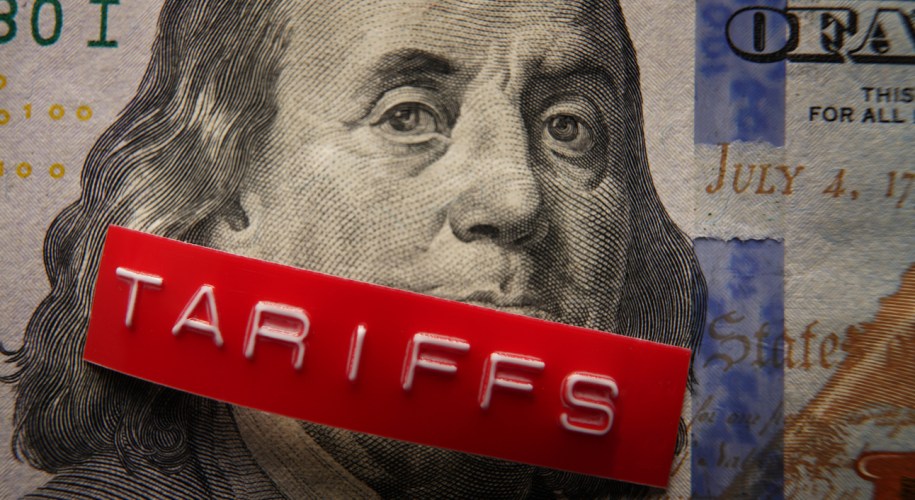
Clearly, there is more going on these days in Washington, D.C. than just the impeachment hearings, and activities this week made that point clear. In the span of only a few days, we saw progress on two key issues – the China 301 tariffs and the U.S.-Mexico-Canada Agreement (USMCA).
First, we saw an indefinite suspension of the List 4B 15% China tariff which was to take effect on December 15, 2019. The President tweeted about it, saying “The 25% Tariffs will remain as is with 7 1/2% put on much of the remainder…” (see here for the full text) and USTR issued a press release (see here). Regretfully, neither is very clear, beyond stating the tariff on goods on List 4B is suspended indefinitely. CBP confirmed the suspension later in the day at CSMS 40984510. There was also a Fact Sheet issued by USTR (see here), but it, too, failed to clear up the tariff impact. Continue reading “Yikes to the Year End!”

CCPA – For CA Businesses & Beyond
On December 4, 2019, MSK Partner Susan Kohn Ross presented via live webinar on “CCPA – For CA Businesses & Beyond.” Please enjoy a recording of this webinar and contact skr@msk.com with any questions pertaining to the CCPA. Continue reading CCPA – For CA Businesses & Beyond
Webinar: Independent Contractors Under Dynamex and A.B. 5
On Thursday, November 14, 2019, MSK Partner Jonathan Turner and Associate Alfredo Ortega presented via webinar on, “Independent Contractors Under Dynamex and A.B. 5.” Please enjoy the video recording of the webinar and contact Kaitlyn at kjt@msk.com for any additional information. Continue reading Webinar: Independent Contractors Under Dynamex and A.B. 5
Update to Critical Restrictions on French Nationals (E and L Visas) as of November 12, 2019

By Frida P. Glucoft and Janice Luo
Today, the U.S. Department of State (DOS) changed the reciprocity schedule for France to reflect decreased E-1, E-2, and L-1 visa validity periods. Specifically, effective November 12, 2019, E-1 and E-2 visas are now limited to a validity of only 25 months per visa issuance. Similarly, L-1 visas are now limited to a validity of only 17 months per visa issuance. Until this change, E and L visas have had validity for 60 months.
In general, different types of U.S. nonimmigrant visas have different allowable validity periods depending on the nationality of the applicant, because the Immigration and Nationality Act (INA) requires the DOS to set country-specific visa policies based on reciprocity. The validity periods, number of entries, and visa fees for different types of visas are based on each country’s treatment of similar classes of U.S. visitors to its territory, as well as national security, immigration, and other considerations. Since August 2019, there have been announcements by the U.S. Embassy in France regarding decreased E visa validity periods for French nationals. According to the U.S. Embassy in France’s website at that time, the reduction in validity time on E visas was implemented to correspond with the “treatment afforded to U.S. citizens by the Government of France”. However, until today, the DOS has not changed the reciprocity schedule to reflect the changes. Continue reading “Update to Critical Restrictions on French Nationals (E and L Visas) as of November 12, 2019”
More Bad News For California Employers as Governor Signs Bills Into Law

Written by Jeremy Mittman
Recently, we informed our readers about a new law making it more difficult to classify independent contractors as such. Unfortunately, that was just the tip of the iceberg. A number of additional new employment-related bills recently signed into law by Governor Gavin Newsom will have a negative impact on California employers. Unless specifically noted, these laws go into effect on January 1, 2020. MSK recommends that any employer with California employees should consult with their employment counsel to address questions regarding changes to current policies/procedures in light of these new laws. Continue reading “More Bad News For California Employers as Governor Signs Bills Into Law”
California Consumer Privacy Act: Are You Ready? (Part 2)

In Part 1, we summarized the recent legislative changes regarding the California Consumer Privacy Act (“CCPA”). Bearing in mind the CCPA takes effect on January 1, 2020 and the Attorney General is required to issue regulations by July 1, 2020, these regulations both meet that time frame, but also seek to provide much-needed guidance to industry.
Most of the legislative changes focused on narrowing the definition of personal information, clarified the time frame which applies when a consumer demands information the business possesses about him or her, and also confirmed the CCPA applies to businesses, not non-profits or government entities. In this Alert, we summarize the regulations which were recently issued. However, even in the regulatory context, the starting point remains the same. Companies should begin by asking the following questions: Continue reading “California Consumer Privacy Act: Are You Ready? (Part 2)”
 MSK Blog