


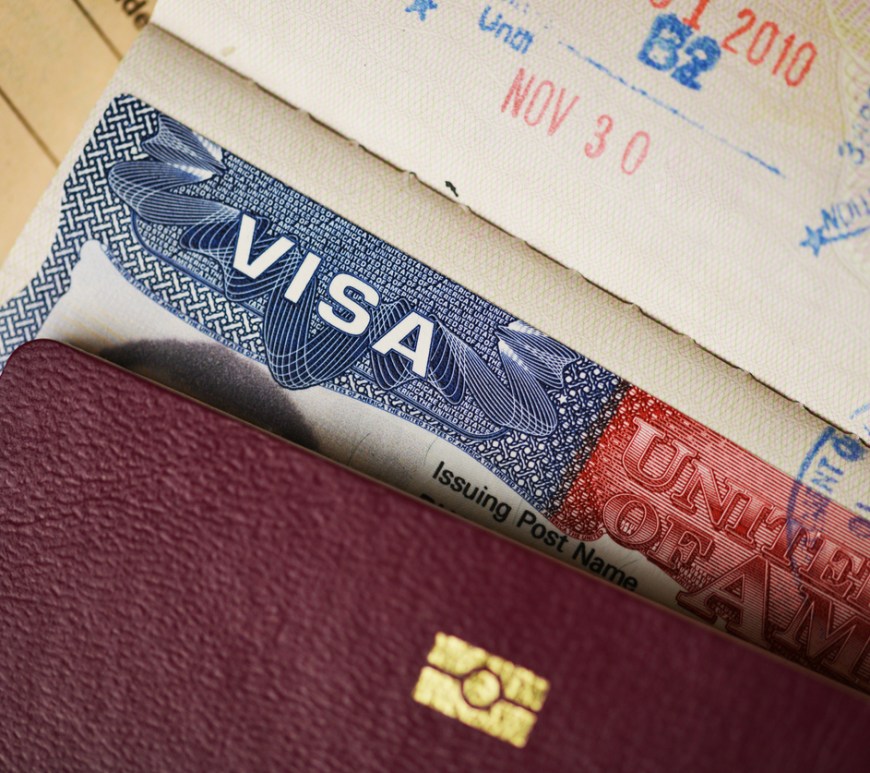
H-1B/H-4 Visa Update: U.S. State Department Expands Online Presence Review to Include H-1B and H-4 Visa Applicants
Written by Howard Shapiro and Jason Farkas According to a recent announcement from the U.S. Department of State (DOS), as of December 15, 2025, the DOS will expand the requirement that an “online presence review” be conducted for all H-1B applicants and their dependents (H-4). Per the announcement, all H-1B and H-4 visa applicants at U.S. consular posts abroad will undergo a review of their … Continue reading H-1B/H-4 Visa Update: U.S. State Department Expands Online Presence Review to Include H-1B and H-4 Visa Applicants

California Bans Most “Stay-or-Pay” Provisions in Employment Contracts, Effective Jan. 1, 2026
Written by Jeremy Mittman and Thea Rogers It is relatively commonplace for employers to make payments to employees that are subject to repayment in certain circumstances. Many employment contracts require full and immediate repayment of these amounts when an employee separates from the employer. However, California has recently taken a groundbreaking step with the enactment of Assembly Bill 692 (“AB 692”), designed to promote worker … Continue reading California Bans Most “Stay-or-Pay” Provisions in Employment Contracts, Effective Jan. 1, 2026

California Employers be WARNed: Expanded Cal-WARN Notice Requirements Take Effect January 1, 2026
Written by Jeremy Mittman and Thea Rogers Earlier this month, Governor Newsom signed California Senate Bill 617 into law, amending the California Worker Adjustment and Retraining Notification Act (Cal-WARN). Effective January 1, 2026, the law imposes enhanced notice requirements on employers conducting mass layoffs, relocations, or terminations. Key Changes Under SB 617 SB 617 broadens the scope of information that employers must include in a … Continue reading California Employers be WARNed: Expanded Cal-WARN Notice Requirements Take Effect January 1, 2026
PleasrDAO v. Shkreli: Wu-Tang Clan Album May Be Considered A Trade Secret
Written by Constance Kang Can a rare musical work constitute a trade secret? In a novel application of trade secret law to a Wu-Tang Clan album, a federal judge in the Eastern District of New York has answered “yes.” U.S. District Judge Pamela Chen’s September 25 order emphasized the unusual nature of this analysis, as musical works do not fit squarely within traditionally protected categories … Continue reading PleasrDAO v. Shkreli: Wu-Tang Clan Album May Be Considered A Trade Secret
White House Issues, Clarifies Proclamation on H-1B Restrictions
Written by David Rugendorf, Howard Shapiro, and Janice LuoOn September 19, 2025, President Donald J. Trump issued a proclamation, “Restriction on Entry of Certain Nonimmigrant Workers,” which imposes certain restrictions on H-1B visas. The proclamation, effective at 12:01 a.m. Eastern Time on September 21, 2025, specifies that no H-1B specialty occupation worker may enter the United States absent proof of an employer petitioner payment of … Continue reading White House Issues, Clarifies Proclamation on H-1B Restrictions
Of Trademark and Labor Law: Trader Joe’s Company v. Trader Joe’s United
Written by Rebecca Benyamin and Matt Mardesich On September 8, 2025, the United States Court of Appeals for the Ninth Circuit reinstated a trademark infringement claim and reversed the district court’s conclusion that the Norris-LaGuardia Act barred it from granting injunctive relief. See Trader Joe’s Company v. Trader Joe’s United, — F.4th —, 2025 WL 2586674 (9th Cir. 2025). Trader Joe’s alleged that Trader Joe’s … Continue reading Of Trademark and Labor Law: Trader Joe’s Company v. Trader Joe’s United

New California Supreme Court Case Provides Guidance to Employers Seeking to Rely on the “Good Faith Defense” to California Wage and Hour Violations
Written by Jeremy Mittman, Stephen Rossi and Sara Kim On August 21, 2025, the California Supreme Court unanimously held that the “good faith defense” to claims for liquidated damages for unpaid minimum wages requires proving that the employer “made an attempt to determine what the law required that was reasonable under the circumstances and a good faith effort to comply with the requirements of the … Continue reading New California Supreme Court Case Provides Guidance to Employers Seeking to Rely on the “Good Faith Defense” to California Wage and Hour Violations

When HR Meets AI: California Issues New Employment AI Regulations
Written by Jeremy Mittman and Matt Mardesich In recent years, employers have increasingly utilized artificial intelligence (“AI”) tools to assist with making various employment decisions, ranging from screening applicants during hiring to determining employee pay and schedules. While AI tools can lead to efficiency and cost-saving for employers, they also risk resulting in unintentional bias or discrimination if not properly administered. To protect against such … Continue reading When HR Meets AI: California Issues New Employment AI Regulations
California Supreme Court Waters Down—But Does Not Extinguish—Harsh Arbitration Fee Law
Written by Jeremy Mittman and Nicholas Baltaxe California Code of Civil Procedure section 1281.98 establishes that employers who draft and maintain arbitration agreements are responsible for paying fees and costs to an arbitrator, and must do so “within 30 days after the due date,” which is the date of the receipt of the invoice. See Cal. Code. Civ. Proc. § 1281.98, subds. (a)(1-2). … Continue reading California Supreme Court Waters Down—But Does Not Extinguish—Harsh Arbitration Fee Law

Hara v. Netflix, Inc.: Ninth Circuit Reaffirms Rogers Test for Expressive Works Post-Jack Daniel’s
Written by Samantha Frankel On July 28, 2025, the Ninth Circuit affirmed dismissal of a Lanham Act false endorsement suit brought by drag performer Lance Hara (known professionally as Vicky Vox) against Netflix over an animated cameo in the comedy series Q-Force. Vox alleged her animated likeness appeared without permission in a ten-second scene, an official teaser trailer, and a promotional still image. Hara v. … Continue reading Hara v. Netflix, Inc.: Ninth Circuit Reaffirms Rogers Test for Expressive Works Post-Jack Daniel’s
 MSK Blog