PPE Exports: Ready to Go?

Written by Susan Kohn Ross

In CSMS 42506108 issued on April 27, 2020, CBP updated its Frequently Asked Questions about Personal Protective Equipment exports. In it, CBP makes clear the Document Imaging System (DIS) sends a confirmation of receipt, as does AES. If the shipment is held for any reason and/or further action is needed, notice of that is most likely going to come through the carrier. In short, absent negative information, the export is ready to go.

When it comes to any Letter of Attestation (“Letter”), CBP has made clear these should be submitted through the DIS. The size limit for CBP is up to 10 MB. The email address is docs@cbp.dhs.gov. There are additional criteria to consider: Continue reading “PPE Exports: Ready to Go?”

Contact Tracing: COVID-19

Written by Susan Kohn Ross and Timothy Carter

As the individual states struggle to define how best to reopen in a manner that minimizes the renewed spread of the novel coronavirus/COVID-19, the subject of contact tracing has become a major focus. To aid in this effort, Apple and Google announced late last week a joint contact tracing project that would leverage Bluetooth technology to identify and selectively alert individuals who have been in close proximity to someone who tested positive for COVID-19. Once alerted, that user could self-isolate or seek testing. Individuals who are diagnosed with COVID-19 can self-report their diagnosis, and any users who have been in recent contact with that individual will receive a notification. Public health agencies would be responsible for checking and verifying test results provided by users in order to prevent spoofing or fabrication. Continue reading “Contact Tracing: COVID-19”

CBP Authorizes Duty Payment Deferral

Written by Susan Kohn Ross

Update 4/23/20:
The official Federal Register notice authorizing the duty payment deferral option has been published – please see here. The comment deadline expires on May 20, 2020.

Update 4/20/20:
We noted in our Alert below that CBP stated the decision about whether or not to defer payment of duty had to be made by 11:59 PM today. CBP has now clarified that is 11:59 PM Eastern Time, and the deadline refers to the April Periodic Monthly Statement.

Also, CBP is now saying if the 301 duty exclusion covers the entire entry, the entry is eligible for the duty payment deferral option.

Original Alert:

Despite statements discounting the possibility, saner heads have prevailed and published late yesterday was an Executive Order issued permitting the Secretary of the Treasury to adjust the deadlines related to payment of duty. Executive Order re Duty Payment Deferral.  On that basis, CBP announced a 90 day postponement of duty payment is possible. First, in CSMS 42423171, CBP made clear the option to postpone duty payment for 90 days exists for many entries filed in March and April 2020. However, if the entry involves antidumping duty, countervailing duty, and/or Section 201, 232 or 301 duties, duty payment deferral is not available. While not obvious from the publications available to date, if your goods are subject to a 301 tariff but you have an exclusion, CBP has verbally advised you are not eligible for duty payment deferral. Many more questions are likely and CBP is holding a second briefing with the trade community this morning. The first such briefing took place yesterday evening. During that briefing, CBP indicated the duty deferral decision had to be made before 11:59 p.m. tonight. This is understood to refer to duty payments due today, April 20, 2020. Make sure to consult with your customs broker, but do not be surprised if many are unsure about the application of this newly announced program, due to the timing of its rollout. Continue reading “CBP Authorizes Duty Payment Deferral”


Privacy Takes Many Forms

Written by Susan Kohn Ross and Timothy Carter

Amazon’s Alexa, Google devices such as Google Assistant and Google Home, Apple’s Siri, and Microsoft’s Cortana are now commonplace in many homes. These devices and other lesser-known counterparts allow users to control nearly everything in their homes with only their voice. That convenience, however, comes at the cost of some degree of privacy. While seldom viewed as presenting a live microphone inside one’s home or office, these otherwise passive listening devices begin recording upon initiation of a verbal cue. While the use (or even presence) of such voice assistants may present privacy concerns when used in consumers’ homes, with millions of people working remotely across the world due to COVID-19, these potential privacy concerns can quickly escalate to a much broader concern, especially for attorneys, who, as we discussed earlier, are bound to maintain confidentiality regarding information concerning the representation of their clients. But this concern extends far beyond “just” attorneys, because so many business dealings involve the exchange of confidential information. What one thinks of as a private or confidential discussion with a business partner is now taking place at home, perhaps with others around, but all too frequently in close proximity to these devices. Continue reading “Privacy Takes Many Forms”

North America, Bordered Up

Written by Susan Kohn Ross

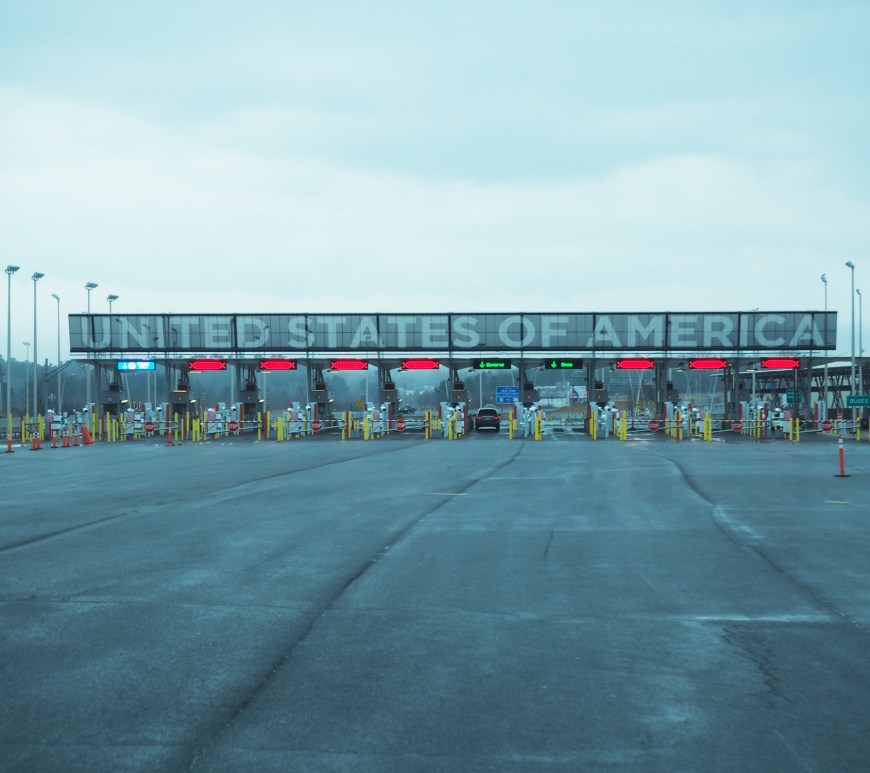
The U.S. is working closely with Mexico and Canada to ensure North America has a coordinated approach to combating the pandemic caused by COVID-19, and mitigating any further spread. The United States and Canada have agreed to restrict travel at the land border to essential travel only (details regarding those travel restrictions can be found here and here). In a similar fashion, the United States and Mexico are finalizing an agreement that will facilitate only essential travel at the U.S. southern border. The three countries are maintaining cross-border activities that support health security, commerce, supply security, trade, and other essential activities, while taking prudent steps to protect citizens and to limit spread of the virus. The stated goal of these efforts is to help save lives. As such, these restrictions are in place indefinitely. Continue reading “North America, Bordered Up”

Careful With The Remote

Cybersecurity Concerns with Remote Work

Written by Susan Kohn Ross and Timothy Carter

While likely not the first topic that comes to mind amidst a global pandemic, organizations and businesses that now find themselves entirely (or almost entirely) remote would be remiss not to consider the potential data and cybersecurity issues raised by this sudden and unexpected shift to remote work. For much of the country, COVID-19 has resulted in an abrupt shift in the way we work. Even for those businesses that maintained robust work-from-home policies and systems, this shift presents a learning curve. The more traditional data and cybersecurity concerns ever-present in normal business operations are compounded by the difficulties presented by an extensive remote workforce. Preoccupied remote workers can be more susceptible to online threats such as phishing emails or malware and ransomware, thereby “opening the door” and providing unauthorized access to bad actors. The other, often lesser considered concern is accidental disclosure of confidential business information. Continue reading “Careful With The Remote”

Telecommuting? Buckle Up

Are Your Employees Telecommuting Now? COVID-19 and Cybersecurity Concerns for Businesses

Written by Jeremy Mittman and Susan Kohn Ross

A topic of immediate concern to businesses that has not received a great deal of attention (but should) is cybersecurity. There are unscrupulous people out there who will try to take advantage of the situation! This is especially worrisome with the increased usage of telecommuting to facilitate business continuity.

Within the Dept. of Homeland Security sits the Cybersecurity and Infrastructure Security Agency or CISA which is “responsible for protecting the Nation’s critical infrastructure from physical and cyber threats.” CISA, through its National Cyber Awareness System, released Defending Against COVID-19 Cyber Scams, see here for the full text.  In short, beware of emails with malicious attachments and hyperlinks. Also be careful about social media pleas, texts and calls having to do with COVID-19.

The NCAS recommends:

Continue reading “Telecommuting? Buckle Up”

Best Practices for Maintaining Employee Privacy Regarding COVID-19

Written by Jeremy Mittman and Susan Kohn Ross

The situation surrounding COVID-19 is, to the say the least, fluid and scary. The ultimate outcome of the disruption to the business community is also unclear. There are nonetheless a couple of topics we can talk about right now with some degree of certainty on which businesses may want to focus as we all struggle to deal with the very human toll of this pandemic. One is employee privacy and is addressed in this edition. The cybersecurity topics worthy of immediate attention will be covered in a subsequent blog post.

We start here with the confidentiality obligation of employers regarding information about the health of their employees. If someone on your staff becomes infected, as a general proposition, as the employer, you may not share that information with other employees. The Centers for Disease Control published an Interim Guidance for Businesses and Employers, and stated: “If an employee is confirmed to have COVID-19, employers should inform fellow employees of their possible exposure to COVID-19 in the workplace but maintain confidentiality as required by the Americans with Disabilities Act.” Since COVID-19 has spread to many different countries, the privacy laws in those countries also need to be considered. For example, the European privacy law – the GDPR – addresses privacy around health data, plus local public health authorities in those countries will have their own protocols to follow.

Continue reading “Best Practices for Maintaining Employee Privacy Regarding COVID-19”

COVID-19 and the Trade Community

COVID19, Coronavirus disease, corona virus, Concept Picture about epidemic in the World
Photo Credit: istock.com/AlxeyPnferov

By Susan Kohn Ross

There are a bunch of other things going on when it comes to international trade, but the most concerning topic right now is the coronavirus or COVID-19. From a purely business continuity perspective, we are receiving lots of inquiries around the following question: “Can we get out of our contracts by invoking the force majeure clauses?” Such a clause allows parties to cancel contracts when events occur which are both beyond their control but also totally unexpected. A typical illustration would be an “Act of God.” First, make sure your contract includes a force majeure clause, because if not, that could present a significant uphill and costly battle. Given the widespread losses which are likely to result, it is reasonable to anticipate companies of any size will, so to speak, “stick to their guns” in trying to “spread the pain.”

Assuming such a clause is present in your contract, what does it say? An example of one recently presented includes among its examples: “… strikes, riots, floods, storms, earthquakes, fires, power failures, natural disasters, pandemics, insurrection, acts of God, or for any cause beyond the control of” the named party. Is that language sufficient to permit cancellation under the current circumstances of the COVID-19 outbreak? Probably so, since it mentions pandemics and the World Health Organization has labeled the outbreak as such, but would this language have been broad enough to cover the situation a month ago? Maybe not. Continue reading “COVID-19 and the Trade Community”

CCPA: More Regulatory Changes Proposed

CCPA Image
Photo Credit: istock.com/KrulUA

By Susan Kohn Ross and Timothy Carter

On March 11, 2020, the California Attorney General (CA AG) issued additional revisions to the proposed regulations implementing the California Consumer Privacy Act (CCPA). The CA AG published a redline against the earlier proposed regulations highlighting the latest changes. A copy can be found here. The latest modified draft regulations are subject to a public comment period which ends on March 27, 2020, at 5:00 p.m. (PDT). Information about where to submit comments can be found at the end of this Alert.

While many of the latest changes consist of technical corrections or clarifications, there are some significant modifications, all are effective on July 1, 2020. Below, we summarized the key changes: Continue reading “CCPA: More Regulatory Changes Proposed”