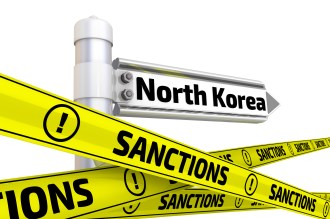
Walking the North Korean Tightrope

Sanctions against North Korea. Concept
Photo credit: iStock.com/Waldemarus

By Susan Kohn Ross

On September 21, 2017, President Trump issued an Executive Order (yet to be numbered) (“EO”) imposing additional sanctions on North Korea. It took effect the next day. The general press has quoted Treasury Secretary Mnuchin as stating: “Foreign financial institutions are now on notice that going forward they can choose to do business with the United States or North Korea, but not both.” These latest changes raise the specter for even more caution on the part of companies conducting international business. The question every CFO at every company should ask is – is our due diligence program as good as it needs to be? If not, your funds could get seized and dealing with the Dept. of Justice in these types of cases can be quite challenging.   The government often has information the private sector does not possess and, if your due diligence program is not deemed sufficient, you stand little chance of getting those funds released. Given the current climate, you can bet getting funds released related to the North Korea sanctions is going to be even more difficult!

The new Executive Order is broadly worded to include any person who is determined: Continue reading “Walking the North Korean Tightrope”


Solar Flare-up with China

Solar power plant panels with sun rays and blue sky
Photo credit: iStock.com/Lara_Uhryn

By Susan Kohn Ross

Two actions took place at the end of last week which heighten concerns that a trade war with China could be ever more likely. First, there was the preliminary decision in the solar panels 201 case. Then, we had the additional sanctions imposed by the President on North Korea.

The 201 solar panel case began when Suniva Inc. and SolarWorld Americas Inc. filed their cases before the International Trade Commission (“ITC”) in April and May 2017. These actions are, of course, in addition to the antidumping and countervailing duties currently being imposed on these products from China. Continue reading “Solar Flare-up with China”

Trading with China – New Reasons to Be Wary!

By Susan Kohn Ross

port
Photo credit: iStock.com/nattanan726

Today, President Trump signed into law H.R. 3364, the “Countering America’s Adversaries Through Sanctions Act”. The general press is covering this story by writing about Russia’s initial retaliation taking the form of cutting the staff authorized at the U.S. embassy in Moscow and the seizure of certain U.S. diplomatic property within Russia. When it comes to international traders, the impact on dealing with Russia, but also Iran and North Korea, takes the form of enhanced compliance efforts.

The new law will provide more in the way of direct and indirect sanctions. A direct sanction arises because the person (or company/entity) is listed by one of the relevant U.S. agencies on the appropriate blocked persons list. A secondary sanction arises because a blocked person (individual or entity) owns or has a controlling ownership in a company not otherwise listed as blocked. Of course, additional headaches exist when there is U.S. content in the good being sold, so the impact is on both exports and imports. Continue reading “Trading with China – New Reasons to Be Wary!”

If You SEC Something, Say Something

Cybersecurity of network of connected devices and personal data security
Photo credit: iStock.com/NicoElNino

By Susan Kohn Ross

Just about every survey of General Counsels reveals the same #1 culprit of sleepless nights….. a cybersecurity hack. If you run a business in today’s global environment, it is hard to escape the fundamental reality that it is more than likely a matter of when, not if, you will face a cyber threat. And depending on the nature of your business, that threat can have a wide range of implications. If you are a public company, there is an additional issue to consider… what do you have to disclose to your investors and shareholders?

Being prepared for a hack with a comprehensive written information security plan and an equally robust incident response plan is just one component to be considered if you are a public company. You must also have a plan to meet your reporting and disclosure obligations to a variety of governmental bodies. While measuring your response needs in the wake of a hack, and determining if there are state, federal or international laws and regulations that require reporting, you must also pay close attention to possible disclosure obligations in your SEC filings. Specifically, if you have tripped a disclosure to a state attorney general or your company’s customers, then it is possible you may also have a disclosure obligation to your shareholders. Continue reading “If You SEC Something, Say Something”

Trump’s Cuba Course Clarified

Trade Concept
Photo credit: iStock.com/XtockImages

By Susan Kohn Ross

“Trump cracks down on Cuba” or variations on that phrase have peppered the general press since Friday, when the President announced his policy towards Cuba.  When you read what was actually written, you come away with a more tempered reaction. Yes, there will be changes, and the most critical one is yet to come, but we focus here on what was actually written.

First, the format is not an Executive Order but rather a June 16, 2017 “National Security Presidential Memorandum on Strengthening the Policy of the United States Towards Cuba” accompanied by a Fact Sheet. The memo can be found here, and the Fact Sheet here. So, nothing changes right away.

Taken together, there are two points that could impact international traders. Continue reading “Trump’s Cuba Course Clarified”

Romaine Calm: FSVP is Approaching

Photo credit: iStock.com/darksite

By Susan Kohn Ross

Does FSVP Apply to You?

Are you the importer, consignee, or agent for food imported into the United States?  If so, the Foreign Supplier Verification Program for Importers of Food for Humans and Animals (FSVP), a key element of the Food Safety Modernization Act (FSMA), likely applies to you.  Implementation of the FSVP will begin on May 30, 2017, but categories of companies or foods may be subject to later compliance deadlines.  Where do you fit?

The FSVP regulations aligns with key components of the FDA’s overall food safety plan for facilities that manufacture, process, pack or hold food which must now establish and follow the regulations regarding current good manufacturing practice (CGMP) and hazard analysis and risk-based preventive controls for human food and animal food (Preventive Controls or PC).

What Is FSVP? Continue reading “Romaine Calm: FSVP is Approaching”

Due Your Duty

By Susan Kohn Ross

With the ever-increasing scrutiny being brought to compliance and the payment of duties on imported goods by Customs and Border Protection (CBP), it is worth commenting that any duties which are due when an entry liquidates may, in fact, end up having to be paid even if the related protest remains pending due to the legal and contractual relationship between the importer and his surety company.  Simply put, if a surety insists on receiving payment of any amounts demanded by CBP upon liquidation, the importer does not have any solid grounds to object.  Why would the surety do so if a protest is pending? Because the surety is looking to mitigate its risk. If the importer does not pay, the surety will have to do so, at least up to the face amount of any bonds it has written, and sureties try their best not to be put in that position. Continue reading “Due Your Duty”

Buy American Executive Order

By Susan Kohn Ross

On April 18th, President Trump issued an Executive Order (“EO” or “Order”) focused on the Buy American  laws and regulations. See Buy American EO.  This EO directs federal government entities to review their procurement rules so that, to the extent legally permitted, preference is given to American made goods.  Section 2 specifically states: “[i]t shall be the policy of the executive branch to buy American and hire American”.  At the same time,  the EO confirms:  “[n]othing in this order shall be construed to impair or otherwise affect … existing rights or obligations under international agreements”.  So, what does this EO mean to the private sector when it comes to government contracting?

First, it is important to keep in mind the review triggered by this Order applies only to federal procurement. States and other governmental entities have their own rules. They cannot contradict the federal rules, but they can be different.

Next, nothing in this Order has any impact on privately funded projects. The typical example given in the general press is the Keystone Pipeline. Nonetheless,  the point is you are only impacted if you are providing or intend to provide goods to a U.S. government entity. Continue reading “Buy American Executive Order”

DOJ Defines Compliance

By Susan Kohn Ross

In the span of the last 18 months, the topic of corporate compliance programs has gotten considerable attention from the Department of Justice  (“DOJ”) and now finally, DOJ has published significant details about how it is likely to measure the sufficiency of any company’s compliance program.

First, some background.  In September 2015, the Yates memo was published, see DOJ Sets Its Sights on Officers and Directors for more details. In short, then Deputy Attorney General Yates reminded the DOJ offices nationwide, if a corporation has violated the law,  its level of cooperation will be measured, in large part, by whether it provides “all” the relevant details, which means did the company identify the individuals whose actions or inactions resulted in the violations under consideration, and provide supporting documentation to show what happened and how those individuals were involved. If the company did not do so, it does not get full credit under the Sentencing Guidelines. Continue reading “DOJ Defines Compliance”

Is the Border Tax Crossing the Line?

By Susan Kohn Ross and Jeffrey D. Davine

It is far too early to discern the extent of any change to the relationship between the U.S. and Mexico in the face of the oft-repeated insistence of the Trump campaign to “renegotiate” NAFTA, a promise that was reiterated once Mr. Trump was sworn into office. Following a prickly meeting last month between President Trump and Mexican President Enrique Peña Nieto, accounts from Mexico report the government as having started consultations with its business community, a process described as taking 90 days. The results of those consultations and how they might impact any further discussions with the U.S. remain to be seen. Similarly, President Trump and Canadian Prime Minister Justin Trudeau also met last month, but under somewhat more cordial circumstances. Again, next steps with Canada remain an open question. However, the overarching theme is the oft-repeated promise from the Trump Administration that a border tax will be imposed.  While nothing concrete has been proposed to date, how such a border tax might work has understandably caused varying levels of concern among American companies. Given there is nothing concrete to examine, in this Alert, we seek to provide a brief explanation of the concepts being bandied about. Continue reading “Is the Border Tax Crossing the Line?”