California Bans Most “Stay-or-Pay” Provisions in Employment Contracts, Effective Jan. 1, 2026

Written by Jeremy Mittman and Thea Rogers It is relatively commonplace for employers to make payments to employees that are subject to repayment in certain circumstances. Many employment contracts require full and immediate repayment of these amounts when an employee separates from the employer. However, California has recently taken a groundbreaking step with the enactment of Assembly Bill 692 (“AB 692”), designed to promote worker … Continue reading California Bans Most “Stay-or-Pay” Provisions in Employment Contracts, Effective Jan. 1, 2026

California Employers be WARNed:  Expanded Cal-WARN Notice Requirements Take Effect January 1, 2026

Written by Jeremy Mittman and Thea Rogers Earlier this month, Governor Newsom signed California Senate Bill 617 into law, amending the California Worker Adjustment and Retraining Notification Act (Cal-WARN). Effective January 1, 2026, the law imposes enhanced notice requirements on employers conducting mass layoffs, relocations, or terminations. Key Changes Under SB 617 SB 617 broadens the scope of information that employers must include in a … Continue reading California Employers be WARNed:  Expanded Cal-WARN Notice Requirements Take Effect January 1, 2026

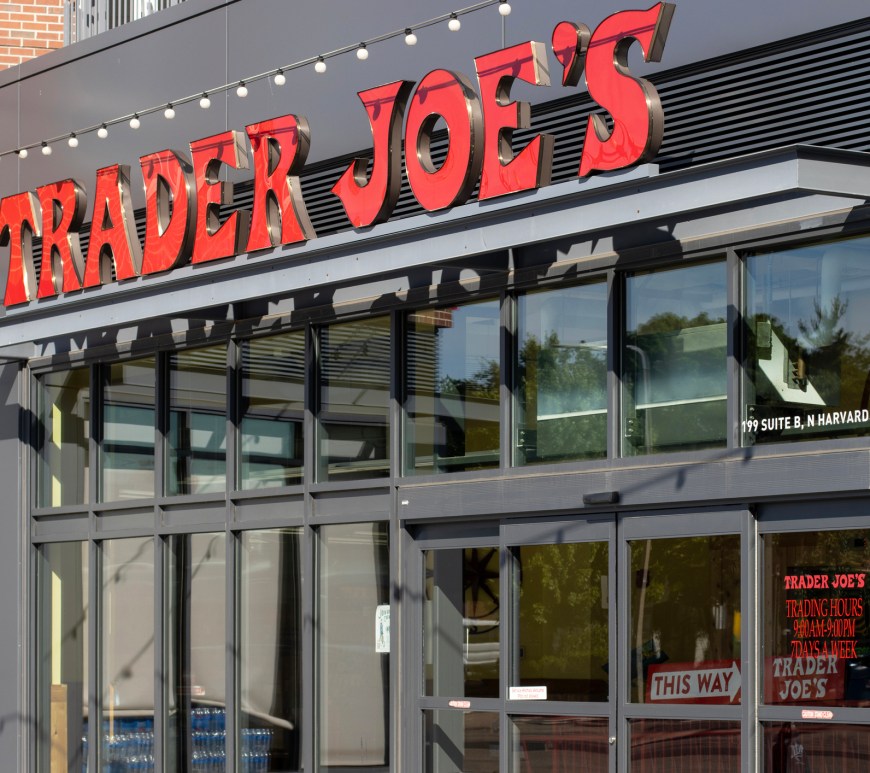
Of Trademark and Labor Law: Trader Joe’s Company v. Trader Joe’s United

Written by Rebecca Benyamin and Matt Mardesich On September 8, 2025, the United States Court of Appeals for the Ninth Circuit reinstated a trademark infringement claim and reversed the district court’s conclusion that the Norris-LaGuardia Act barred it from granting injunctive relief.  See Trader Joe’s Company v. Trader Joe’s United, — F.4th —, 2025 WL 2586674 (9th Cir. 2025). Trader Joe’s alleged that Trader Joe’s … Continue reading Of Trademark and Labor Law: Trader Joe’s Company v. Trader Joe’s United

New California Supreme Court Case Provides Guidance to Employers Seeking to Rely on the “Good Faith Defense” to California Wage and Hour Violations

Written by Jeremy Mittman, Stephen Rossi and Sara Kim On August 21, 2025, the California Supreme Court unanimously held that the “good faith defense” to claims for liquidated damages for unpaid minimum wages requires proving that the employer “made an attempt to determine what the law required that was reasonable under the circumstances and a good faith effort to comply with the requirements of the … Continue reading New California Supreme Court Case Provides Guidance to Employers Seeking to Rely on the “Good Faith Defense” to California Wage and Hour Violations

When HR Meets AI: California Issues New Employment AI Regulations

Written by Jeremy Mittman and Matt Mardesich     In recent years, employers have increasingly utilized artificial intelligence (“AI”) tools to assist with making various employment decisions, ranging from screening applicants during hiring to determining employee pay and schedules. While AI tools can lead to efficiency and cost-saving for employers, they also risk resulting in unintentional bias or discrimination if not properly administered.     To protect against such … Continue reading When HR Meets AI: California Issues New Employment AI Regulations

California Supreme Court Waters Down—But Does Not Extinguish—Harsh Arbitration Fee Law

Written by Jeremy Mittman and Nicholas Baltaxe     California Code of Civil Procedure section 1281.98 establishes that employers who draft and maintain arbitration agreements are responsible for paying fees and costs to an arbitrator, and must do so “within 30 days after the due date,” which is the date of the receipt of the invoice. See Cal. Code. Civ. Proc. § 1281.98, subds. (a)(1-2). … Continue reading California Supreme Court Waters Down—But Does Not Extinguish—Harsh Arbitration Fee Law

Ready, Set, Vlog!  New California Laws Protect the Rights of Child Vloggers

Written by Jeremy Mittman and Eric Engelman A pair of new California laws (AB 1880 and SB 764) will go into effect on January 1, 2025 and together greatly expand the protections that apply to child vloggers in California. AB 1880 is meant to curb the potential abuse and exploitation of child vloggers by expanding California’s “Coogan Law” (as further explained below) to now include … Continue reading Ready, Set, Vlog!  New California Laws Protect the Rights of Child Vloggers

PAGA: The Next Generation: Recently Published FAQs Clarify New Legislative Changes

Written by Jeremy Mittman and Wei Kit (Ricky) Tai With the recent legislative reform to the California Private Attorneys General Act (“PAGA”), the California Department of Industrial Relations (“DIR”) has published a set of helpful Frequently Asked Questions (“FAQs) breaking down some of the key changes to the law for employers.   The pertinent changes noted in the FAQs include: While the FAQs do not … Continue reading PAGA: The Next Generation: Recently Published FAQs Clarify New Legislative Changes

New California Law Imposes Requirements on Contracts with Freelance Workers

Written by Jeremy Mittman and Matt J. Mardesich As readers of this blog are likely aware, California generally uses a three-part test, known as the ABC test, to determine whether workers are classified as employees or independent contractors under the Wage Orders and California Labor Code. However, a notable exception exists for contracts for “professional services” as defined by Labor Code Section 2778, and assuming a multi-part … Continue reading New California Law Imposes Requirements on Contracts with Freelance Workers

Recent California Law Clarifies Loan-Out Companies Are Lawful 

Written by Anthony J. Amendola and Matt J. Mardesich Many artists in the motion picture industry choose to provide their services through personal services corporations or similar entities generally known as “loan-out” companies.  When a recipient of the talent’s services (e.g., a producer or other industry employer) engages talent in this manner, the “loan-out” company serves as the artist’s “general” (on-going) employer and “lends” the … Continue reading Recent California Law Clarifies Loan-Out Companies Are Lawful