Clanging: Here Come Those New Steel and Aluminum Tariffs!

Straight row of metal bars after grinding
Photo credit: iStock.com/Nordroden

By Susan Kohn Ross

Earlier today, March 8, 2018, President Trump signed two Presidential Proclamations, one dealing with additional tariffs on steel and the other with additional tariffs on aluminum. As has been widely reported in the general press, those rates are 25% on steel and 10% on aluminum. The only countries exempted are Canada and Mexico.

Steel articles are defined as those which are classified under HTSUS 7206.10 through 7216.50 (including ingots, bars, rods and angles), 7216.99 through 7301.10 (including bars, rods, wire, ingots, and sheet piling), 7302.10 (rails), 7302.40 through 7302.90 (including plates and sleepers), and 7304.10 through 7306.90 (including tubes, pipes and hollow profiles). Aluminum products are defined as unwrought aluminum (HTS 7601); aluminum bars, rods, and profiles (HTS 7604); aluminum wire (HTS 7605); aluminum plate, sheet, strip and foil (flat rolled products) (HTS 7606 and 7606); aluminum tubes and pipes and tube and pipe fittings (HTS 7608 and 7609); and aluminum castings and forgings (HTS 7616.99.5160 and 7616.99.51.70). Continue reading “Clanging: Here Come Those New Steel and Aluminum Tariffs!”

Steel & Aluminum: Tough Tariffs, Tough Road Ahead?

steel
Photo credit: iStock.com/inyoun

By Susan Kohn Ross

Earlier today, President Trump announced his intention to adopt the recommendations of the Dept. of Commerce and impose tariffs on imports of steel and aluminum. The formal signing is said to be taking place “next week.” President Trump has stated those tariffs will be 25% on foreign-made steel and 10% on foreign-made aluminum. Hopefully when the final document is signed and released, it will become clear how long these tariffs will be in place and whether they will be accompanied by any other measures, such as quotas.

Commerce’s original steel recommendations were: (i) a 24% tariff on all steel imports; or (ii) a 53% tariff on steel imports from Brazil, China, Costa Rica, Egypt, India, Malaysia, South Korea, Russia, South Africa, Thailand, Turkey and Vietnam; which (iii) could include a quota from all other countries equal to their 2017 level of imports; or (iv) no tariffs, but a quota on all steel products from all countries equal to 63% of their 2017 import levels. Continue reading “Steel & Aluminum: Tough Tariffs, Tough Road Ahead?”

New Tariffs: Trade War Washing Ashore?

solar panels  under blue sky on sunset
Photo credit: iStock.com/snvv

By Susan Kohn Ross

Yesterday, January 22, 2018, U.S. Trade Representative (USTR) Robert Lighthizer announced the imposition of safeguard tariffs on solar cells and modules. Much has been said in the general press about this case, but only now is the key point starting to register, and is something international traders immediately thought about – is President Trump starting a new trade war with China?

By way of a quick summary, after seeking relief through the antidumping and countervailing duty laws and not getting the desired market relief, Suniva, later joined by SolarWorld, invoked Section 201 of the Trade Act of 1974. The appropriate petition was brought, the International Trade Commission (ITC) conducted the required proceedings, found detrimental harm, and made recommendations to the President. While disagreement among the Commissioners was acknowledged, most favored an increase in duties, and President Trump agreed. Safeguard tariffs have been imposed for four years – the maximum length of time permitted – on a per year basis – 30%, 25%, 20% and 15%. The USTR announcement also states the first 2.5 gigawatts of imported cells are excluded from the safeguard tariff. A critical point here is these safeguards are being imposed on both the cells and the modules, regardless of where made, as would be expected from a global safeguard, but the solar cells are overwhelmingly made in China. Continue reading “New Tariffs: Trade War Washing Ashore?”

Border Searches of Electronic Devices

Men dress up lifestyle hold smartphone screen shows the key in the Security online world. the display and technology advances in communications. The concept of advancement in living in the future.
Photo credit: iStock.com/Sitthiphong

By Susan Kohn Ross

Earlier this month, MSK attorneys David Rugendorf and Frida Glucoft published an Alert summarizing the latest directive issued by Customs and Border Protection (CBP) regarding the search of electronic devices. A copy of their original article can be found here – Hold That Call International Travelers. Given the increasing likelihood of any traveler’s electronic devices being subjected to a search, whether arriving or departing the U.S. by air, ocean or land, these recent changes warrant a deeper dive.

First, for those who want to read the actual document, it is CBP Directive 3340-049A. As the earlier Alert noted, CBP has the broad rights to search any individuals, luggage, and cargo entering and leaving the U.S. Searches of cargo are governed by other laws and regulations. This directive deals only with arriving and departing travelers and their devices. Continue reading “Border Searches of Electronic Devices”

Your Driver’s License Is Still Valid For Domestic Air Travel, At Least For Now

business travel
Photo credit: iStock.com/photoncatcher

By Benjamin Lau and David S. Rugendorf

As the Department of Homeland Security continues to phase in the requirements of the REAL ID Act, some domestic airline travelers may be prohibited from using their state-issued driver’s license or ID card in order to board their flight.

After January 22, 2018, state-issued driver’s licenses and IDs may be used for domestic airline travel only if they were issued by a state which is in compliance with the REAL ID Act or has been granted an extension by the Secretary of Homeland Security. Currently, all 50 US states, Puerto Rico, Guam, and the US Virgin Islands are either in compliance with the REAL ID Act or have been granted an extension by the Secretary of Homeland Security.  The only US nationals impacted by the January 22, 2018 date are individuals who possess driver’s licenses or IDs issued by American Samoa or the Northern Mariana Islands. Continue reading “Your Driver’s License Is Still Valid For Domestic Air Travel, At Least For Now”

Hold That Call International Travelers: CBP Doubles Down on Airport Searches of Electronic Devices

Man Checking Mobile Is Charged At Airport Security Check
Photo credit: iStock.com/monkeybusinessimages

By David S. Rugendorf and Frida P. Glucoft

Many international travelers express surprise when, after arriving at LAX, JFK or other US airports or land borders, the US Customs and Border Protection (CBP) officer directs them to hand over their smartphone, laptop or related electronics device for a search. As disconcerting and invasive as it may be to have a uniformed total stranger work his or her way through one’s e-mails, photos and hard drive, one should be aware that it is generally within the authority of immigration and customs officials to conduct such searches. Just as one’s person and luggage is subject to search upon arrival to the US, so are one’s electronic devices. International travelers should be forewarned that these types of searches may become more commonplace than they already are. CBP reports that in 2017, it conducted more than 30,000 electronics device searches at airports and land borders, almost double the amount of searches it conducted in 2016. Now with a fresh policy in place, it is safe to expect this upward trend to continue. Continue reading “Hold That Call International Travelers: CBP Doubles Down on Airport Searches of Electronic Devices”

Tips for Traveling with Electronic Devices

Woman using her mobile phone , city skyline night light background
Photo credit: iStock.com/LDProd

By Susan Kohn Ross

In the September 18, 2017 Federal Register notice (see 82 FR 43556) , U.S. Citizenship and Immigration made clear it will now routinely require those applying to enter the U.S. to provide social media handles. As such, the obvious starting point for these tips must be a reminder that Customs and Border Protection (“CBP”) officers may require arriving travelers to provide the unlock code to their electronic devices and user names/passwords to gain access to programs, including social media accounts, so make sure all your programs are closed when you cross the border! The contents on your devices can be examined, and that is true whether or not you are a U.S. citizen, and regardless of your profession. If you are selected for such an inspection, you can expect this two page summary may be handed to you.

The national security concerns of protecting the homeland allow CBP officers to inspect passengers and their belongings without meeting the Fourth Amendment protections against unreasonable search and seizure.  A CBP officer is not required to articulate why he or she directs you to secondary or why you or a particular device is of interest. Continue reading “Tips for Traveling with Electronic Devices”

Walking the North Korean Tightrope

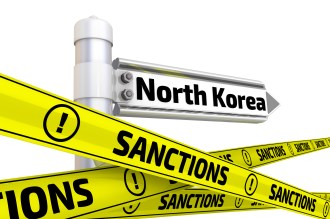
Sanctions against North Korea. Concept
Photo credit: iStock.com/Waldemarus

By Susan Kohn Ross

On September 21, 2017, President Trump issued an Executive Order (yet to be numbered) (“EO”) imposing additional sanctions on North Korea. It took effect the next day. The general press has quoted Treasury Secretary Mnuchin as stating: “Foreign financial institutions are now on notice that going forward they can choose to do business with the United States or North Korea, but not both.” These latest changes raise the specter for even more caution on the part of companies conducting international business. The question every CFO at every company should ask is – is our due diligence program as good as it needs to be? If not, your funds could get seized and dealing with the Dept. of Justice in these types of cases can be quite challenging.   The government often has information the private sector does not possess and, if your due diligence program is not deemed sufficient, you stand little chance of getting those funds released. Given the current climate, you can bet getting funds released related to the North Korea sanctions is going to be even more difficult!

The new Executive Order is broadly worded to include any person who is determined: Continue reading “Walking the North Korean Tightrope”

Solar Flare-up with China

Solar power plant panels with sun rays and blue sky
Photo credit: iStock.com/Lara_Uhryn

By Susan Kohn Ross

Two actions took place at the end of last week which heighten concerns that a trade war with China could be ever more likely. First, there was the preliminary decision in the solar panels 201 case. Then, we had the additional sanctions imposed by the President on North Korea.

The 201 solar panel case began when Suniva Inc. and SolarWorld Americas Inc. filed their cases before the International Trade Commission (“ITC”) in April and May 2017. These actions are, of course, in addition to the antidumping and countervailing duties currently being imposed on these products from China. Continue reading “Solar Flare-up with China”

Trading with China – New Reasons to Be Wary!

By Susan Kohn Ross

port
Photo credit: iStock.com/nattanan726

Today, President Trump signed into law H.R. 3364, the “Countering America’s Adversaries Through Sanctions Act”. The general press is covering this story by writing about Russia’s initial retaliation taking the form of cutting the staff authorized at the U.S. embassy in Moscow and the seizure of certain U.S. diplomatic property within Russia. When it comes to international traders, the impact on dealing with Russia, but also Iran and North Korea, takes the form of enhanced compliance efforts.

The new law will provide more in the way of direct and indirect sanctions. A direct sanction arises because the person (or company/entity) is listed by one of the relevant U.S. agencies on the appropriate blocked persons list. A secondary sanction arises because a blocked person (individual or entity) owns or has a controlling ownership in a company not otherwise listed as blocked. Of course, additional headaches exist when there is U.S. content in the good being sold, so the impact is on both exports and imports. Continue reading “Trading with China – New Reasons to Be Wary!”