Website Accessibility – Americans with Disabilities Act Impact

hands of business person working on computerBy Jonathan Turner and Susan Kohn Ross

Background

Title III of the Americans with Disabilities Act (“ADA”) mandates that public accommodation must be provided to disabled persons to allow for the “full and equal enjoyment” of the related privileges, goods, services, advantages and accommodations as those provided to able bodied persons. The owner of any business is responsible for making sure those accommodations are made with “reasonable modification.” The ADA makes it very clear that a business that does not provide for that accommodation is engaging in unlawful discrimination 42 U.S.C. section 12182(b)(2)(A)(iii).

The statute provides for various examples of where public accommodations must be provided, including locations such as an inn, a restaurant, a theater, an auditorium, a bakery, a laundromat, a depot, a museum, a zoo, a nursery, a day care center, and a gymnasium. Noticeably absent from that list are websites. That’s because websites did not exist at the time the statute was passed, and Congress has not expressly addressed the issue in the interim. Continue reading “Website Accessibility – Americans with Disabilities Act Impact”

Customers Now Jointly Liable with Port Trucking Companies for Certain Labor Violations

Truck in port
Photo credit: iStock.com/nightman1965

By Susan Kohn Ross

One of the bills signed into law by California Governor Edmund G. Brown from the most recent legislative session aims to hold customers accountable when hiring trucking companies that have a record of Labor Code violations. Under SB 1402, customers who utilize trucking companies to deliver goods from California’s ports may be held jointly and severally liable for certain Labor Code violations committed by those trucking companies. Here is the explanation for the need for this new law: “Holding customers of trucking companies jointly liable for future labor law violations by port drayage motor carriers who they engage, where the customer has received advance notice of their record of unsatisfied judgments for labor law violations, will exert pressure across the supply chain to protect drayage drivers from further exploitation.” And “Customers have the market power to exert meaningful change in the port drayage industry that has eluded California drivers for more than a decade.” Continue reading “Customers Now Jointly Liable with Port Trucking Companies for Certain Labor Violations”

China Tariffs – List 3 Finalized and Taking Effect

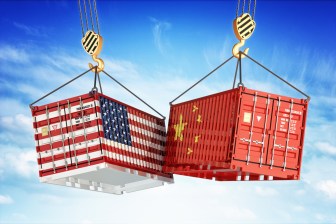
Economic trade war between USA and China
Photo credit: iStock.com/cybrain

In this video blog, MSK Partner & International Trade Practice Chair Susan Kohn Ross covers the latest developments with the 301 tariffs. 

At the end of the day on September 17, 2018, the U.S. Trade Representative issued notice that List 3 of the China tariffs has been finalized and takes effect with a 10% tariff on September 24, 2018. If “sufficient” progress is not made with the Chinese as defined by the Trump Administration, that tariff rate will rise to 25% on January 1, 2019. List 3 is the list containing products worth $200 billion.

The USTR announcement can be found here. The original list of products was 6,031. The final list was reduced to 5,745 and can be found here.

To no one’s surprise, the Chinese immediately announced their own retaliatory action and those details can be found here. Continue reading “China Tariffs – List 3 Finalized and Taking Effect”

China 301 Tariffs – Current Events

In this video blog, MSK Partner & International Trade Practice Chair Susan Kohn Ross covers what’s next with the 301, including the tariff China has imposed on goods imported from the U.S., which product lists are at which stage, what is going on with List 3 in both countries, and other current events. Continue reading China 301 Tariffs – Current Events

China 301 List 2 – Effective August 23, 2018

USA and Chinese flags on mountain signpost.
Photo credit: iStock.com/Darwel

By Susan Kohn Ross

USTR Lighthizer yesterday published notice that the 25% tariff on goods appearing on List 2 will become effective on August 23, 2018. For those who wonder if filing comments makes a difference, the answer is yes! In his announcement, USTR Lighthizer made the point the list dropped from 284 to 279 tariff items based on testimony and comments which had been received. None of this, of course, helps those companies which are taking a serious financial hit from these tariffs, but then once the official notice is published in the Federal Register, an exclusion request will be included, and so companies should be gearing up to do two things: Continue reading “China 301 List 2 – Effective August 23, 2018”

Brief Updates on China 301 List 3

By Susan Kohn Ross On August 1, 2018, USTR Lighthizer issued a press release indicating he was following through with President Trump’s direction and will consider raising the rate of duty from 10% to 25% on those products on China 301 List 3. A formal notice in the Federal Register is expected soon. Mr. Lighthizer also announced the written comment period is being extended to September … Continue reading Brief Updates on China 301 List 3

China 301: List 3 Now A Reality

China United States Trade Solution
Photo credit: iStock.com/wildpixel

By Susan Kohn Ross

Late on July 10, 2018, U.S. Trade Representative Lighthizer released a list of the next Chinese-made products targeted for additional duties, this time at a 10% rate and worth about $200 billion. The statement in support of this action can be found here, and the list of affected products here. As before, the list of products is released in Federal Register pre-publication format.

The dates to keep in mind are as follows… Continue reading “China 301: List 3 Now A Reality”