Fortnite Is Nearly Free From Pellegrino Suit Over Dance Moves

Written by Sofia Castillo

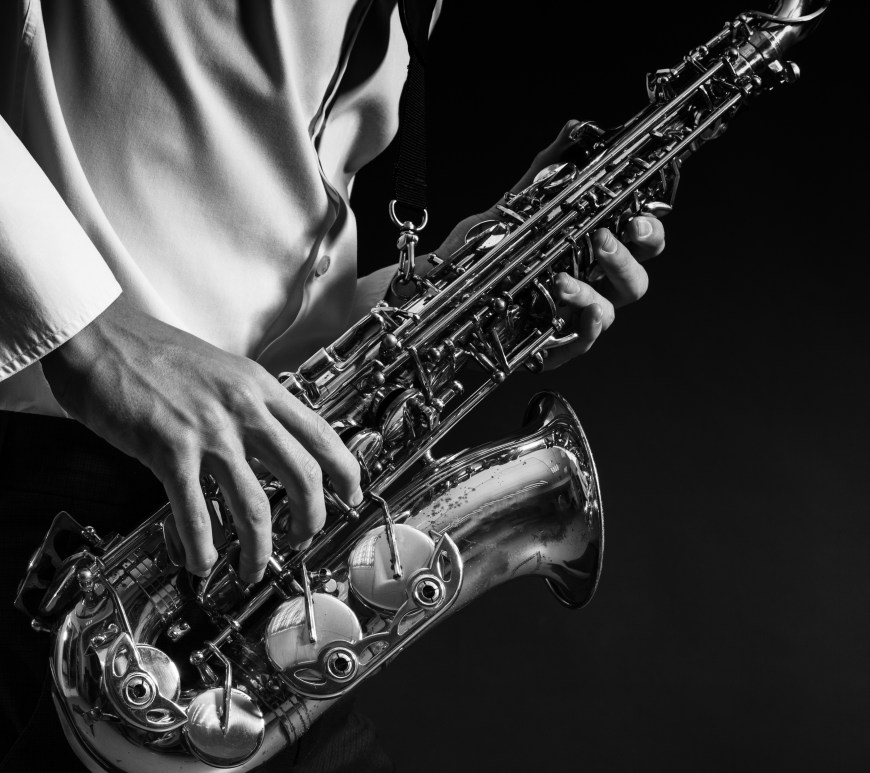
On March 31st, the Eastern District of Pennsylvania dismissed with prejudice all but one of plaintiff’s claims in Pellegrino v. Epic Games, No. 19-1806 (E.D. Pa. Mar. 31, 2020). As in several other recent cases, the dispute in Pellegrino arose out of an unauthorized use of dance moves in the popular video game Fortnite Battle Royale. Unlike those other cases, however, instead of suing for copyright infringement, professional saxophone player Leo Pellegrino brought claims for misappropriation of likeness and for trademark infringement under both the Lanham Act and Pennsylvania state law.

Pellegrino alleged that he developed a signature dance move while playing the saxophone. He further alleged that one of Fortnite’s “emotes,” the “Phone It In,” plays a saxophone while dancing and thus misappropriates and infringes that signature dance move. Continue reading “Fortnite Is Nearly Free From Pellegrino Suit Over Dance Moves”

Court Sides With Video Game Producer Over The Use Of Athlete’s Tattoos

Written by Sofia Castillo

On March 26, 2020, the district court for the Southern District of New York issued a landmark ruling in a case closely followed by the film, video game, sports and tattoo industries. Where for several years the only direct precedent on the issue of expressive tattoos in expressive works was limited to early rulings in cases like that involving The Hangover or relegated to settlements, Solid Oak Sketches, LLC v. 2K Games, Inc. firmly resolved all doubt. In the ruling, the court granted the defendant video game publishers’ motion for summary judgment on three separate grounds, finding that the defendants’ depiction of basketball superstars’ tattoos in a “NBA2K” video game was: (1) a “de minimis” use, (2) allowed under the players’ implied license given by the tattoo artists, and (3) a fair use. This decision comes almost exactly two years after Judge Swain denied the defendants’ motion to dismiss the claims.

On the first ground, the court looked to precedent regarding “de minimis” use principles in other contexts. Ultimately, the defendants’ video evidence convinced the court that NBA2K’s depiction of tattoos on basketball superstars LeBron James, Kenyon Martin and Eric Bledsoe (and none of the other over 400 available players in the game) was “de minimis” and therefore “no reasonable trier of fact could find the Tattoos as they appear in NBA 2K were substantially similar to the Tattoo designs licensed to Solid Oak.” The court found that the small size and distorted angles of the tattoos’ display as part of the game play was “indiscernible to the average game user,” making the plaintiff’s copyright expression insufficiently observable to rise to the level of an actionable taking. Continue reading “Court Sides With Video Game Producer Over The Use Of Athlete’s Tattoos”

Supreme Court Rules in Favor of North Carolina, Applies Sovereign Immunity

Written by Bradley J. Mullins and Adé T.W. Jackson

On Monday, the U.S. Supreme Court ruled that a provision of the Copyright Act that allows for lawsuits against state governments for copyright infringement is unconstitutional.  The justices were considering Allen, et al. v. Cooper, et al., Case No. 18-877 (Mar. 23, 2020), a case where North Carolina was being sued by a filmmaker for using his videos and photos of the wreck of Queen Anne’s Revenge — the flagship of the pirate Blackbeard.  The justices unanimously ruled that North Carolina was shielded from the lawsuit by state sovereign immunity.

Although the Eleventh Amendment gives states broad sovereign immunity against such lawsuits, the plaintiff relied on the Copyright Remedy Clarification Act (CRCA) — a statue enacted by Congress in 1990 expressly to permit infringement claims against the States.  However, Monday’s ruling invalidates the statute, with the justices determining that Congress lacked the constitutional authority required to abrogate state sovereign immunity in this way. Continue reading “Supreme Court Rules in Favor of North Carolina, Applies Sovereign Immunity”

Pirates Find New Shelter

Demand for Pirated Content Surges as the Public Stays Home

Written by Eleanor M. Lackman

At a time where theaters are shut down and productions are on hold, the entertainment industry is facing another challenge: the sudden surge in demand for pirated audiovisual and game content.  According to anti-piracy firm MUSO, the number of people illegally streaming the movie Contagion increased by over 5600%.  As lockdowns and stay-home orders keep people at home in an increasing number of countries, online searches for local pirate sites have ballooned, even despite studios’ in-home release of films that were slated to premiere this month in theaters.

Apparently taking advantage of the situation, well-known piracy app Popcorn Time, which launched in 2015 and was quickly shut down thereafter, has just reemerged in a new version.  In its own words, Popcorn Time announced in a tweet on Tuesday: “Love in the Time of Corona Version 0.4 [sic] is out!” Popcorn Time offers an easy-to-use system that uses BitTorrent to stream movies and television shows without needing to download them.  This time, the instructions for the app include a suggestion for users to use VPNs to avoid detection by users’ ISPs, which may be held responsible for repeated acts of infringement by their users if the ISP fails to take appropriate steps to curtail it.  See, e.g., BMG Rights Management (US) LLC v. Cox Communications, Inc., 881 F.3d 293 (4th Cir. 2018). Continue reading “Pirates Find New Shelter”

MSK Wins Reversal of “Dark Horse” Copyright Verdict

Written by Christine Lepera, Jeffrey M. Movit and Gabriella Nourafchan

Last July, a team of MSK attorneys represented Defendants in a copyright infringement trial involving allegations that the ostinato (a musical phrase that repeats) in Katy Perry’s 2013 song “Dark Horse” infringed the ostinato in Plaintiffs’ Christian rap song entitled “Joyful Noise.”  After the jury returned a verdict in favor of Plaintiffs, MSK filed a motion seeking reversal, or in the alternative, a new trial.

This week, the Court granted MSK’s motion, overturned the jury verdict, and entered judgment in Defendants’ favor.  The Court found that Plaintiffs’ copyright claim failed because the ostinato in “Joyful Noise” was commonplace expression that no music creator can monopolize.  Continue reading “MSK Wins Reversal of “Dark Horse” Copyright Verdict”

COVID-19 Triggers Savings

Your Trademark and the COVID-19 Outbreak

Written by Alesha M. Dominique and Sofia Castillo

This week, the U.S. Patent and Trademark Office (USPTO) announced that it considers the effects of the Coronavirus outbreak to be an “extraordinary situation” within the meaning of 37 CFR 2.146 for affected trademark applicants and trademark owners. In response, it is waiving the petition fees (set by regulation, rather than statute) that it normally charges to revive an abandoned trademark application and to reinstate a canceled or expired trademark registration if they were abandoned or canceled/expired as a result of the impact of the Coronavirus outbreak. Other trademark-related deadlines and fees will not change.

Specifically, the USPTO is waiving the petition fee to revive an abandoned application or to reinstate a canceled or expired registration if it was abandoned or canceled/expired “due to an inability to timely respond to a trademark-related Office communication as a result of the effects of the Coronavirus outbreak.” A petition must be accompanied by a statement that explains “how the failure to respond to the Office communication was due to the effects of the Coronavirus outbreak.” Continue reading “COVID-19 Triggers Savings”

Ninth Circuit Ends Lawsuit Involving Copyright Protection for Characters, Leaving Plaintiffs in a Bad Mood

Photo Credit: istock.com/Ja_inter

Written by Robert H. Rotstein

On March 16, 2020, the Ninth Circuit ended a lawsuit alleging that Disney’s Inside Out infringed plaintiffs’ alleged copyright in characters known as “The Moodsters.” Daniels, et al., v. The Walt Disney Company, et al., Case No. 18-55635 (9th Cir. Mar. 16, 2020). The Court elaborated on the standards governing character protection and enunciated a rigorous standard for pleading “idea submission” claims in federal court.

Plaintiffs’ five characters are color-coded anthropomorphic emotions, each representing a different emotion. Between 2007 and 2009, Plaintiffs allegedly pitched The Moodsters to Disney. In 2015, Disney released Inside Out, a film that centers on five anthropomorphized emotions that live inside the mind of an eleven-year-old girl. Continue reading “Ninth Circuit Ends Lawsuit Involving Copyright Protection for Characters, Leaving Plaintiffs in a Bad Mood”

Ninth Circuit Rules in Favor of Led Zeppelin, Clarifies Standards for Copyright Infringement

By David A. Steinberg and James Berkley

Photo Credit: istock.com/NiroDesign

On March 9, 2020, the Ninth Circuit issued its en banc decision­­­ in the long-running and closely watched copyright case concerning the rock group Led Zeppelin’s 1971 song “Stairway to Heaven.” Skidmore v. Led Zeppelin et al., Case No. 16-56057, 16-56287 (9th Cir. Mar. 9, 2020).  A 2014 lawsuit in the Central District of California alleged that “Stairway to Heaven” infringed portions of an instrumental composition titled “Taurus” that had been recorded and released in 1967 by the group Spirit.  Capping off several years of uncertainty, the Court’s en banc opinion reversed the previous 2018 ruling of a three-judge panel and reinstated the judgment entered at the district court, where a jury found that “Stairway to Heaven” does not infringe the “Taurus” musical composition.

Among many topics covered, the Ninth Circuit’s en banc opinion contains three sets of holdings that, absent a successful petition to the U.S. Supreme Court, should have continuing implications for copyright litigation in the Ninth Circuit.  These holdings may be summarized as follows: Continue reading “Ninth Circuit Rules in Favor of Led Zeppelin, Clarifies Standards for Copyright Infringement”

YouTube May Be An Enormous Town Square, But It’s Still Not Subject to The First Amendment

Photo Credit: istock.com/Mack15

Written by Theresa B. Bowman

In Prager University v. Google LLC, et al., Case No. 18-15712 (9th Cir. Feb. 26, 2020), the Court of Appeals for the Ninth Circuit dismissed a First Amendment lawsuit against YouTube late last week, holding that the video hosting giant is a private forum that is free to foster particular viewpoints – and need not be content-neutral.  The victory is a significant message to other online content hosts, aggregators and service providers that they need not feel threatened by censorship claims for selecting and curating content on their systems.

The lawsuit began in 2017, when conservative media company PragerU sued YouTube for imposing restrictions on some of PragerU’s short animated educational videos.  YouTube tagged several dozen videos for age-restrictions and disabled third party advertisements on others.  PragerU claimed the restrictions constituted censorship because they muted conservative political viewpoints. Continue reading “YouTube May Be An Enormous Town Square, But It’s Still Not Subject to The First Amendment”

New USPTO Guidelines for Electronic Filings and Specimens

Trademark, Patent, USPTO, TTAB, TEAS, Email
Photo Credit: istock.com/rs-photo

By Alesha M. Dominique and Dima S. Budron

On February 15, 2020, the United States Patent and Trademark Office’s (USPTO) new rules will go into effect (84 Fed. Reg. 37081) requiring applicants, registrants, and parties to a proceeding before the Trademark Trial and Appeal Board (TTAB) to provide their own email address to receive USPTO correspondence, and file all trademark submissions electronically using the Trademark Electronic Application System (TEAS), with limited exceptions.  In addition, the new rule amends the requirements for specimens in accordance with the Trademark Act and precedential case law.

Requirement to Provide Applicant, Registrant and Party Email Address

As of February 15, 2020, applicants, registrants, and parties to a proceeding before the TTAB, will be required to provide and maintain their own valid email address for receipt of correspondence from the USPTO.  This requirement is in addition to the attorney address that is already required.  The applicant’s, registrant’s, or party’s email address will be publicly displayed along with other contact information already available in the USPTO’s public database. Continue reading “New USPTO Guidelines for Electronic Filings and Specimens”