Shareholder Distancing

Shareholder Meetings in the Age of “Social Distancing” and COVID-19

Written by Blake Baron

Background

On March 13, 2020, the U.S. Securities and Exchange Commission (the “SEC”) published guidance to assist public companies, investment companies, shareholders and other market participants affected by COVID-19 in connection with their upcoming shareholder meetings. The SEC explained that this guidance was designed to allow these companies to continue to hold their meetings, including through the use of technology, and engage with shareholders under social distancing circumstances, while still complying with the federal securities laws.

Shareholder Meetings – The Impact of COVID-19 and the Natural Transition to Virtual Meetings

Generally, public companies and investment companies are required to hold annual meetings of security holders, with the federal securities laws requiring the delivery of proxy materials to the voting shareholders.  Over the past few years, more and more companies have been transitioning to either complete “virtual” shareholder meetings or “hybrid” meetings, which avoid the need for in-person shareholder attendance. Continue reading “Shareholder Distancing”


COVID-19 Client Communication

As the COVID-19 crisis rapidly evolves, the health and safety of our employees, clients and our communities remain our highest priority. We wanted to share with you what we are doing as a firm. We have instructed attorneys and staff in all of our offices to work remotely (with rare exception for certain critical functions). This is happening seamlessly as part of our business continuity plan. We have been working round-the-clock in counseling clients on today’s mission-critical issues, from employment to immigration to tax, as it relates to the outbreak of COVID-19. Like you, we are constantly monitoring the situation, and we will provide additional updates in the coming days and weeks as appropriate. In the meantime, we want you to know that our thoughts are with you and your families, and we hope that you remain healthy and safe.

In an effort to support you during these uncertain times, we have assembled a firm-wide COVID-19 response team from all of our practice areas. For the coming weeks, and starting today in this alert, we intend to send a consolidated communication alert on a regular basis that touches on breaking news and relevant items that could affect you or your business across a range of topics. If there is anything else that we can do to help you during this challenging time, please do not hesitate in reaching out.

Continue reading “COVID-19 Client Communication”

Coronavirus Business Interruption

Written by Jean Pierre Nogues and Daniel M. Hayes

Escalating health concerns, governmental restrictions, empty shelves at retailers, supply chain disruptions, and wild gyrations in the financial markets.  The COVID-19 virus and steps taken to reduce its spread are impacting more businesses in more ways each day.

In order to put yourself in the best position to weather this storm and recover as quickly as possible, it is vital that you consider and fully understand the defenses you or your business partners may have under your contracts, and whether you have any insurance coverage for your COVID-19 losses. Continue reading “Coronavirus Business Interruption”

Federal Tax Payments May Be Delayed 90 Days

Written by David Wheeler Newman Treasury Secretary Steven Mnuchin announced that individual taxpayers may defer payment of tax bills up to $1 million for ninety days, interest and penalty free, as part of a coronavirus stimulus bill announced by the administration on March 17. According to the Secretary, the $1 million limit is intended to provide relief to small businesses and pass-through entities like partnerships … Continue reading Federal Tax Payments May Be Delayed 90 Days

Telecommuting? Buckle Up

Are Your Employees Telecommuting Now? COVID-19 and Cybersecurity Concerns for Businesses

Written by Jeremy Mittman and Susan Kohn Ross

A topic of immediate concern to businesses that has not received a great deal of attention (but should) is cybersecurity. There are unscrupulous people out there who will try to take advantage of the situation! This is especially worrisome with the increased usage of telecommuting to facilitate business continuity.

Within the Dept. of Homeland Security sits the Cybersecurity and Infrastructure Security Agency or CISA which is “responsible for protecting the Nation’s critical infrastructure from physical and cyber threats.” CISA, through its National Cyber Awareness System, released Defending Against COVID-19 Cyber Scams, see here for the full text.  In short, beware of emails with malicious attachments and hyperlinks. Also be careful about social media pleas, texts and calls having to do with COVID-19.

The NCAS recommends:

Continue reading “Telecommuting? Buckle Up”

Best Practices for Maintaining Employee Privacy Regarding COVID-19

Written by Jeremy Mittman and Susan Kohn Ross

The situation surrounding COVID-19 is, to the say the least, fluid and scary. The ultimate outcome of the disruption to the business community is also unclear. There are nonetheless a couple of topics we can talk about right now with some degree of certainty on which businesses may want to focus as we all struggle to deal with the very human toll of this pandemic. One is employee privacy and is addressed in this edition. The cybersecurity topics worthy of immediate attention will be covered in a subsequent blog post.

We start here with the confidentiality obligation of employers regarding information about the health of their employees. If someone on your staff becomes infected, as a general proposition, as the employer, you may not share that information with other employees. The Centers for Disease Control published an Interim Guidance for Businesses and Employers, and stated: “If an employee is confirmed to have COVID-19, employers should inform fellow employees of their possible exposure to COVID-19 in the workplace but maintain confidentiality as required by the Americans with Disabilities Act.” Since COVID-19 has spread to many different countries, the privacy laws in those countries also need to be considered. For example, the European privacy law – the GDPR – addresses privacy around health data, plus local public health authorities in those countries will have their own protocols to follow.

Continue reading “Best Practices for Maintaining Employee Privacy Regarding COVID-19”

Three New Coronavirus Developments for Employers

Coronavirus 2019-nCOV medical still life concept
Photo credit: istock.com/rabbitti

Written by Jeremy Mittman and Stephen Franz

There are several new developments at the federal and state level regarding the Coronavirus (COVID-19) outbreak and its impact on California employers and workers.  The United States House of Representatives passed the “Families First Coronavirus Response Act,” (H.R. 6201), tentatively creating new paid leave obligations related to the coronavirus for many employers.  Moreover, two California government agencies have issued important new guidance on coronavirus and its impact on employers and workers:  The California Labor Commissioner’s Office issued an FAQ Memo and the California Employment Development Department (EDD) also issued relevant guidance.

Continue reading “Three New Coronavirus Developments for Employers”

Novel Coronavirus European Travel Ban (Effective March 13, 2020)

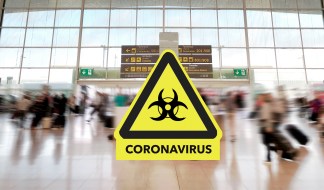
Airport terminal and coronavirus sign
Photo Credit: istock.com/Marta Ortiz

By Frida Glucoft and Benjamin Lau

On March 11, 2020, the White House issued Proclamation 9984 “Suspension of Entry as Immigrants and Nonimmigrants of Certain Additional Persons Who Pose a Risk of Transmitting 2019 Novel Coronavirus,” which suspends entry to the United States for immigrants and nonimmigrants who were physically present in the Schengen Area during the 14-day period preceding their arrival to the United States. The Schengen Area includes the following 26 countries:

Austria Hungary Norway
Belgium Iceland Poland
Czech Republic Italy Portugal
Denmark Latvia Slovakia
Estonia Liechtenstein Slovenia
Finland Lithuania Spain
France Luxembourg Sweden
Germany Malta Switzerland
Greece Netherlands

Exceptions: The travel restriction does not apply to US Citizens, legal permanent residents (green card holders), spouses of US Citizens or legal permanent residents, unmarried children under the age of 21 of US Citizens or legal permanent residents, parents or legal guardians of US Citizens or legal permanent residents who are unmarried and under the age of 21, or members of the US Armed Forces and spouses and children of members of the US Armed Forces. Additional less common immigration statuses, such as individuals traveling on diplomatic visas, United Nation visas, or C-1/D crewmember visas, are also excluded from the travel restriction. Continue reading “Novel Coronavirus European Travel Ban (Effective March 13, 2020)”

Be Prepared: What Should Employers Do About the Coronavirus?

Woman Applying Soap On The Hand Near Basin
Photo Credit: istock.com/AndreyPopov

Written by Jeremy Mittman and Thea Rogers

This week, the U.S. Centers for Disease Control and Prevention (CDC) warned that the Coronavirus, otherwise known as COVID-19, will likely continue its spread around the world and to the U.S.  While we don’t know the extent to which the Coronavirus will take hold in the U.S., employers should start planning now so they can protect the safety of their workforces and maintain normal business operations, to the extent possible, should the Coronavirus have a significant impact.

In doing so, employers face potentially conflicting laws that should be taken into account in determining how to move forward.  For example, under the Occupational Safety and Health Act (OSHA) and similar state laws, employers have a general duty and obligation to provide a safe and healthy work environment and must not place their employees in situations that are likely to cause serious physical harm or death.  On the other hand, overreacting or implementing overbroad bans or quarantines that aren’t based on reasonable or reliable facts or information could violate laws that prohibit discrimination (based upon disability, national origin, or other protected characteristics).

Employers should contact counsel with any questions as they navigate putting together their Coronavirus (or general infectious disease prevention) plans and policies, or dealing with employee-specific issues that may arise.

Continue reading “Be Prepared: What Should Employers Do About the Coronavirus?”