Department of Labor Releases Initial Q&A for Families First Coronavirus Response Act

Department of Labor Releases Initial Q&A for Families First Coronavirus Response Act, Effective April 1, 2020

Written by Jeremy Mittman and Stephen Franz 

On March 24, 2020 the U.S. Department of Labor (”DOL”) published an initial series of “Questions and Answers” related to the Families First Coronavirus Response Act (“FFCRA”).  The FFCRA contains COVID-19-related paid family leave and sick leave provisions which apply to private employers with fewer than 500 employees.  Notably, and surprisingly, the DOL states that the FFCRA is effective on April 1, 2020.  Because the FFCRA states the leave provisions shall take effect “not later than 15 days” after the March 18, 2020 date of enactment, many assumed that the DOL would begin enforcement on April 2, 2020.  The agency did not provide any reason for this accelerated start date.

The Questions and Answers address topics including how an employer may count its employees in determining the 500-employee threshold, whether the paid leave requirements are retroactive, and how to calculate employees’ pay for leave purposes (additional detail provided in the guidance itself, copied below). Unfortunately, the Questions and Answers do not answer two of the most pressing questions facing many employers: (1) whether “shelter in place” orders are “quarantine or isolation” orders necessitating paid leave under the FFCRA; and (2) whether furloughed employees are eligible for paid leave.  Employers should expect further guidance from the DOL in the coming days, including more Q&A, which will hopefully address these critical issues. Continue reading “Department of Labor Releases Initial Q&A for Families First Coronavirus Response Act”


FAQs re New Federally-Mandated COVID-19 Leave Benefits

Here is a quick reference guide to the new federal sick and family leave law. Please check back frequently for updates as we provide them.   THE BASICS AND COMMON QUESTIONS: QUESTION ANSWER What is the current status of the law? President Trump signed into law H.R. 6201, the Families First Coronavirus Response Act, on March 18, 2020. When does the law take effect? April … Continue reading FAQs re New Federally-Mandated COVID-19 Leave Benefits

Freedom Of (All) The Press?

Impact of “Shelter in Place” Orders on Media Companies Written by Aaron M. Wais and Craig C. Bradley In today’s age, people consume their news in myriad ways: from more traditional means such as watching the nightly news to reading a wide variety of media websites.  Many of these organizations require people on the ground to report and deliver the news, and also thrive on … Continue reading Freedom Of (All) The Press?

Golden State Stays Home

COVID-19: SoCal Shelter in Place Orders

Written by Susan Kohn Ross and Matthew S. Beasley

On March 19, 2020, the City of Los Angeles (“City”), the County of Los Angeles (“County”), and the State of California (“State”) each issued separate “shelter in place” orders in response to the Novel Coronavirus. Each generally requires that residents stay home unless they are engaged in work which the orders define as “essential.” Unfortunately, the orders are not consistent in how “essential” is defined. Moreover, on March 20 the State issued an updated order and expanded its definition of “essential.” For example, the State order now defines the following types of workers as essential: “Workers supporting the entertainment industries, studios, and other related establishments, provided they follow covid-19 public health guidance around social distancing.” The City and County orders, by contrast, do not currently include entertainment workers as “essential,” even though a significant portion of California’s entertainment workers are in Los Angeles. Continue reading “Golden State Stays Home”

North America, Bordered Up

Written by Susan Kohn Ross

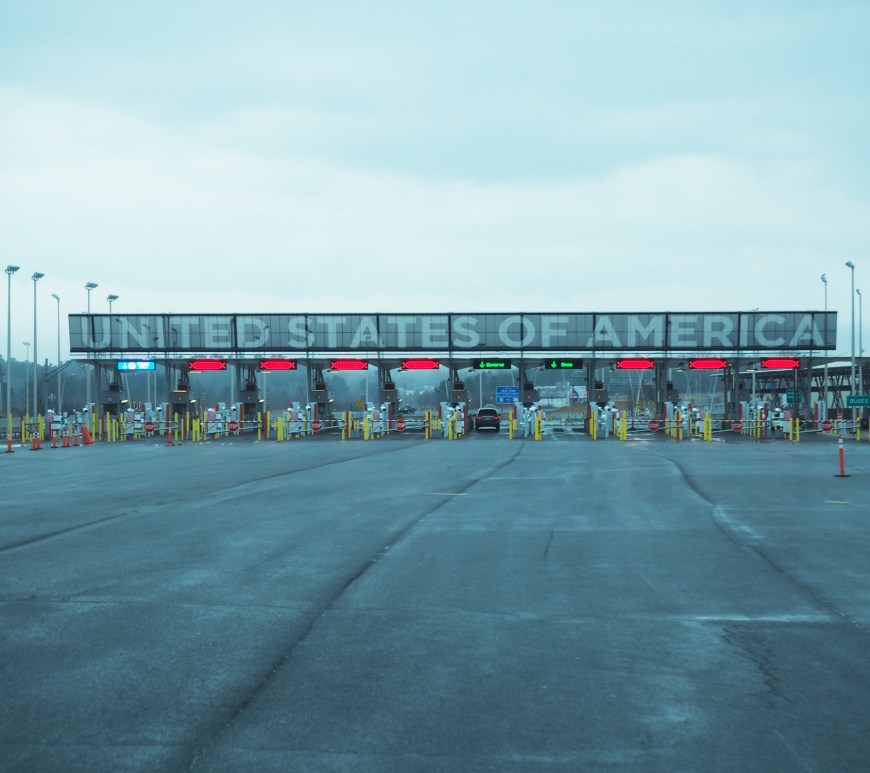
The U.S. is working closely with Mexico and Canada to ensure North America has a coordinated approach to combating the pandemic caused by COVID-19, and mitigating any further spread. The United States and Canada have agreed to restrict travel at the land border to essential travel only (details regarding those travel restrictions can be found here and here). In a similar fashion, the United States and Mexico are finalizing an agreement that will facilitate only essential travel at the U.S. southern border. The three countries are maintaining cross-border activities that support health security, commerce, supply security, trade, and other essential activities, while taking prudent steps to protect citizens and to limit spread of the virus. The stated goal of these efforts is to help save lives. As such, these restrictions are in place indefinitely. Continue reading “North America, Bordered Up”

Careful With The Remote

Cybersecurity Concerns with Remote Work

Written by Susan Kohn Ross and Timothy Carter

While likely not the first topic that comes to mind amidst a global pandemic, organizations and businesses that now find themselves entirely (or almost entirely) remote would be remiss not to consider the potential data and cybersecurity issues raised by this sudden and unexpected shift to remote work. For much of the country, COVID-19 has resulted in an abrupt shift in the way we work. Even for those businesses that maintained robust work-from-home policies and systems, this shift presents a learning curve. The more traditional data and cybersecurity concerns ever-present in normal business operations are compounded by the difficulties presented by an extensive remote workforce. Preoccupied remote workers can be more susceptible to online threats such as phishing emails or malware and ransomware, thereby “opening the door” and providing unauthorized access to bad actors. The other, often lesser considered concern is accidental disclosure of confidential business information. Continue reading “Careful With The Remote”

Don’t Get Stuck With COVID-19

US Immigration In The Time of the Coronavirus

Written by David S. Rugendorf

Our lives have changed almost overnight, and the unimaginable has become the new normal. We find ourselves, our families and our workplaces in an unprecedented and ever evolving situation, with new government directives and restrictions appearing on an almost daily basis. With that in mind, we have a few general points to share with our clients and friends:

RECONSIDER TRAVEL PLANS – This should be obvious. Government travel restrictions are in place prohibiting entry into the United States of individuals who have recently been present in China and Europe (including the United Kingdom). Exceptions are currently being made for US citizens, permanent residents (“green card” holders) and their immediate families. Entries across our land borders are now severely curtailed. We do not expect the situation to return to normal any time soon – further restrictions may be imposed. Appointments to obtain visas at US embassies and consulates all over the world have been cancelled, or face lengthy postponements. Applicants should monitor their e-mails for notifications regarding cancellations and postponements. US airports have seen delays in immigration processing and crowding which have made social distancing impossible. Continue reading “Don’t Get Stuck With COVID-19”

Big Apple Shrinks

Shelter in Place Order – New York’s Approach

Written by Susan Kohn Ross

On Friday, Governor Cuomo issued New York’s order. While not referring to “shelter in place”, it has the same impact. To be accurate, the full title is “Guidance for Determining Whether A Business Enterprise is Subject To A Workforce Reduction Under Executive Order 202.6.” Building on an existing executive order to reduce the workforce at each business/work location by 75%, the new order defines essential businesses as follows, and requires that other, non-essential businesses “reduce the in-person workforce at each business/work location by 100% from pre-state of emergency declaration employment levels…” Continue reading “Big Apple Shrinks”

Pirates Find New Shelter

Demand for Pirated Content Surges as the Public Stays Home

Written by Eleanor M. Lackman

At a time where theaters are shut down and productions are on hold, the entertainment industry is facing another challenge: the sudden surge in demand for pirated audiovisual and game content.  According to anti-piracy firm MUSO, the number of people illegally streaming the movie Contagion increased by over 5600%.  As lockdowns and stay-home orders keep people at home in an increasing number of countries, online searches for local pirate sites have ballooned, even despite studios’ in-home release of films that were slated to premiere this month in theaters.

Apparently taking advantage of the situation, well-known piracy app Popcorn Time, which launched in 2015 and was quickly shut down thereafter, has just reemerged in a new version.  In its own words, Popcorn Time announced in a tweet on Tuesday: “Love in the Time of Corona Version 0.4 [sic] is out!” Popcorn Time offers an easy-to-use system that uses BitTorrent to stream movies and television shows without needing to download them.  This time, the instructions for the app include a suggestion for users to use VPNs to avoid detection by users’ ISPs, which may be held responsible for repeated acts of infringement by their users if the ISP fails to take appropriate steps to curtail it.  See, e.g., BMG Rights Management (US) LLC v. Cox Communications, Inc., 881 F.3d 293 (4th Cir. 2018). Continue reading “Pirates Find New Shelter”