NLRB’s General Counsel’s Office Releases Seven New Advice Memos

By Jonathan Turner

Photo credit: iStock.com/BCFC

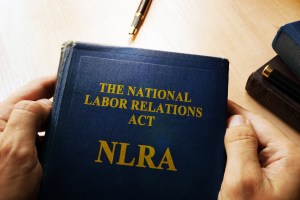
On July 13, 2018, the National Labor Relations Board (NLRB) released seven new memos from its Division of Advice, which is part of the NLRB’s Office of the General Counsel.  The memos resulted from requests for guidance by various NLRB Regional Directors on cases their offices were handling.  The General Counsel’s office can release advice memos to the general public at its discretion after a case has been closed.  The earliest of the seven memos was issued in 2014 and the latest is dated June 14, 2018.  Continue reading “NLRB’s General Counsel’s Office Releases Seven New Advice Memos”

The Business Advisor’s Guide to Making Sense of Recent Trade Tariffs (TAG Alliances)

On August 2, 2018, MSK’s Susan Kohn Ross presented via webinar with John Hove (of Scopelitis, Garvin, Light, Hanson & Feary, P.C.) to TAG Alliance Members on the topic of “Talking Tariffs: The Business Advisor’s Guide to Making Sense of Recent Trade Tariffs and How They Impact Clients.” In this webinar the speakers discussed the recent trade tariffs imposed by the United States. The content … Continue reading The Business Advisor’s Guide to Making Sense of Recent Trade Tariffs (TAG Alliances)

China 301 Tariffs – Current Events

In this video blog, MSK Partner & International Trade Practice Chair Susan Kohn Ross covers what’s next with the 301, including the tariff China has imposed on goods imported from the U.S., which product lists are at which stage, what is going on with List 3 in both countries, and other current events. Continue reading China 301 Tariffs – Current Events

China 301 List 2 – Effective August 23, 2018

USA and Chinese flags on mountain signpost.
Photo credit: iStock.com/Darwel

By Susan Kohn Ross

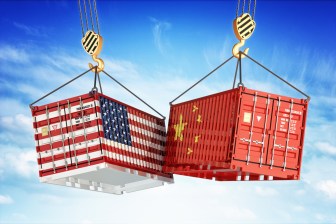
USTR Lighthizer yesterday published notice that the 25% tariff on goods appearing on List 2 will become effective on August 23, 2018. For those who wonder if filing comments makes a difference, the answer is yes! In his announcement, USTR Lighthizer made the point the list dropped from 284 to 279 tariff items based on testimony and comments which had been received. None of this, of course, helps those companies which are taking a serious financial hit from these tariffs, but then once the official notice is published in the Federal Register, an exclusion request will be included, and so companies should be gearing up to do two things: Continue reading “China 301 List 2 – Effective August 23, 2018”

U.S. – China Trade War Heats Up Even More!

By Susan Kohn Ross

Update on the China 301 List 3 Products

On August 1, 2018, USTR Lighthizer issued a press release indicating he was following through with President Trump’s direction and will consider raising the rate of duty from 10% to 25% on those products on the China 301 List 3. A formal notice in the Federal Register is expected soon.

Mr. Lighthizer also announced the written comment period is being extended to September 5, 2018, while the deadline to request to appear at the public hearing is changed to August 13, 2018. The hearing itself is still scheduled for August 20 to 23, 2018.

Then on August 2, there was a new publication which appeared on the USTR website. In it, USTR clarified the August 17, 2018 deadline for comments regarding products on the China 301 List 3 has also been extended to September 5, 2018. Continue reading “U.S. – China Trade War Heats Up Even More!”

Brief Updates on China 301 List 3

By Susan Kohn Ross On August 1, 2018, USTR Lighthizer issued a press release indicating he was following through with President Trump’s direction and will consider raising the rate of duty from 10% to 25% on those products on China 301 List 3. A formal notice in the Federal Register is expected soon. Mr. Lighthizer also announced the written comment period is being extended to September … Continue reading Brief Updates on China 301 List 3

Employers Cannot Rely on the De Minimis Doctrine to Avoid Paying Small Amounts of Regularly Occurring Off-the-Clock Work

By Emma Luevano

The de minimis doctrine, which states that the law does not concern itself with “trifles,” has been applied by federal courts to excuse the payment of wages for small amounts of otherwise compensable time upon a showing that the bits of time are administratively difficult to record.  On Thursday, July 26, 2018, the California Supreme Court ruled that this doctrine does not apply when the otherwise compensable time occurs regularly.  According to the Supreme Court, the advent of modern technology in recording time makes reliance on the de minimis rule nearly unnecessary.  The Supreme Court, however, left for another day whether the de minimis doctrine can excuse an employer from paying for compensable time which does not occur regularly.

In Troester v. Starbucks Corp., a Starbucks employee claimed that, after clocking out, he was required to perform tasks such as transmitting sales data, setting alarms, and sometimes bringing in patio furniture or walking coworkers to their cars, which took an additional 4 to 10 minutes of time per day.  A federal judge dismissed the case, finding that it would be impractical to require Starbucks to record the brief amounts of time employees spent doing work tasks before leaving their stores.  The plaintiff appealed, and the Ninth Circuit Court of Appeals asked the California Supreme Court to decide whether the de minimis rule applies to claims for unpaid wages brought under California Labor Code Sections 510 (providing for overtime pay), 1194 (setting forth a private right of action for minimum wage and overtime violations), and 1197 (providing for minimum wage).  In Thursday’s ruling, the Supreme Court addressed the question in two parts.  Continue reading “Employers Cannot Rely on the De Minimis Doctrine to Avoid Paying Small Amounts of Regularly Occurring Off-the-Clock Work”

My H-1B Was Rejected In The Lottery! What Now?

Close-up detail of American VISA
Photo credit: iStock.com/AlxeyPnferov

By Benjamin Lau

You did everything right. You got into the best school, you got the necessary work experience, you found an employer willing to sponsor you for an H-1B visa, and you filed on April 1. However, despite all your work, your case was not selected as part of this year’s H-1B lottery. Through forces beyond your control, you are now back to square one, wondering whether you must now leave the United States.

But wait! There may still be an alternative visa option available to you within the alphabet soup of U.S. work visas. So, before throwing in the towel and packing your bags, you may want to consider the list of alternative U.S. work visa categories below. One of these alternative visas may offer you the best chance for future employment in the United States – and while the list is not conclusive, it represents the most likely options for you to secure U.S. work authorization. Continue reading “My H-1B Was Rejected In The Lottery! What Now?”