SEC Sets Course on COVID-19 Disclosure

Written by Blake Baron

Introduction

On March 25, 2020, the SEC’s Division of Corporation Finance provided disclosure guidance to public companies to assist in the evaluation of a company’s disclosure obligations with respect to the COVID-19 (novel coronavirus) pandemic and related business and market disruptions.

While it may be difficult for companies to assess or predict the exact impact of COVID-19 on individual companies or entire industries, the SEC explained that a company may have obligations to disclose certain risks and effects to the extent material to investment and voting decisions. Such risks and effects include the impact of COVID-19 on the current state of a company’s operations, management expectations regarding its future effects, a company’s response to the evolving pandemic and operational plans to address such uncertainties. The SEC noted that disclosure of these risks and COVID-19-related effects may be necessary or appropriate in various sections of SEC filings, including, but not limited to, management’s discussion and analysis, the business section, risk factors, legal proceedings, disclosure controls and procedures, internal control over financial reporting, and a company’s financial statements. Continue reading “SEC Sets Course on COVID-19 Disclosure”


Keeping Employees Posted

DOL Releases Model Families First Coronavirus Response Act Notice That Eligible Employers Must Post

Written by Jeremy Mittman and Stephen Franz

On March 26, 2020 the U.S. Department of Labor (”DOL”) published the model notice that certain employers must post informing employees of their rights under the Families First Coronavirus Response Act (“FFCRA”).  Here is a copy of the notice.

The FFCRA contains COVID-19-related paid family leave and sick leave provisions which apply to private employers with fewer than 500 employees.  The FFCRA mandates that eligible employers post notice of employees’ rights under the FFCRA in “conspicuous places on the premises where notices to employees are customarily posted.”  As the FFCRA also states that the notice shall be prepared or approved by the DOL, eligible employers should post a copy of the DOL’s model notice, rather than their own notice.

The DOL also published Frequently Asked Questions addressing topics including where employers must “post” the notice if the workforce is telecommuting, how to provide notice if employees work in multiple locations, and if the notice must be translated (additional detail provided in the FAQs themselves, copied below): Continue reading “Keeping Employees Posted”

America CARES

Tax and Employee Benefits Provisions of the CARES Act Written by David Wheeler Newman The Coronavirus Aid, Relief, and Economic Security Act (the “Act”) contains numerous provisions, intended to stimulate the economy, which will impact tax liability and compliance for individuals and businesses. Some of the important provisions are highlighted below. There are many additional provisions in this legislation impacting taxpayers and the below summary … Continue reading America CARES

Department of Labor Releases Initial Q&A for Families First Coronavirus Response Act

Department of Labor Releases Initial Q&A for Families First Coronavirus Response Act, Effective April 1, 2020

Written by Jeremy Mittman and Stephen Franz 

On March 24, 2020 the U.S. Department of Labor (”DOL”) published an initial series of “Questions and Answers” related to the Families First Coronavirus Response Act (“FFCRA”).  The FFCRA contains COVID-19-related paid family leave and sick leave provisions which apply to private employers with fewer than 500 employees.  Notably, and surprisingly, the DOL states that the FFCRA is effective on April 1, 2020.  Because the FFCRA states the leave provisions shall take effect “not later than 15 days” after the March 18, 2020 date of enactment, many assumed that the DOL would begin enforcement on April 2, 2020.  The agency did not provide any reason for this accelerated start date.

The Questions and Answers address topics including how an employer may count its employees in determining the 500-employee threshold, whether the paid leave requirements are retroactive, and how to calculate employees’ pay for leave purposes (additional detail provided in the guidance itself, copied below). Unfortunately, the Questions and Answers do not answer two of the most pressing questions facing many employers: (1) whether “shelter in place” orders are “quarantine or isolation” orders necessitating paid leave under the FFCRA; and (2) whether furloughed employees are eligible for paid leave.  Employers should expect further guidance from the DOL in the coming days, including more Q&A, which will hopefully address these critical issues. Continue reading “Department of Labor Releases Initial Q&A for Families First Coronavirus Response Act”

Supreme Court Rules in Favor of North Carolina, Applies Sovereign Immunity

Written by Bradley J. Mullins and Adé T.W. Jackson

On Monday, the U.S. Supreme Court ruled that a provision of the Copyright Act that allows for lawsuits against state governments for copyright infringement is unconstitutional.  The justices were considering Allen, et al. v. Cooper, et al., Case No. 18-877 (Mar. 23, 2020), a case where North Carolina was being sued by a filmmaker for using his videos and photos of the wreck of Queen Anne’s Revenge — the flagship of the pirate Blackbeard.  The justices unanimously ruled that North Carolina was shielded from the lawsuit by state sovereign immunity.

Although the Eleventh Amendment gives states broad sovereign immunity against such lawsuits, the plaintiff relied on the Copyright Remedy Clarification Act (CRCA) — a statue enacted by Congress in 1990 expressly to permit infringement claims against the States.  However, Monday’s ruling invalidates the statute, with the justices determining that Congress lacked the constitutional authority required to abrogate state sovereign immunity in this way. Continue reading “Supreme Court Rules in Favor of North Carolina, Applies Sovereign Immunity”

FAQs re New Federally-Mandated COVID-19 Leave Benefits

Here is a quick reference guide to the new federal sick and family leave law. Please check back frequently for updates as we provide them.   THE BASICS AND COMMON QUESTIONS: QUESTION ANSWER What is the current status of the law? President Trump signed into law H.R. 6201, the Families First Coronavirus Response Act, on March 18, 2020. When does the law take effect? April … Continue reading FAQs re New Federally-Mandated COVID-19 Leave Benefits

Freedom Of (All) The Press?

Impact of “Shelter in Place” Orders on Media Companies Written by Aaron M. Wais and Craig C. Bradley In today’s age, people consume their news in myriad ways: from more traditional means such as watching the nightly news to reading a wide variety of media websites.  Many of these organizations require people on the ground to report and deliver the news, and also thrive on … Continue reading Freedom Of (All) The Press?

Golden State Stays Home

COVID-19: SoCal Shelter in Place Orders

Written by Susan Kohn Ross and Matthew S. Beasley

On March 19, 2020, the City of Los Angeles (“City”), the County of Los Angeles (“County”), and the State of California (“State”) each issued separate “shelter in place” orders in response to the Novel Coronavirus. Each generally requires that residents stay home unless they are engaged in work which the orders define as “essential.” Unfortunately, the orders are not consistent in how “essential” is defined. Moreover, on March 20 the State issued an updated order and expanded its definition of “essential.” For example, the State order now defines the following types of workers as essential: “Workers supporting the entertainment industries, studios, and other related establishments, provided they follow covid-19 public health guidance around social distancing.” The City and County orders, by contrast, do not currently include entertainment workers as “essential,” even though a significant portion of California’s entertainment workers are in Los Angeles. Continue reading “Golden State Stays Home”

North America, Bordered Up

Written by Susan Kohn Ross

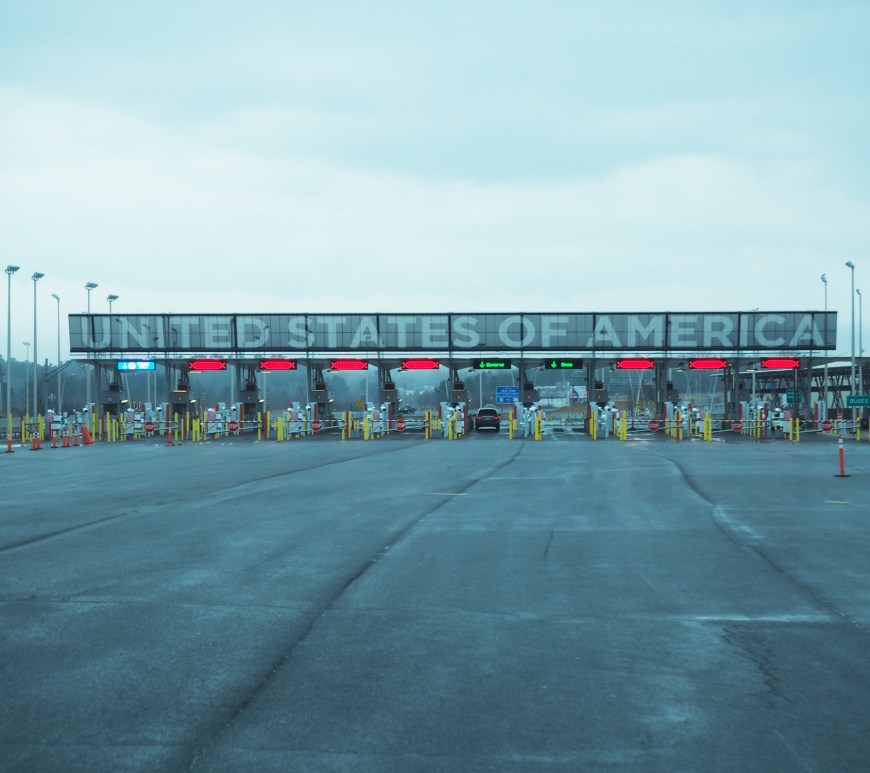
The U.S. is working closely with Mexico and Canada to ensure North America has a coordinated approach to combating the pandemic caused by COVID-19, and mitigating any further spread. The United States and Canada have agreed to restrict travel at the land border to essential travel only (details regarding those travel restrictions can be found here and here). In a similar fashion, the United States and Mexico are finalizing an agreement that will facilitate only essential travel at the U.S. southern border. The three countries are maintaining cross-border activities that support health security, commerce, supply security, trade, and other essential activities, while taking prudent steps to protect citizens and to limit spread of the virus. The stated goal of these efforts is to help save lives. As such, these restrictions are in place indefinitely. Continue reading “North America, Bordered Up”